
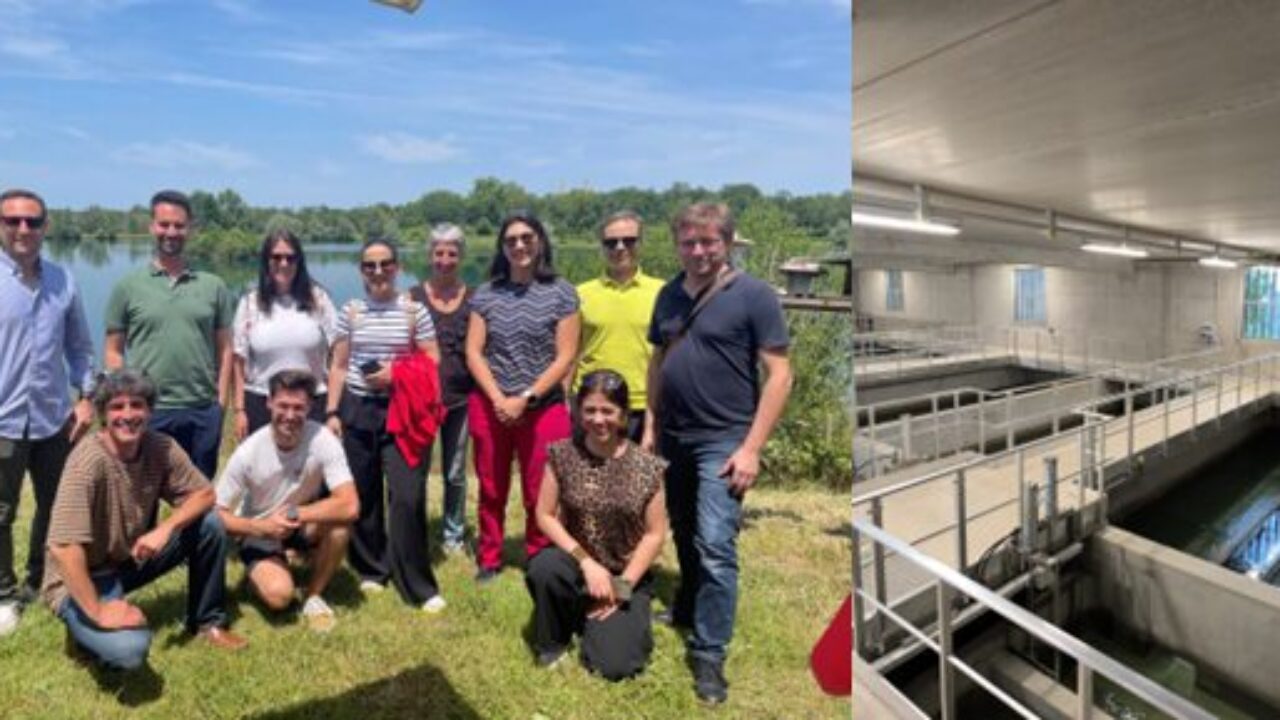
The European project GestEAUr, funded by the Interreg Sudoe programme, is making progress with the development of five territorial assessments in Spain, France and Portugal. These studies mark a decisive step toward designing innovative solutions that address the growing challenges of water management in rural environments with dispersed populations.
The assessments were carried out in La Moraña (Castilla y León), the Guadiana area (Extremadura), the Pays de Béarn (France), and the Portuguese regions of Alto Minho and Torres Vedras. Each territory analysed its socio-economic and environmental situation, as well as its water infrastructure, through participatory workshops with local stakeholders and technical evaluations conducted by specialised organisations.
In La Moraña, an agricultural territory made up of 63 municipalities, the analysis detected the presence of nitrates, loss of flow and deficiencies in wastewater treatment. According to Armando García Cuenca, Deputy for European Affairs of the Provincial Council of Ávila, “this project is a great opportunity because it allows water treatment and management to be adapted to the reality of rural areas, where urban criteria and tools have been used until now.” The region will also host pilot projects to test new treatment technologies.
In the Guadiana area of Extremadura, more than 200 municipalities are taking part in an assessment focused on nitrate pollution and network losses, with the collaboration of Aqualia, a project partner. “Water is agriculture, industry, mobility, tourism… It offers many opportunities, and public-private collaboration is a model to maintain and replicate,” the company notes.
In southwest France, the diagnostic study of the Pays de Béarn highlights the need to strengthen solidarity-based resource management, improve knowledge of strategic reserves and modernise supply and sanitation infrastructures.
In Portugal, Alto Minho faces agricultural and tourist pressures, while Torres Vedras is prioritising the modernisation of its systems in response to water scarcity. Both territories stand out for their commitment to sustainability and their focus on reuse and digitalisation as key pillars for more efficient and resilient water management.