
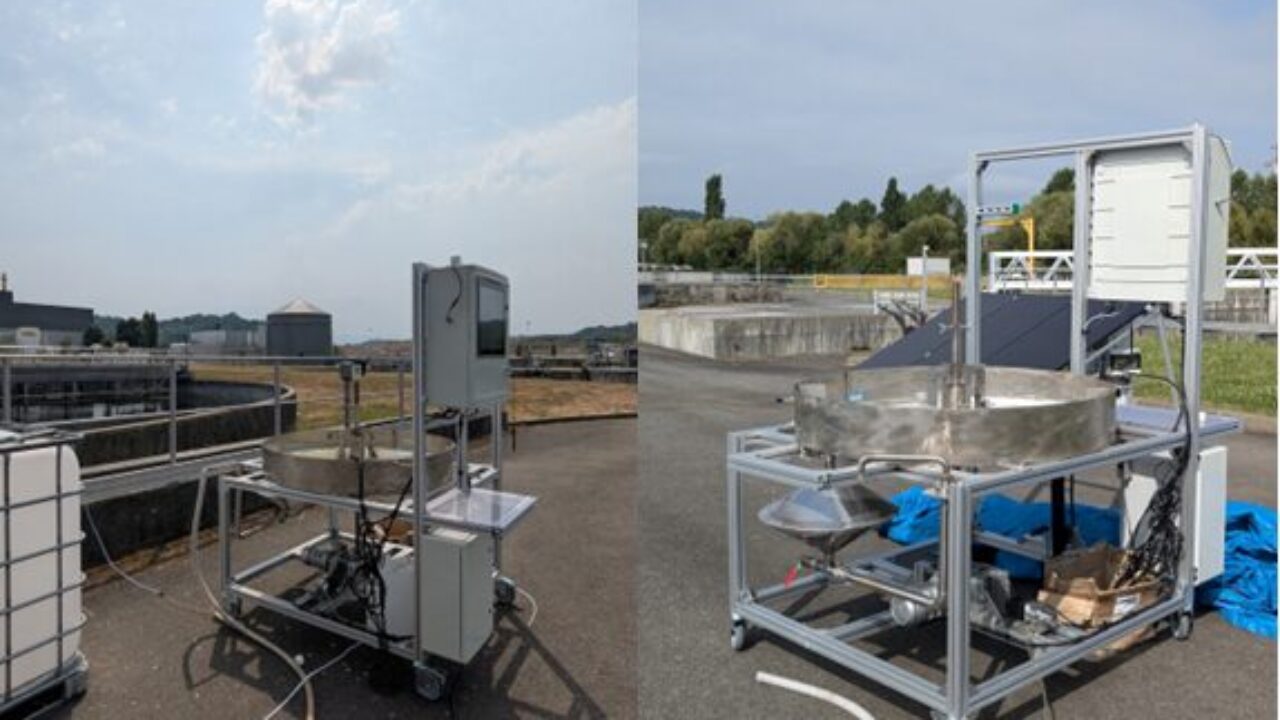
The project demonstrates the potential of a low-energy photo-chemical technology for advanced treatment and recovery of wastewater in rural areas of the Sudoe region.
The French region of Pays de Béarn has launched a pilot project within the framework of the European initiative GestEAUr (Sustainable and Digital Water Management in Rural Areas of the Sudoe Space), co-funded by the Interreg Sudoe programme. This pilot is one of the three planned by the international consortium, and its objective is to strengthen the resilience of water resources in rural areas of southwestern Europe in the face of climate change through innovative, sustainable and economically viable solutions.
The aim of the pilot is to assess a photochemical technology that uses solar energy to accelerate chemical reactions and to evaluate its effectiveness in eliminating toxins from wastewater from treatment plants (WWTPs). This solution seeks to facilitate wastewater reuse for various local applications, such as agricultural irrigation, thus contributing to a more circular and sustainable management of the resource.
The technology is characterised by its low energy and environmental footprint, making it a particularly promising alternative for municipalities and rural communities in the Sudoe area, where water resources are limited and infrastructures tend to operate at a smaller scale.
The pilot system was installed in June 2025, and the first testing campaigns took place in August and September. Although the results are still being analysed, preliminary findings indicate that nine pharmaceutical contaminants have been detected and significantly reduced, demonstrating the effectiveness of the process in removing emerging compounds. These initial results will help determine the treatment capacity of the pilot and adjust its design to local needs.
According to the project leaders, the possibility of replicating the solution in other contexts of the Sudoe region will depend on previous characterisation of the water to be treated, both in terms of abiotic (chemical) and biotic (microbiological, such as E. coli) contaminants, to ensure the system’s efficiency and its proper adaptation to each environment.
GestEAUr aims to address the growing challenges of water management in rural areas, particularly in territories with highly dispersed populations such as Castilla y León, and involves entities from Spain, Portugal and France.
The initiative is scheduled to last three years (January 2024–December 2026), has a total budget of €2,035,800, and is co-funded by the Interreg Sudoe Programme through the European Regional Development Fund (ERDF) with a contribution of €1,526,850.
Join GestEAUr on social media!
Follow our activity, share ideas, and stay informed about our progress toward efficient and sustainable water management. Follow us and get involved X and LinkedIn.