
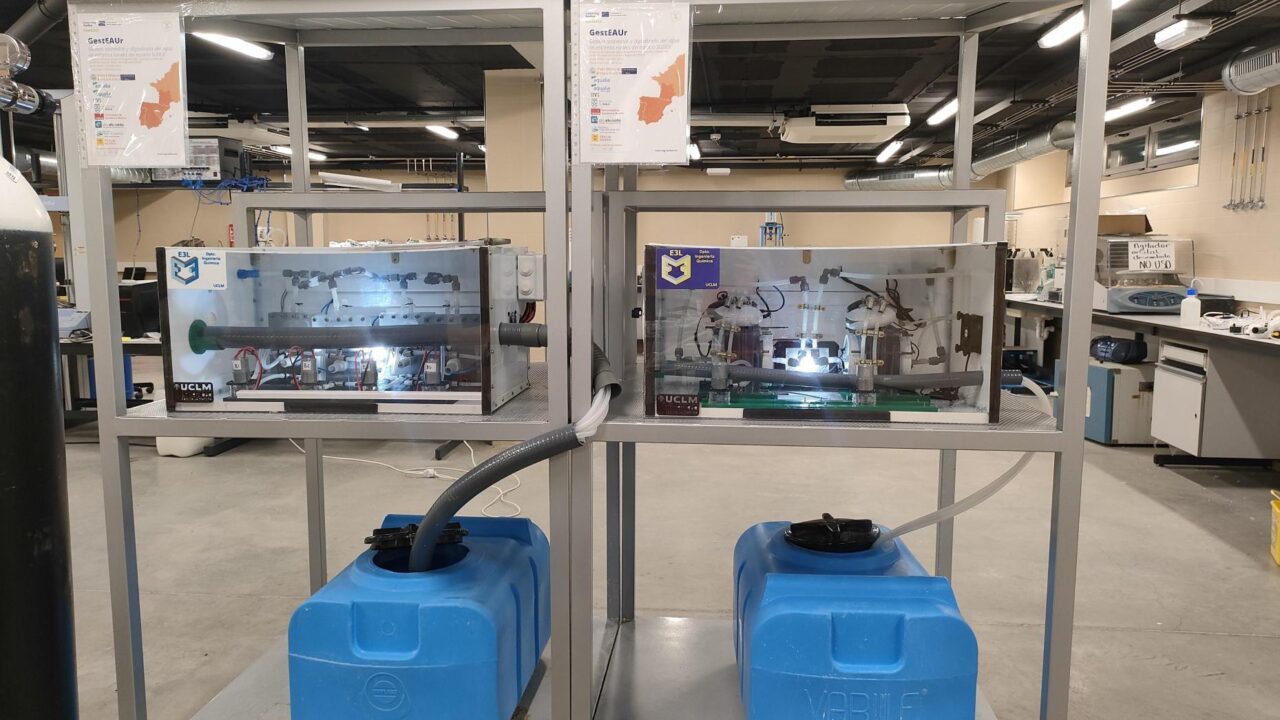
A pilot experience carried out within the framework of the European project demonstrates the effectiveness of 3D-printed modular reactors for producing ozone and hydrogen peroxide using solar energy, improving water quality in Sudoe rural areas.
The University of Castilla-La Mancha (UCLM) is participating in the European project GestEAUr (Sustainable and Digitalized Water Management in Rural Areas of the Sudoe Space) through the development of an innovative electrochemical technology aimed at improving drinking water treatment in rural environments. This work forms part of a pilot project that integrates membrane solutions (Aqualia) and electrochemical synthesis of oxidants (UCLM), co-funded by the Interreg Sudoe programme through the European Regional Development Fund (ERDF).
The pilot addresses one of the main needs of rural areas in southwestern Europe: having sustainable, self-sufficient and scalable technologies to ensure access to high-quality drinking water by eliminating both pathogenic microorganisms and residual pesticides. To this end, the UCLM team has designed and validated modular electrochemical reactors capable of generating oxidants such as ozone and hydrogen peroxide in situ—two key disinfectant and oxidizing agents in water treatment. A modular system is composed of independent units that can be connected to increase or adapt capacity. In the GestEAUr project, this structure enables flexible, sustainable production of oxidants like ozone or hydrogen peroxide, tailored to the needs of each rural area.
The reactors are patent-protected and already constitute a tangible result of the project.
Initial laboratory-scale tests have shown promising results, demonstrating technical feasibility and energy efficiency. They are designed to operate self-sufficiently using solar energy, ensuring sustainable and autonomous functioning in areas with limited electrical grid access.
With this initiative, UCLM strengthens its leadership in applying electrochemical technology and 3D printing to water treatment, in line with its experience in previous European projects such as SafeWaterAfrica and SERPIC, also focused on sustainable water reuse and drinking water production.
GestEAUr aims to address the growing challenges of water management in rural areas, especially in territories with highly dispersed populations such as Castilla y León, and involves entities from Spain, Portugal, and France.
The initiative is planned to run for three years (January 2024–December 2026), has a total investment of €2,035,800, and is co-funded by the Interreg Sudoe Programme through the European Regional Development Fund (ERDF) with a total of €1,526,850.
Join GestEAUr on social media!
Follow our activity, share ideas and stay informed about our progress toward efficient and sustainable water management. Follow us and get involved X and LinkedIn.