
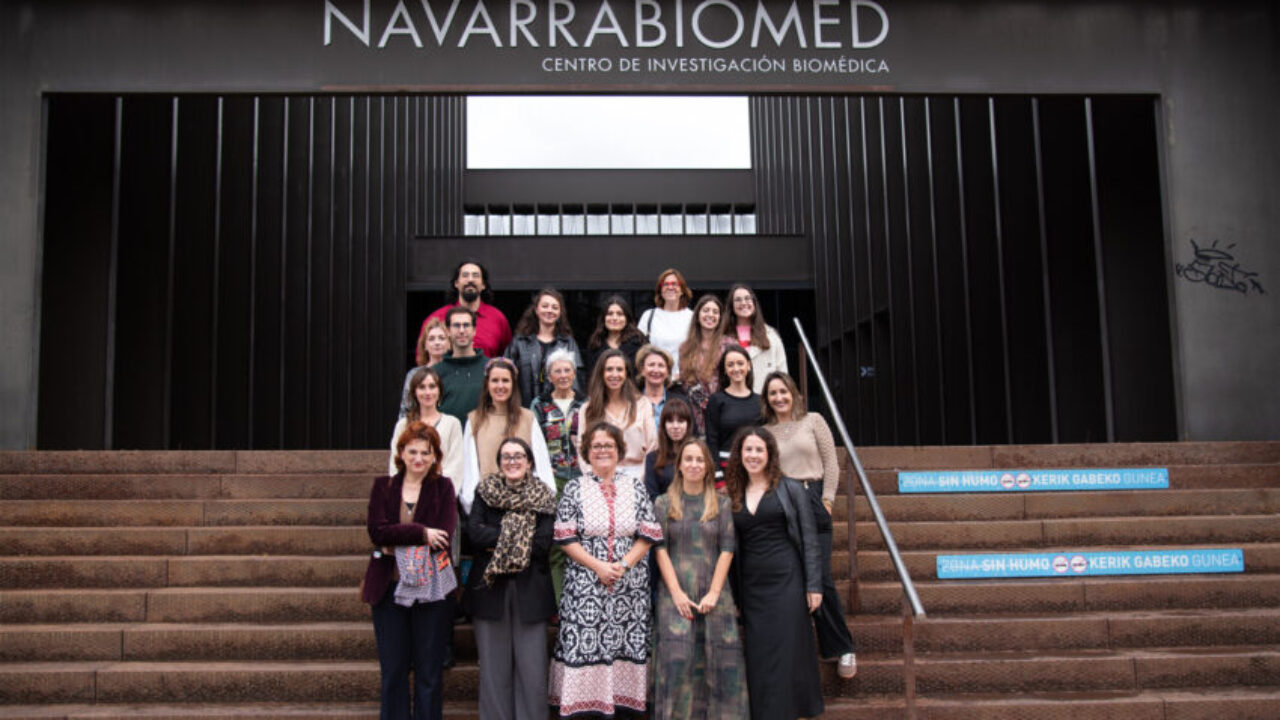
The biomedical research centre Navarrabiomed has hosted the first international workshop of the European project MAG-SUDOE. This is a pioneering initiative that promotes professional mentoring in genetic counseling to improve the well-being of health teams and strengthen the quality of care in clinical genetics services. Genetic counseling is an accompaniment to individuals and families to understand and adapt to the medical, psychological and family consequences of a particular genetic disease, as well as to make informed decisions. With the implementation of a mentoring in genetic counseling, we intend to propose a structured process of support for professionals who work with complex and emotionally intense clinical cases.
A project to strengthen the technical and emotional skills of professionals
Milena Paneque, researcher at i3S (Portugal), genetic advisor and coordinator of the MAG-SUDOE project, highlighted that teams working with sensitive diagnoses and accompanying families affected by hereditary diseases face emotionally demanding situations, with risk of stress, anxiety, compassion fatigue and professional wear. “Structured mentoring allows sharing experiences, strengthening emotional resources and improving clinical response capacity, directly impacting patient quality and safety in the care context,” he said.
The MAG-SUDOE project combines research and previous experience in the clinical field, framed in a cross-border collaboration project to design a mentoring model based on scientific evidence and adapted to the health systems of southwestern Europe.
Awareness session for professionals at the University Hospital of Navarra
 Within the framework of this first workshop, an awareness session open to the professional public of SNS-O was organized and opened by Antonio López Andrés, Director General of Health of the Government of Navarre. Affirmed institutional commitment to people-centred health. “To take good care of patients, we must also take care of professional teams. Accompaniment and reflective practice are the keys to safe, humanized and sustainable care over time,” he explained.
He also stressed the innovative nature of the initiative and the opportunity it represents for Navarra: “Clinical genetics is moving fast and requires complex decisions that generate an enormous emotional and cognitive impact on the teams. MAG-SUDOE provides a structured, evidence-based response to support those working in these settings and improve the care we provide for patients and families.”
After a general presentation on mentoring in genetic counseling, the implementation of the initiative in Navarre was presented, a key step to evaluate the integration of mentoring in real clinical practice. The initiative will include reflection sessions, peer coaching, communication skills training and emotional support, all supervised by a specifically trained professional to guide these sessions, with the aim of strengthening the technical and human competences of clinical genetics services. This experience will make it possible to analyze its impact on professional well-being, on the quality of the practice of genetic counseling by different professionals in the Genetics services and on the safety and better patient experience.
A European project to advance genetic care and occupational well-being
The project reflects a vision shared by the partners: a Europe that cares for those who care, innovates and cooperates to improve people’s health and well-being.
The three-day workshop, attended by partners from Portugal, France and Spain, presented preliminary results of national research and advanced the design of an overall model for the mentoring model in genetic counselling, as a joint European solution.

The main objectives of MAG-SUDOE are:
• Improve the quality of genetic counseling in hospitals and health centers in the SUDOE region, which will result in improved healthcare.
• Promote the psychological well-being and resilience of health professionals.
• Strengthen scientific and health cooperation between Spain, France and Portugal.
• Generate transferable evidence for the adoption of mentoring models in other European contexts.
Its mission is to foster a culture of mutual care and healthcare excellence in clinical genetics services.
MAG-SUDOE is 75% funded by the ERDF through the Interreg Sudoe programme and will run until 2028, when final results and recommendations for integration into public health policies will be presented. The consortium is coordinated by the Institute for Research and Innovation in Health (i3S) of Oporto, with the participation of Navarrabiomed (Navarra), the Instituto de Investigación Sanitaria de Santiago de Compostela (IDIS), the Toulouse University Hospital Centre (CHU Toulouse) and the Portuguese Public Health Society (SPSP) among other partners representing national associations of genetic counselling professionals in France, Portugal and Spain as well as various policy makers and patient organisations.