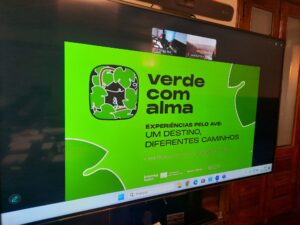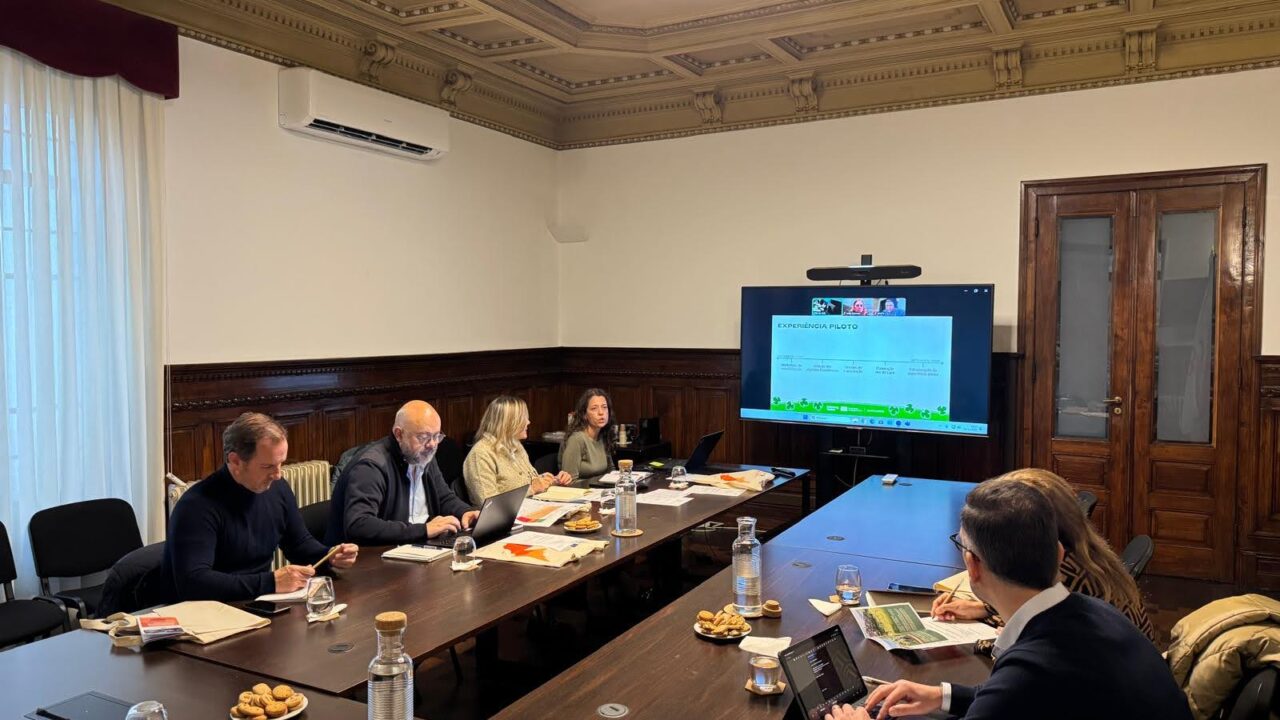
Within the framework of the AgroTour SUDOE project, co-financed by the Interreg SUDOE Programme, the Intermunicipal Community of Ave (CIM do Ave) held two Advisory Forum meetings, on 5 December (in person) and 16 December (online), to validate the “Verde com Alma” Pilot Experience.
During these working sessions, the eno and agrotourism experiences and offers developed for the Ave territory were presented, together with the next steps of the pilot experience, focusing on digital marketing, the use of artificial intelligence tools for promotion, and the testing of experiences with key territorial stakeholders.
The meetings were attended by the Associação de Municípios Portugueses do Vinho (AMPV), the Associação da Hotelaria, Restauração e Similares de Portugal (AHRESP), Chef António Loureiro (restaurant a Cozinha, holder of a Michelin star and certifications such as Green Key and Zero Waste), the CCDR Norte, the Associação de Desenvolvimento Rural de Basto (PROBASTO), the Regional Tourism Authority of Porto and Northern Portugal (TPNP), the Confederation of Portuguese Farmers (CAP) and the Landscape Laboratory of Guimarães.
The pilot experience had previously been validated by the 8 municipalities of the Ave region, members of the Advisory Forum, as well as by 52 participating economic agents.
Members of the Advisory Forum highlighted the in-depth work carried out by CIM do Ave within the AgroTour SUDOE project, underlining its strategic value for the structuring of a solid eno and agrotourism offer, and put forward recommendations to strengthen its visibility and recognition, with the aim of positioning the Ave region as a reference destination at national level.
With this phase completed, the “Verde com Alma” Pilot Experience now enters a new stage focused on the development of tourist-oriented communication tools, prioritising digital formats (brochures, video, photography, artificial intelligence-based solutions, website and social media), as well as on the testing of the experience with incoming tour operators, with a view to its future commercialisation.
Currently, the pilot experience involves 52 local stakeholders, 54 individual experiences and 14 local and regional experience proposals, based on authenticity, sustainability and local identity as the foundations of an integrated and distinctive tourism offer.