
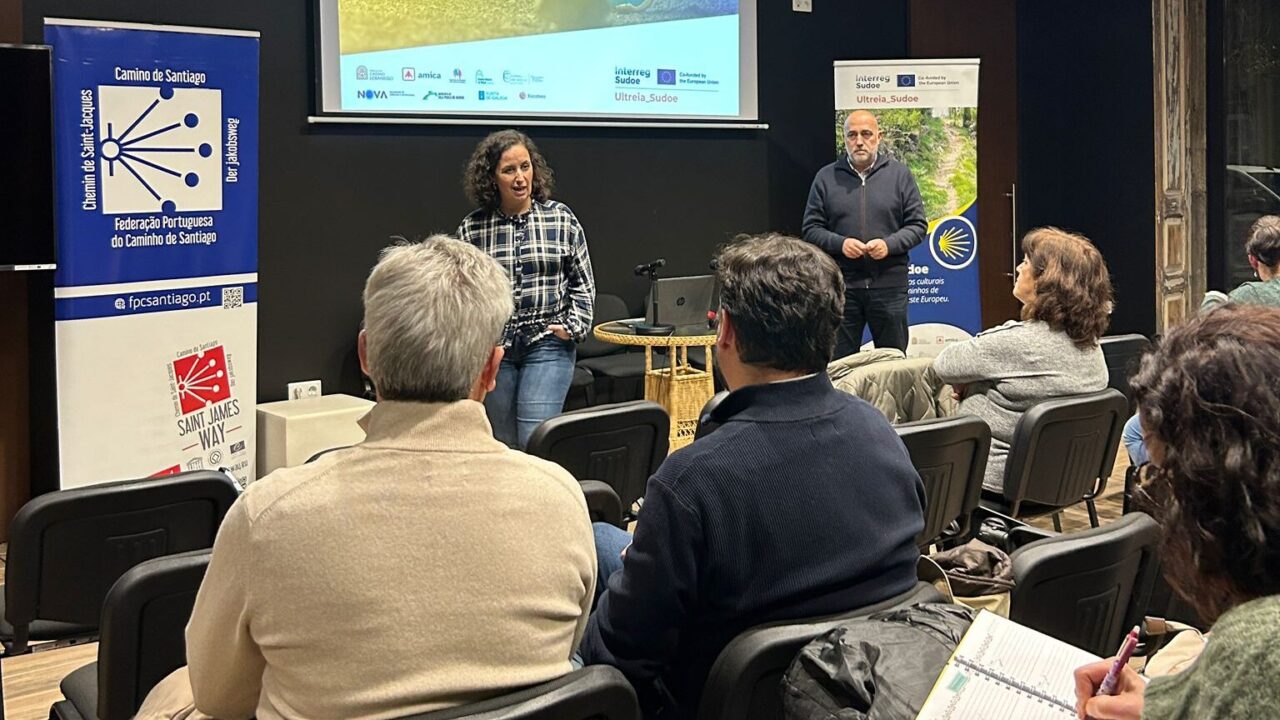
The Ultreia Sudoe project aims to foster the economic and social development of the Camino de Santiago routes by enhancing natural and cultural resources—both tangible and intangible—as well as the artisanal, creative, and agri‑food productive capacities of the territories involved.
The project, with a budget of approximately 1.4 million euros and funded by Interreg Sudoe through the European Regional Development Fund (ERDF), involves entities from three countries: Spain (Fundación Camino Lebaniego, Fundación Santa María la Real, Association of Municipalities of the French Way of Saint James, Amica and the Management Society of the Xacobeo Plan); France (French Agency of the Ways of Compostela); and Portugal (Municipality of Vila Pouca de Aguiar and the Faculty of Science and Technology of Nova University Lisbon).
The goal is to create a shared strategy for the Camino de Santiago routes (CaS Sudoe) to promote the value of natural and cultural resources—tangible and intangible—as well as artisanal, creative, and agri‑food production, bringing them closer to tourists and pilgrims both digitally and in person. The aim is to ensure respectful, mindful, and authentic tourism, while promoting sustainable economic and social development along the Camino routes.
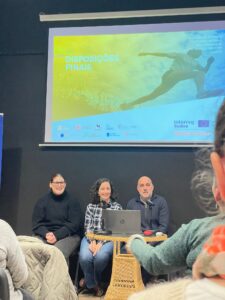
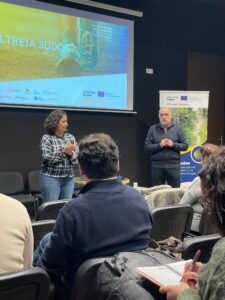
To this end, a working group has already been established. It met for the first time at the end of this week in Vila Pouca de Aguiar and functions as a local governance space, promoting coordination among key stakeholders and the development of territorial initiatives. This working group remains permanently open to welcoming new members who wish to contribute to local economic revitalization.
The project includes the creation of physical or virtual spaces called “Paradas” along the Camino, designed to promote and showcase the cultural, agri‑food, and artisanal heritage of each territory. The idea is to encourage sales and generate wealth for local communities, giving meaning to and materializing the project’s intention to foster economic and social development.
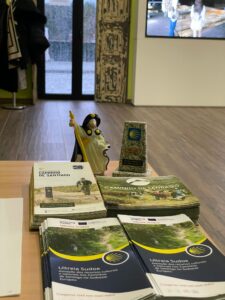
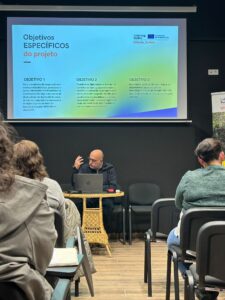
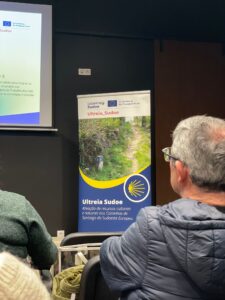
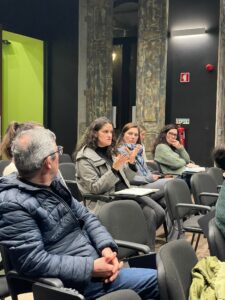
In Vila Pouca de Aguiar, the Camino “Parada” will feature a physical space open to the public next to the Capela do Senhor. Here, pilgrims and visitors will be able to discover the best of the region—its people, its flavors, and its traditional knowledge. The Paradas are not merely rest stops but true showcases of local products and services, where items can be displayed and connections with new audiences can be made, forming part of a new network that promotes circular economy, sustainability, and rural pride.
The project also includes a strong focus on digitalization, through the installation of systems to measure the flow of people and other technological tools that will make it possible to collect relevant information for planning, decision‑making, and analyzing the pilgrims’ experience.
The project is expected to be completed by the end of 2026.