Technical Advances
Mapping the Path Forward
Over the past six months (August 2025 – January 2026), the team at ECOFILAE has been busy mapping out strategic territories. This crucial work helps identify exactly where the TARGET strategy could be successfully replicated in the future.
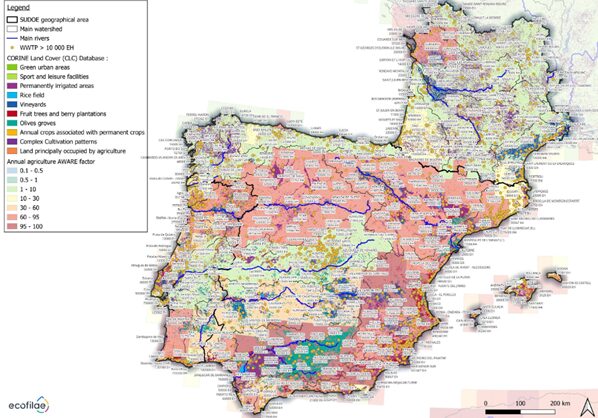
What happens next? Now that the mapping is complete, ECOFILAE is waiting for the results from the January workshops led by EPIDOR and CEREMA. During these sessions, stakeholders prioritized key issues and developed specific scenarios for the Dordogne region and Grand Périgueux.
Once these scenarios are finalized, ECOFILAE will step back in to crunch the numbers. They will carry out both multi-criteria and cost-benefit analyses to ensure the proposed solutions are not only effective but economically sound.
Focus on the Dordogne: The collaborative approach of TARGET’s French partners
As part of the Target strategy test in the Dordogne river basin, conducted by EPIDOR, the team at CEREMA has placed a huge emphasis on how consultation works in practice.
To kickstart the process, they brought in a consulting firm (Ecologie Urbaine et Citoyenne) to interview key figures involved in water management across the basin. This research allowed them to produce a detailed “map” of local actors, identifying exactly where different groups stand regarding the use of non-conventional water sources.
Following this initial research, the team organized two workshops in Périgueux, thanks to the support of GRAND PERIGUEUX:
-

Meeting in Périgueux, January 2026. 29 January 2026: The second workshop focused on the future. The goal was to encourage stakeholders to actively contribute to the strategy and prepare for the practical actions ahead.
- 15 January 2026: 15 January 2026: The first session aimed to bridge the gap between technical data (produced by EPIDOR, ECOFILAE, and CEREMA) and local reality. Using a playful approach, CEREMA, EPIDOR and EUC helped participants identify and rank the territory’s major challenges, highlighting both the opportunities and obstacles for managing water shortages.
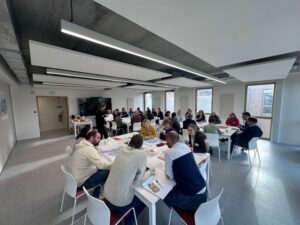
It is worth noting that CEREMA’s participation unit observed both events to evaluate the consultation process itself.
What if someone could not assist? For those who could not attend the in-person sessions, a final online workshop was scheduled for the 5th of February. This ensured that every voice had a chance to be heard in shaping the strategy!
Testing the Target Strategy in other territories
Is the TARGET strategy flexible enough to work in other regions?
To find the answer, the EPIDOR and CEREMA team has developed a specific interview guide designed to survey other territories, identified by the mapping work carried out by ECOFILAE, across the SUDOE zone. The goal is to see if the solutions proposed by Target can be replicated elsewhere and to understand how different communities feel about water reuse.
The TARGET approach is being compared in the 3 countries with initiatives that are already up and running.
In France, 2 regions have been selected, with CEREMA and EPIDOR leading the interviews. Meanwhile in Spain, UCM and AMAyA are going to carry out the interviews in 15 regions, and in Portugal, FCT Nova is going to work on 5 regions, such as areas focused on shellfish farming, to see how the strategy holds up in new contexts.
By interviewing a wide variety of stakeholders, from River Basin authorities to local water syndicates and associations, the TARGET team hopes to gather valuable feedback on whether these territories could adopt elements of the strategy in the future.
Connecting Spain, Portugal, and France
It has been a busy few months for AMAyA. Between September 2025 and January 2026, the team led a major analysis of water governance across France, Spain, and Portugal. This work involved coordinating closely with partners in all three countries to produce a comprehensive report on how water is managed during times of scarcity.
AMAyA has also been actively working with the UCM (Complutense University of Madrid) to select specific Spanish territories where the TARGET strategy can be applied. Together, they have been identifying local actors and monitoring studies on the social acceptability of using non-conventional water sources.
Save the Date: Madrid 2026! Looking ahead, AMAyA and UCM are preparing a major dissemination event. They are currently coordinating with the organizers of the Reuse Euro Med International Congress, taking place in San Fernando de Henares (Madrid) from 17–19 June 2026. AMAyA will be hosting a special seminar within the congress to share the project’s findings. If you wish to join, you can register here!: https://server.matchmaking-studio.com/en/REUSE_EuroMed_Madrid_2026/home.html
Expanding Green Infrastructure
Granollers is moving ahead with significant improvements to both its strategy and its landscape.
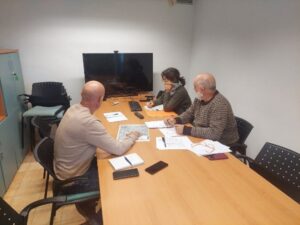
Regarding the planification, recently, the team awarded two key contracts to external experts. The first will support the local pilot test of the TARGET Strategy, while the second focuses on optimizing the existing REUT network, aiming to find new solutions to improve the infrastructure. Work plans are already being finalized with these partners.
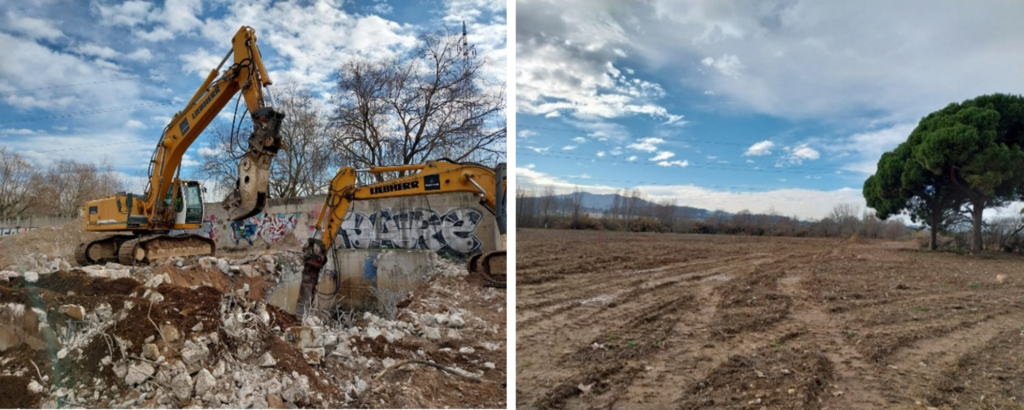
On the ground, exciting physical changes are taking place. In December 2025, construction began on the expansion of the Can Cabanyes wetland. Located just north of the current site on land formerly occupied by industry, this project is transforming the area.
Once operational in 2027, this second wetland will not only boost local biodiversity but also has the potential to increase the capacity for producing reclaimed water.
Proactive Drought Management
Following the recommendations of ERSAR (Regulatory Entity for Water and Waste Services) regarding drought monitoring, the Municipality of Barreiro has finalized, approved, and implemented a Water Supply Contingency Plan. While currently operating at “Normal Situation” (C0), the plan is designed to be predictive, aimed at anticipating crises to prevent emergency scenarios. It establishes a hierarchy of alert levels based on risk assessment:
- C0 (Normal): Current situation.
- C1 (Pre-Alert): Indication of serious problems.
- C2 (Alert): Possibility of occurrence, not immediate, of some serious problems but with possible provisional resolution by the system.
- C3 (Emergency): Occurrence of a serious situation with no possibility of mitigation/response by the system.
These levels guide the implementation of specific contingency measures, which range from provisional system resolutions to consumption restrictions in severe cases.
The plan serves as a critical decision-support tool for senior management, balancing technical risk analysis with political decision-making. Operational protocols focus on continuous monitoring, loss management, and infrastructure renewal. The plan prepares for extreme scenarios, such as total aquifer failure, by outlining “Essential Consumption” strategies. More specifically, supplying the population via tanker trucks (15 liters/inhabitant/day, supplied by 15 tanker trucks of 20m3 each, each refilling 4 times a day) and securing alternative water sources for critical assets like the Barreiro-Montijo Hospital Center.
Crucially, this plan anticipates the new Critical Entity Resilience (CER) Directive. It treats water and wastewater sectors as critical infrastructure, preparing the municipality to face all hazards, natural or man-made, not just drought.
By using data-driven monitoring tools, Barreiro is ensuring it can meet its legal obligations and, most importantly, protect its citizens from water scarcity, fulfilling a key objective of the TARGET project.
New Insights into Environmental Safety
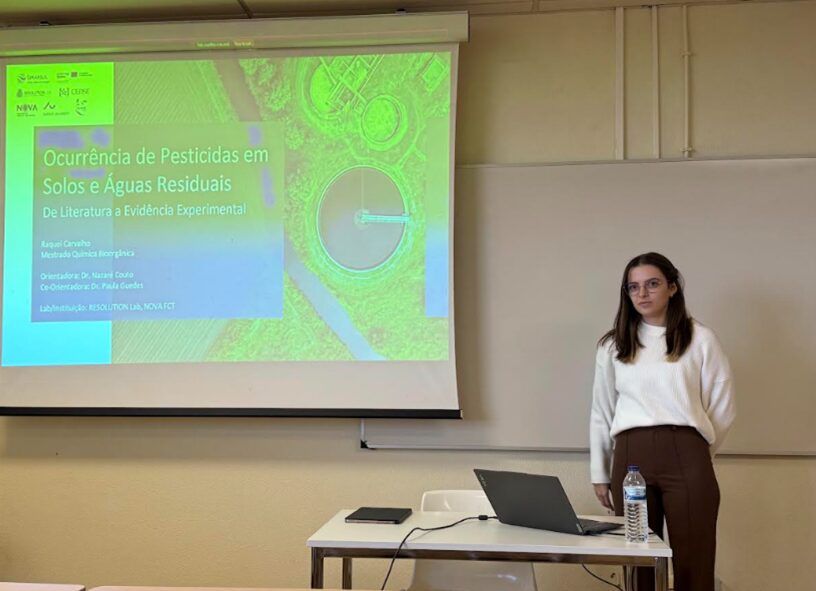
We are thrilled to announce that our colleague Raquel Carvalho successfully defended her MSc thesis on 14 November 2025, titled “Pesticides occurrence in soil and wastewater – from literature review to monitoring evidence.” Developed within the Master in Bioinorganic Chemistry at NOVA School of Science and Technology (NOVA FCT), Raquel’s research bridges the gap between theoretical knowledge and real-world data by combining a critical literature review with direct monitoring evidence. Her work provides a clearer picture of how pesticides persist in our environment.
aaaaaaaaaaaaaaaaaaaaaaaaaaaaaaaaaaaaaaaaaaaaaaaaaaaaaaaaaaaaaaaaaaaaaaaaaaaaaaaa
Annual meeting
TARGET’s third meeting in Montpellier, France
On 7–8 October, the TARGET project team gathered at the Institut Agro Montpellier for our third official meeting. Expertly hosted by our partner ECOFILAE, the event was a fantastic opportunity to share knowledge not just within our team, but with colleagues from the Interreg Sudoe I-Rewater and Sollagua projects.
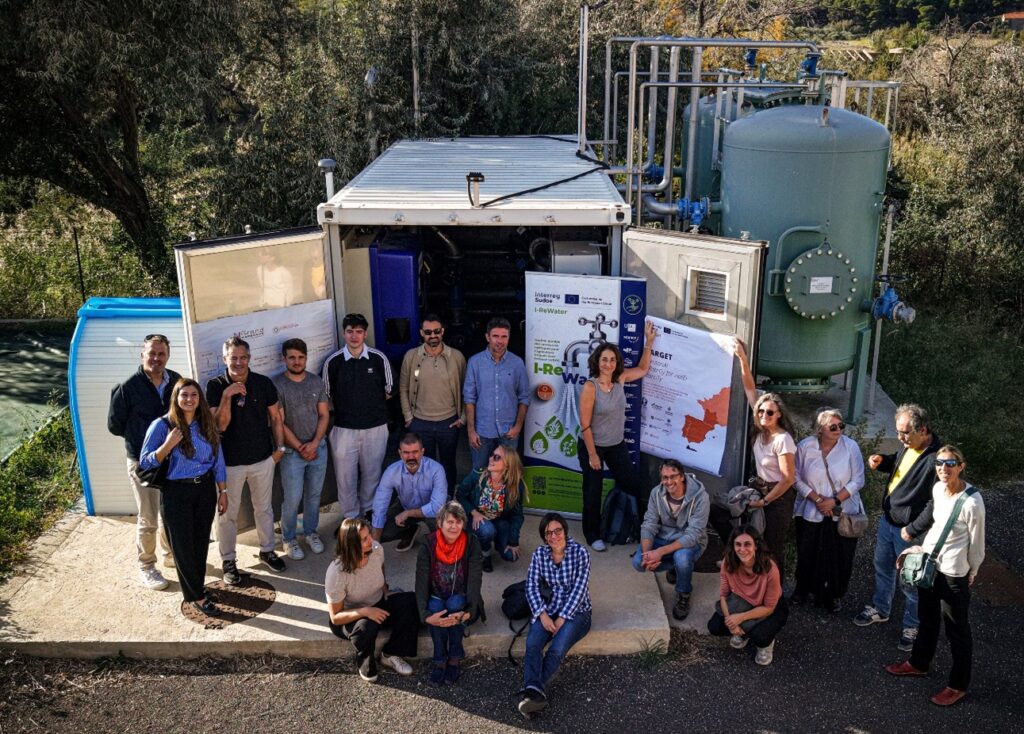
On the first day, Lydie Riera (EPIDOR) kicked off the event with a warm welcome, followed by a keynote from Laurence Burgaud (Montpellier Méditerranée Métropole) on choosing the right water management strategies. The day continued with engaging workshops and presentations. We heard from TARGET partners Catherine Frank Néel (CEREMA), Tony Ortiz (UPC), and Rui Teixeira (MBAR), alongside insightful contributions from our guest projects: Nicolas Saurin (I-ReWater), Rémi Declerc (Rur’Eaux), and Magali Gerino (Sollagua). These talks sparked meaningful breakout discussions on how to drive our shared mission forward.
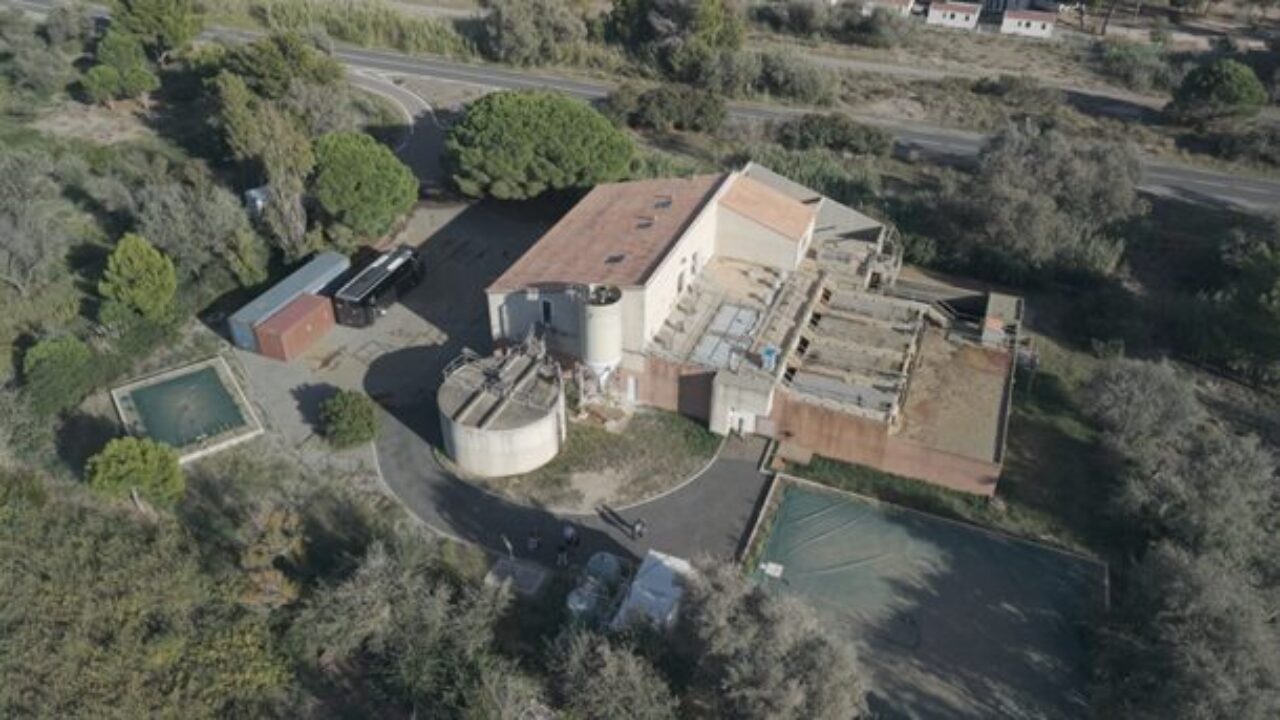
A major highlight was our technical visit to the Narbonne Plage Wastewater Treatment Plant. Guided by Nicolas Lafont, the team explored impressive on-site solutions, including the use of reclaimed water for vineyard irrigation, a perfect example of water-smart technology protecting local ecosystems. The second day was dedicated to internal progress updates and planning the road ahead.
A huge thank you to ECOFILAE for being such wonderful hosts, and to all our partners for their continued dedication: CEREMA, EPIDOR, Le Grand Périgueux, Câmara Municipal do Barreiro, FCT NOVA, UPC, Granollers, UCM, AMAyA, and FSVA/Kaizen. Together, we are pushing towards a more sustainable future!
You can watch the video of the Montpellier meeting by clicking down here in the picture!
Results dissemination
Spreading the Word
Beyond their technical duties, AMAyA has been active in sharing the TARGET project’s message with the wider community.
While maintaining regular coordination with partners through remote COPIL meetings, the team has also been out in the field:
- On 25 November, they met with technicians from the Guadalquivir River Basin for a technical visit and knowledge exchange.
- On 12 December, they visited Pablo de Olavide University in Seville to give a talk on Nature-based Solutions to Limnology students.
Looking ahead to 2026, the team has also submitted an abstract for the upcoming International Congress Reuse Euro-Med, titled “A comparative analysis of water governance in Spain, France and Portugal” (Isabel Martín, Mª Pilar Flores, Catherine Frank-Neel, Nazaré Couto, Rui Teixeira, Amélie Bresson). This event will take place in San Fernando de Henares, Spain, from 17–19 July 2026, where AMAYA hopes to showcase the project’s results. You can register here!: https://server.matchmaking-studio.com/en/REUSE_EuroMed_Madrid_2026/home.html
Two papers on the way!
UPC has finalized two new dissemination articles, sharing the project’s findings with the wider scientific community:
The first paper, titled “Innovative Standards for Using Nature-Based Solutions in Water Reuse Projects”, has been submitted to the Springer series Advances in Biochemical Engineering/Biotechnology.
The second article focuses on local lessons learned. Titled “Hacia sistemas híbridos de reutilización de agua: aprendizajes tras 20 años de operación en Can Cabanyes (Granollers)”, it explores 20 years of operations at the Can Cabanyes site and has been submitted to REVISTA IDiAgua.
Dissemination at SRA – Iberian Chapter in Évora, Portugal
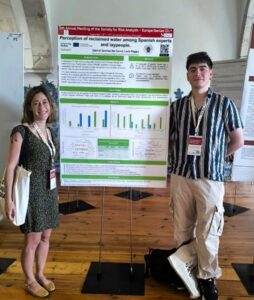
On 18th–19th September, our colleagues from Universidad Complutense de Madrid (UCM), travelled to Évora, Portugal, for the 6th Annual Meeting of the Society for Risk Analysis Europe – Iberian Chapter.
We are proud to share that they presented their research titled “Perception of Reclaimed Water among Spanish Experts and Laypeople.” This exploratory study, which compares the views of water management professionals with those of the general public, was recognized with an Honorable Mention Award for its outstanding contribution!
¿What did they find? The study revealed crucial insights into how we talk about water:
- The Knowledge Gap: The general public feels a higher level of risk and possesses less knowledge about reclaimed water than experts.
- Negative Bias: Interestingly, both experts and the public believe that others view reclaimed water negatively.
- Open Minds: Despite the hesitation, both groups showed a strong interest in sustainable practices, suggesting a real opportunity for better public engagement.
This recognition highlights just how important it is to understand these perceptions so we can shape better communication and policy for the future. Well done to the team!
What’s next?
Coming Up: The Consortium Heads to Portugal
Next month, the TARGET project team will regroup for our next major working session. On 25–26 March, partners will travel to Barreiro and Lisbon for two days of internal collaboration hosted by the Municipality of Barreiro and FCT Nova.
The Agenda:
- Workshops & Seminars: The team will hold internal workshops to review progress, alongside a special seminar with local Portuguese stakeholders to exchange local insights.
- Field Visit: To see theory in practice, the consortium will visit the SIMARSUL Wastewater Treatment Plant in the afternoon to study their water treatment and reuse processes.
We look forward to sharing the outcomes of this meeting in our next newsletter!