
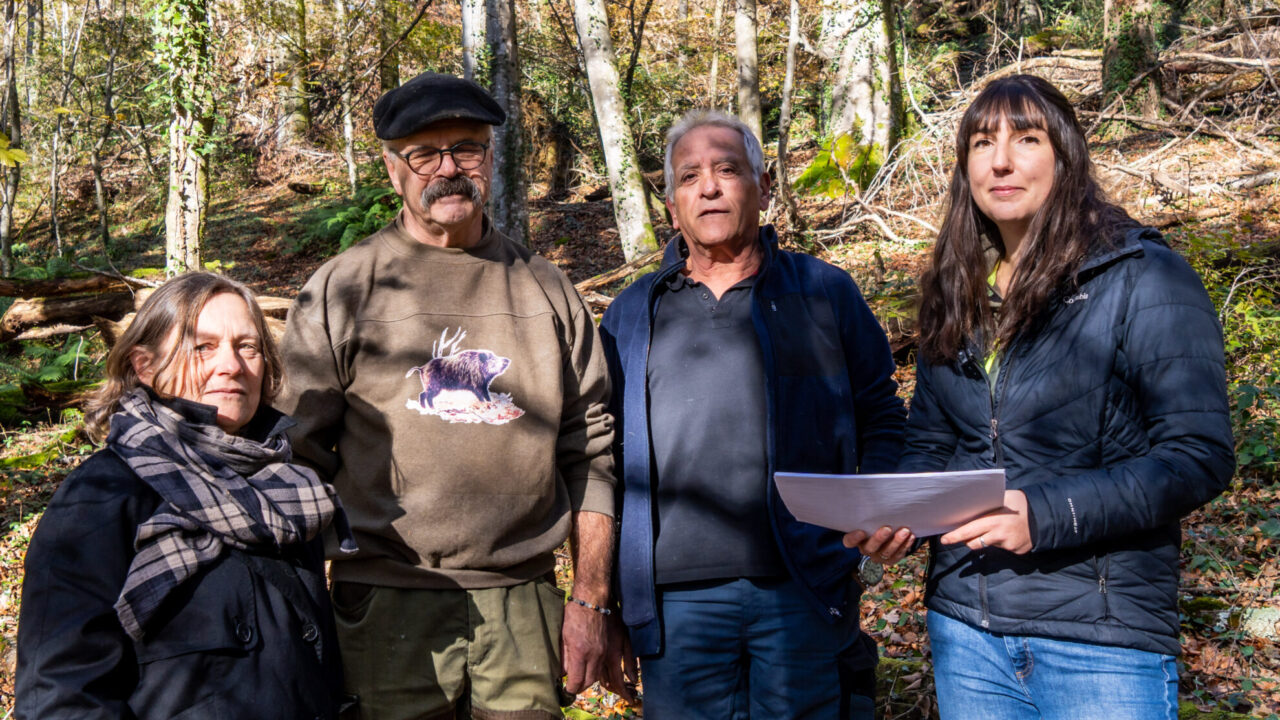
On 26 and 27 November, the project team visited the town of Montrejeau (Midi-Pyrénées, Occitanie) to see first-hand the results of this new methodology applied in the Tilhouse Forest (65).
The visit, organised by the Massif des Pyrénées delegation of the Union des Communes Forestières du Grand Sud (UGS), provided an opportunity to observe the work carried out by the technical team led by Irène Sénaffe and to analyse how the management measures implemented contribute to preserving biodiversity without compromising fire risk reduction.
During the working session, Irène Sénaffe, delegate of Massif des Pyrénées (UGS), presented the good practices applied to reconcile fire prevention objectives with the conservation of forest ecosystems. She stressed the importance of selectively reducing fuel load and planning forest management from a comprehensive perspective, taking into account the environmental, social and economic values of the territory.
On site, in Tilhouse Old Forest plot, municipal representatives Jean-Michel Viau and Jean Naranjo, Deputy Mayors, explained the key role played by municipalities in preventive land management and the conservation of natural resources.
The pilot project has incorporated new technical tools to identify areas of greatest ecological sensitivity and to plan interventions that minimise impacts on flora and fauna. In this regard, Guillaume Arlandes, a Geographic Information Systems engineer (Pyrénées Cartographie), shared the cartographic methodology applied, based on GIS and high-precision environmental criteria to guide forestry work.
For her part, Léa Pradines, coordinator of the territory’s forest charter (PETR du Pays des Nestes), explained how forest planning at the local level allows these measures to be integrated into broader strategies for territorial development and adaptation to climate change.
BIO4RES aims to improve fire risk prevention and management in the forests of the SUDOE area through the sustainable use of extracted biomass. This makes it possible to consolidate the viability of prevention plans, reduce risk, and at the same time strengthen the resilience of forests without compromising their ecosystem services.
The project also promotes the use of biomass as a renewable energy resource, generating employment and economic development opportunities for rural areas. In this way, it contributes to addressing some of the main challenges currently facing the forestry sector: fire prevention, biodiversity protection, combating rural depopulation and decarbonisation.