
The Nouvelle-Aquitaine region, one of the European territories most affected by forest fires in recent years, currently represents a prime testing ground for innovative solutions. Cutting-edge technologies dedicated to wildfire prevention, as well as biological solutions for restoring burned forests, are being tested there at an operational scale. Under the coordination of Xylofutur, one of the nine partners in the consortium, a pilot action has been deployed at four sites in the region: Cestas, Landiras, Guillos and Hostens. At these sites, two lines of action are combined: early detection of fire outbreaks using advanced sensors, and the acceleration of natural regeneration in burned areas through the use of plant-based biofertilisers.
These experiments, led by French technology start-ups, aim to develop concrete, operational and transferable solutions for other territories in southern Europe facing the same challenges: preventing wildfires and sustainably restoring forests after fire in a context of accelerated climate change. Although the trials are currently at different stages of progress, their scope goes beyond the regional level. In the long term, the results obtained could serve as a reference for other European regions seeking to strengthen their wildfire prevention strategies and accelerate post-fire regeneration of their forest ecosystems. Through this pilot action, Xylofutur illustrates the growing role of innovation and start-ups in tomorrow’s forest management, by combining advanced risk anticipation technologies with biological solutions that respect ecosystems.
Actions implemented
Within the framework of this project, two companies have been selected to deploy the solutions tested at the pilot sites. On the one hand, SYLVIACARE is responsible for the experimentation of early wildfire detection, with the aim of significantly reducing the time between the outbreak of a fire and the intervention of emergency teams. The system is based on an installation that is both simple and highly technological: four sensors capable of monitoring an area of up to 10 hectares, and a supervision platform that enables communication with the sensors and the reception of alerts (via the platform, SMS or email). The system meets three main objectives: detecting a fire outbreak in under 10 minutes, accurately geolocating the fire, and transmitting information to the relevant stakeholders in real time.
For this action, the sites where the experimentation will take place have already been identified (in Cestas and Landiras), consisting mainly of maritime pine stands. The installation will be carried out during the month of January.
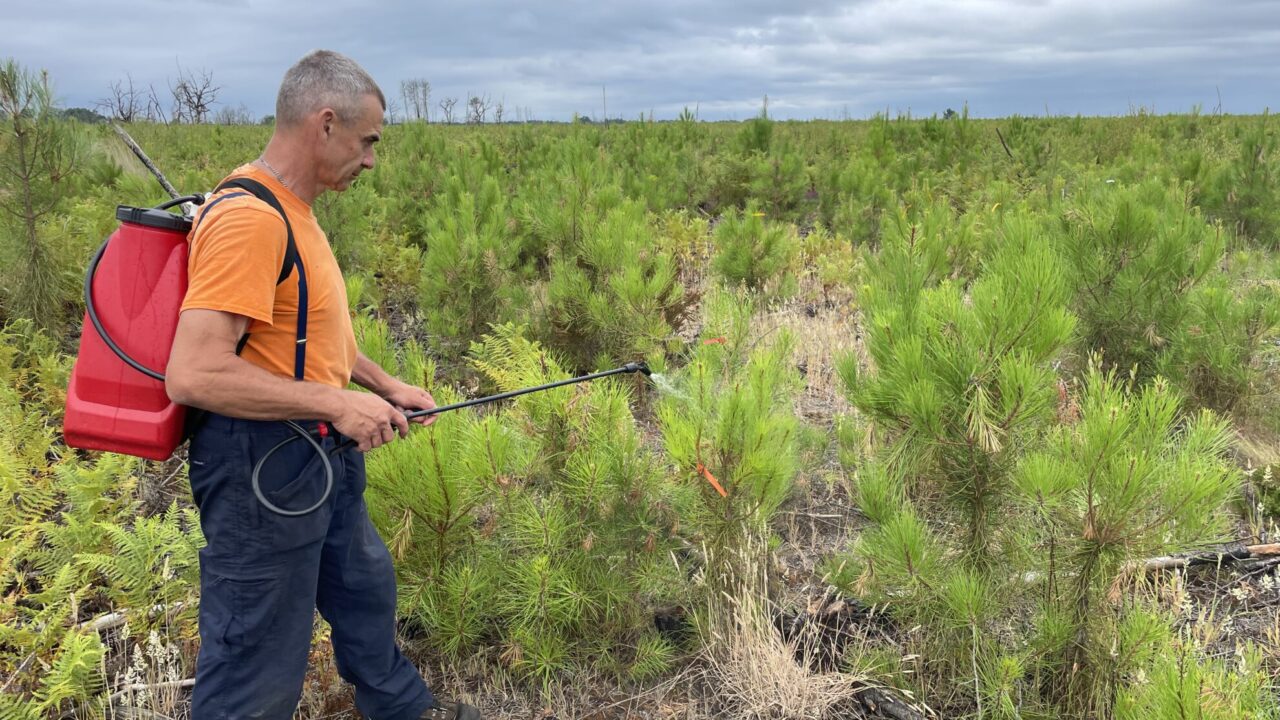
The second innovation is led by Elicir, a start-up specialised in the development of 100% plant-based biostimulants. Its technology, protected by several international patents, enables treated plants to improve their ability to explore their environment, optimise hormonal regulation throughout the growth cycle, and better cope with environmental stresses. These solutions also contribute to the natural activation of plant defence mechanisms against pathogens (fungi, viruses and bacteria), without the use of external chemical inputs.
The experimentation began in June 2025 on two plots affected by the 2022 wildfires. The Guillos plot is mainly composed of birch trees, while the Hostens plot consists primarily of maritime pine. The biostimulant has already been applied to the plots, and the next tree growth measurements will be carried out in early 2026.
Expected results
The pilot sites coordinated by Xylofutur aim to generate two complementary types of results: strengthening wildfire prevention and limiting forest damage, and increasing forest resilience and regeneration capacity without the use of external chemical products. Both actions will produce a series of experimental data intended to be analysed, consolidated and replicated in other forest ecosystems with similar characteristics.
Instagram (@socialforest_sudoe)