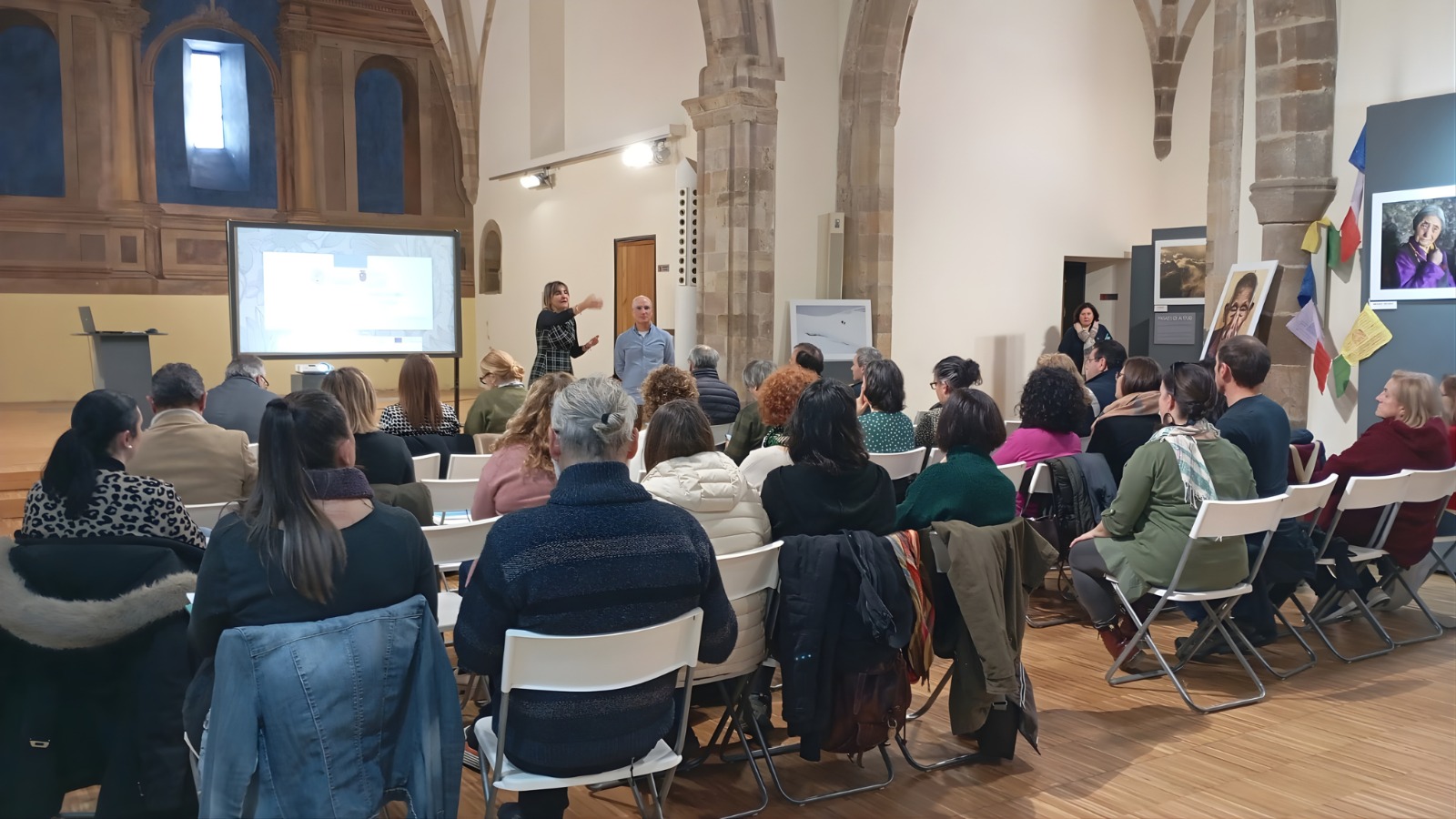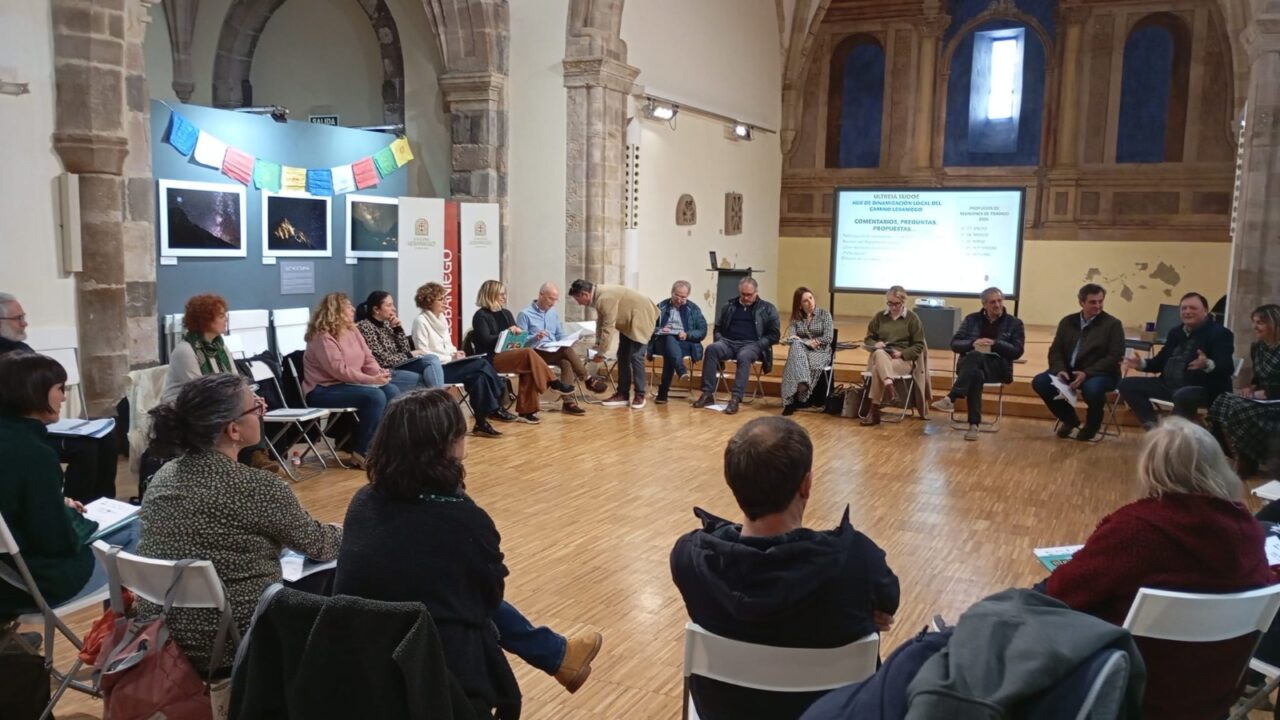
The meeting, part of the European Ultreia-Sudoe project, brought together institutional representatives and public and private stakeholders connected to the Camino. This first session opens a calendar of working meetings that will take place throughout 2026 in different locations across the territory.
The Camino Lebaniego Foundation held the first informational meeting of the Hub or working group of the European Ultreia Sudoe project at the Lebaniego Studies Center in Potes. This meeting marks the beginning of a collaborative process that will bring together public, private, and social actors linked to the Camino Lebaniego.
Around 70 entities from the region were invited, with approximately 40 participants representing 35 organizations from diverse sectors related to the Camino. Among the attendees were six mayors of municipalities along the route, the Directorate-General for Culture and Heritage of the Government of Cantabria, AMICA (the Cantabrian partner of the project), representatives from hospitality, pilgrim hostels, active tourism companies, inbound agencies, artisans, folklore groups, and other services connected to the Camino.
During the session, the Ultreia Sudoe project was presented, with a special focus on the role of the Hubs as spaces for shared governance, reflection, and joint decision-making aimed at improving Camino management, strengthening the cultural identity of the territory, and promoting sustainable local development linked to inland tourism.
The director of the Camino Lebaniego Foundation, Pilar G. Bahamonde, emphasized that “this working group is designed to be an open space for listening and collaboration, where all Camino stakeholders can actively participate in defining concrete actions that address the real needs of the territory and those who travel through it.” She highlighted that the high level of participation in this first meeting “confirms the interest and commitment in Cantabria, especially in rural Camino areas, to move toward a more coordinated, sustainable, and innovative management model.”
Following this initial informational meeting, the Hub will launch a series of five working sessions in 2026, held throughout the year in different locations across the territory. The first of these meetings will take place on January 27 in San Vicente de la Barquera. Each session will define and debate concrete actions, agreed upon by group members, based on the project’s strategic lines—shared governance, cultural heritage, universal accessibility, local development, pilgrim experience, technological innovation, and climate change—and on the Ultreia Sudoe Action Plan.
According to the Foundation’s director, Pilar G. Bahamonde, “the goal is for this process to go beyond idea-sharing and translate into real, measurable initiatives that improve the pilgrim experience while strengthening the local economy and social cohesion in Camino municipalities.”
In parallel with the launch of the Hubs, the Ultreia Sudoe project is developing other complementary actions aimed at improving Camino management and the experience of pilgrims and visitors. These include installing systems to measure foot traffic at various points along the route to obtain reliable data on flow patterns, as well as creating ‘Camino Stops’—physical and virtual spaces for welcome, rest, and information that also serve as meeting points with local communities and showcases for regional products and services, helping to boost the local economy and sustainability.