
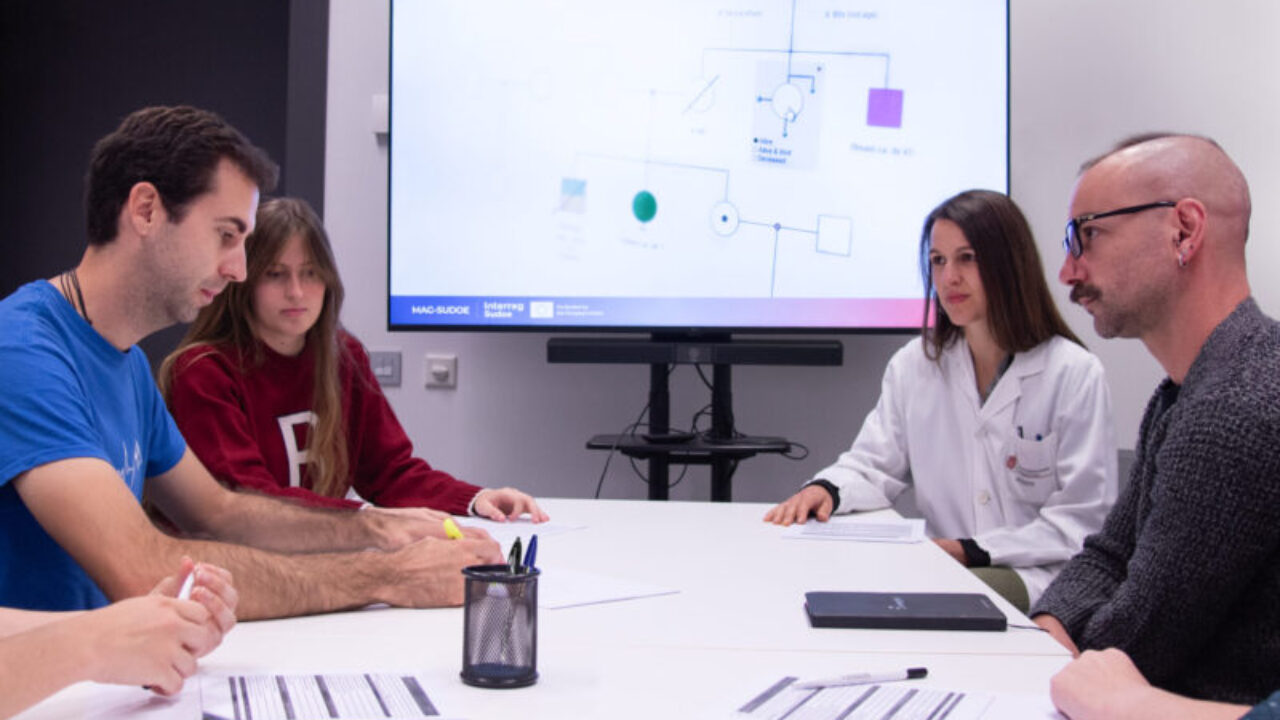
One of the key actions within the European project MAG-SUDOE, was the implementation of a pilot action, recently concluded with Genetics healthcare professionals in Portugal. The main goal was to test the feasibility, acceptability and early impact of a structured mentoring model in genetic counselling.
The pilot study/program took place remotely, with professionals of public hospitals along the country. This approach enabled the participation of professionals from a wide range of genetic services within the National Health System, ensuring broad territorial coverage and made it possible to assess how the model works in contexts with specific territorial challenges, such as limited specialised resources and high clinical workload.
An innovative response to a complex clinical reality
Genetic counselling is becoming increasingly important in personalised medicine. At the same time, it is emotionally demanding work. Professionals face complex diagnoses, sensitive family situations and difficult decisions every day.
MAG-SUDOE addresses this challenge by proposing as a source of resilience the implementation of professional mentoring as a structured tool for reflexive practice, support, continuous learning and well-being. The pilot in Portugal allowed this approach to be tested in real clinical practice.
The pilot experience in Portugal
The pilot was designed to assess whether a mentoring programme could be realistically integrated into a genetics service and bring benefits both to professionals and to patient care. The intervention received ethical approval from the coordinating institution (CECRI-i3S).
Seven professionals took part in the programme, including medical geneticists and genetic counsellors. Over several weeks, participants attended online group supervision sessions.
These sessions created a safe and confidential space where professionals could share real clinical cases, reflect on ethical challenges, improve communication skills and openly discuss the emotional impact of their work. The programme was collaborative, non-hierarchical and based on peer learning.
The process included three phases. Prior to the intervention, individual interviews and baseline assessments were conducted. During the intervention, the programme included one immersion session and four GCS group sessions. Following the intervention, its impact was evaluated combining post-intervention questionnaires, retrospective interviews and a final focus group.Encouraging results focused on people
Preliminary results show high engagement and strong professional commitment, even under demanding clinical conditions. Overall satisfaction with the programme was rated as positive to very positive.
Participants highlighted several key benefits:
• A safe space to share experiences.
• Reduced feelings of professional isolation.
• Greater awareness of emotional workload.
• Improved communication with patients and families.
• Increased confidence when dealing with complex cases.
For many participants, mentoring offered a rare opportunity to pause, reflect and take care of themselves within a busy healthcare environment.
Towards a European mentoring model: the MAG SUDOE joint solution
This pilot is a key step in the development of the MAG-SUDOE model, which will also be implemented in Spain and France. The final goal is to build a common European mentoring model for genetic counselling, grounded in scientific evidence and adaptable to different healthcare systems.
MAG-SUDOE is co-funded by the Interreg Sudoe Programme (ERDF) and promotes an innovative vision of healthcare: improving genetic services not only through technology, but also by supporting those who provide care.
Because better supported professionals lead to better care for patients and families. MAG-SUDOE: caring for those who care.