
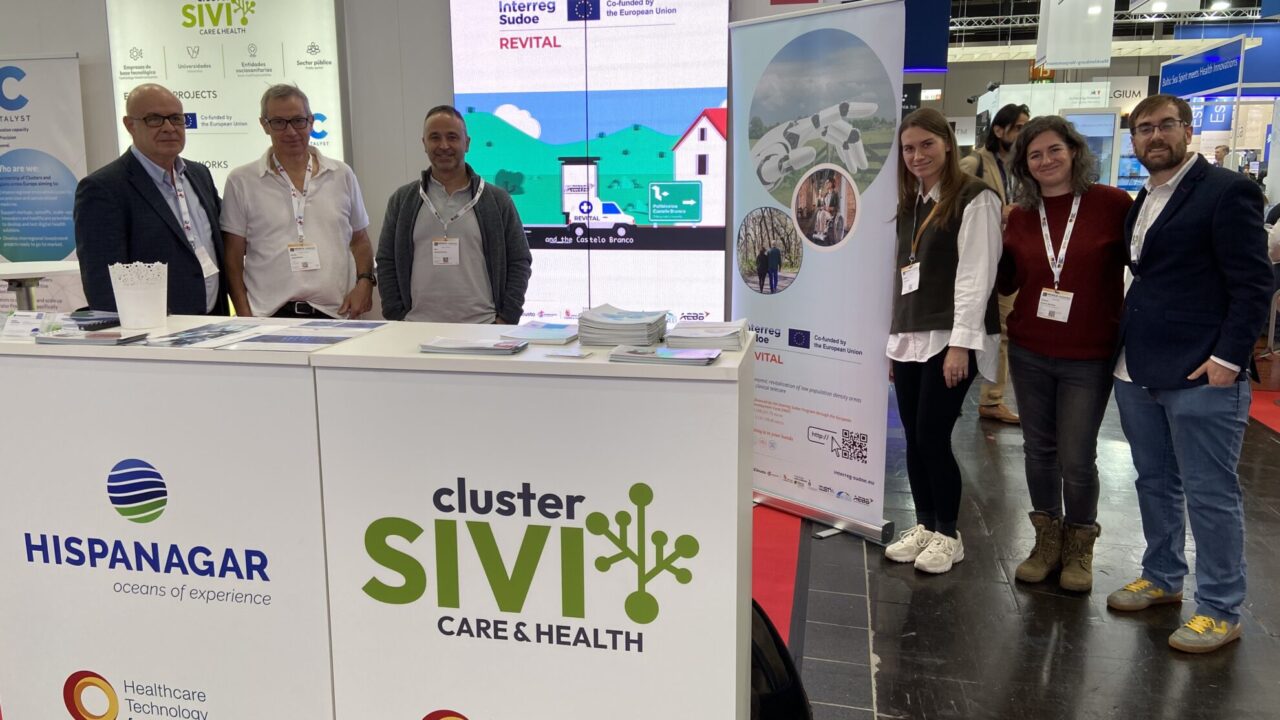
The REVITAL-Interreg Sudoe project had a prominent presence at MEDICA 2025, the world’s most influential medical trade fair, held from November 17-20 in Düsseldorf, Germany. During the event, several members of the project’s European consortium actively participated in the SIVI Cluster’s stand, which was provided as the project coordinator. They showcased the progress and expected impact of this initiative aimed at revitalizing rural areas in Southwest Europe.
A project to transform rural areas in Southwest Europe
REVITAL was created in response to the challenges facing rural territories in Southwest Europe—Castilla y León (Spain), Beira Baixa (Portugal), and the French Basque Country—which suffer from structural problems such as rapid population aging, depopulation, and increasing socioeconomic decline.
The COVID-19 pandemic further highlighted the limitations of rural areas in terms of healthcare services, care for the elderly, and the availability of qualified professionals. In this context, REVITAL proposes a profound transformation through:
- Advanced telecare services
- Physical and neurological telerehabilitation systems
- Innovative technologies that enable high-quality remote care
The goal is to improve the quality of life of elderly and dependent individuals without requiring them to travel to urban areas for specialized care. At the same time, REVITAL seeks to generate skilled employment, attract talent, revitalize the rural economy, and promote sustainable development based on social innovation.
An international consortium committed to social innovation
The project had a prominent space within the SIVI Cluster stand, located in Hall 15, Stand G04-9, in the Spain Pavilion. There, representatives of the consortium had the opportunity to explain to professional visitors, companies, and international organizations how REVITAL is building a new model of social and healthcare for rural areas.
Through MEDICA 2025, the consortium had the opportunity to present the initiative to the public by distributing informational brochures and showing an explanatory animated video, created specifically for the event. This activity helped to bring the project’s objectives and scope closer to professionals, organizations, and institutional representatives. Furthermore, participation in MEDICA facilitated the creation of synergies with other stakeholders in the sector, as well as providing the opportunity to learn firsthand about the latest technological advances and developments related to telehealth, rehabilitation, and innovation.
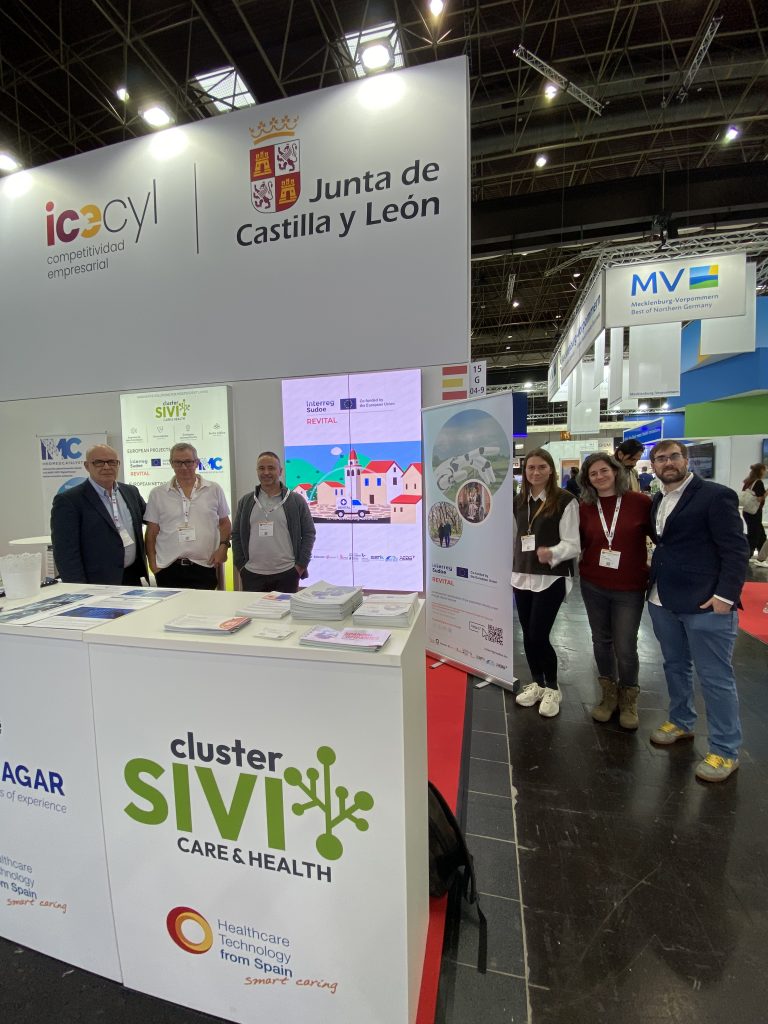
The REVITAL project is coordinated by the SIVI Cluster and involves a multidisciplinary consortium of key entities from the socio-health, technological, academic, and territorial sectors:
- Gerencia de Servicios Sociales de Castilla y León (España)
- Fundación San Cebrián (España)
- GOGOA Mobility Robots (España)
- École Supérieure des Technologies Industrielles Avancées – ESTIA (Francia)
- Universidad de DEUSTO (España)
- Etablissement Public de Santé de GARAZI (Francia)
- Associação Empresarial da Beira Baixa – AEBB (Portugal)
- Instituto Politécnico de Castelo Branco – IPCB (Portugal)
The participation of several of these partners in MEDICA 2025 provided a global overview of the project, facilitated the sharing of experiences across regions, and established connections with other international stakeholders interested in digital health and advanced rehabilitation solutions.
A Step Forward in International Recognition for the Project
REVITAL’s presence at MEDICA 2025 provided a strategic opportunity to showcase the consortium’s commitment to improving healthcare in rural areas and to position the project as a European benchmark for innovation applied to territorial cohesion.
SIVI and the project members emphasize that the interest generated at the trade fair reinforces the importance of investing in solutions that guarantee quality care regardless of where people live, fostering stronger, more connected, and more sustainable rural communities.