
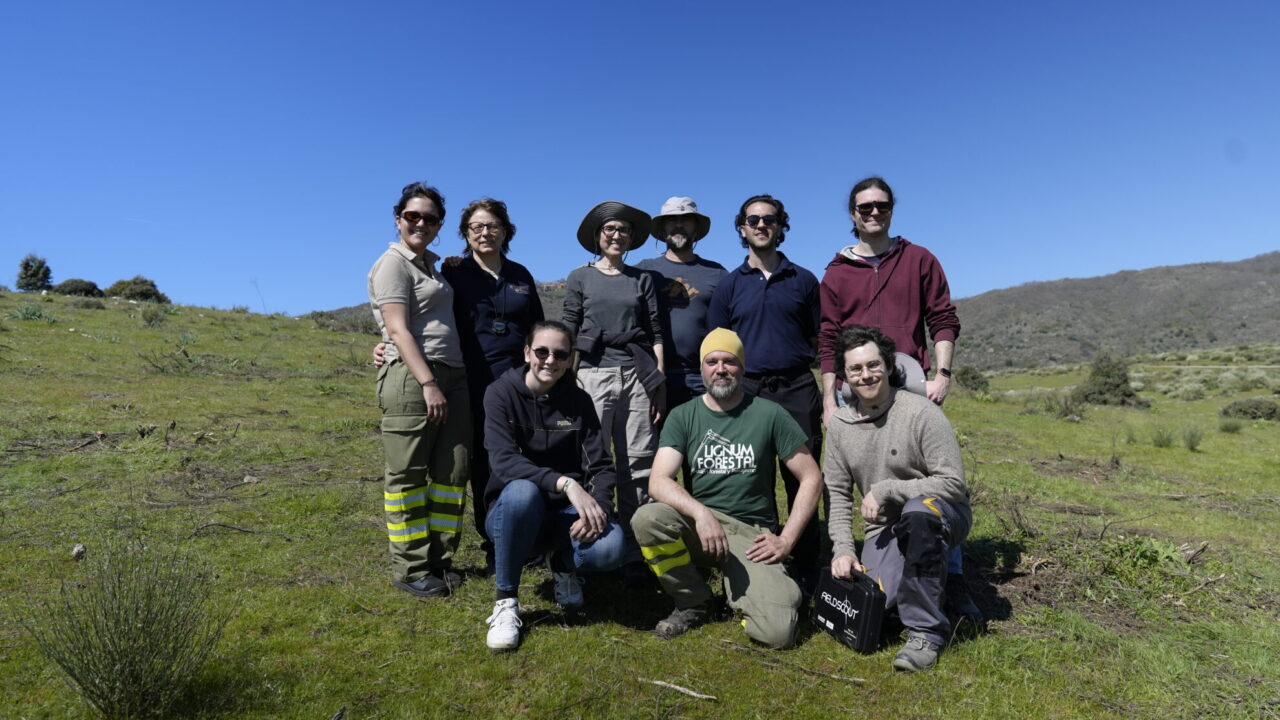
A network of 30 sensor nodes is collecting real-time data during controlled burns of shrubby vegetation carried out on the Santibáñez el Alto common pastureland
On 17 March, a communal pasture in the municipality of Santibáñez el Alto, in the province of Cáceres, was transformed into an open-air laboratory. As part of the European Interreg Sudoe SenForFire project, researchers, technicians and forest fire crews carried out controlled experimental burns with the aim of validating advanced technologies for the early detection of forest fires.
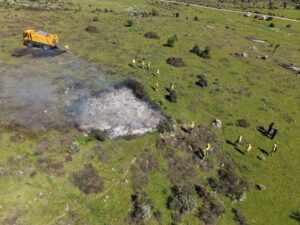 The day’s activities included an experimental controlled burn of piles of Cytisus multiflorus, commonly known as ‘white broom’, a shrub species commonly found in the hills of south-western Spain. Over the course of approximately three hours, nine piles of vegetation were burned sequentially at intervals of between 15 and 20 minutes, creating a controlled and reproducible environment for data collection under real-world conditions. The Forest Fire Reinforcement Brigade (BRIF), the Comprehensive Forest Fire Prevention Team (EPRIF) and the Forest Fire Prevention and Analysis Team (EPAIF), which report to the Ministry for Ecological Transition and Demographic Challenge (MITECO), and the Institute of Forest Sciences (ICIFOR-INIA) of the CSIC.
SenForFire deployed a network of approximately 30 sensor nodes distributed across the pilot area which, during the burn, monitored gases such as CO and NO₂, volatile organic compounds (VOCs) and particulate matter. The data collected enabled the performance of two types of technology to be assessed: the highly sensitive and highly selective microsensors developed by the IMB-CSIC, and the low-cost, low-power prototypes based on commercial sensors, developed by the University of Extremadura.
Soil monitoring to anticipate risk
At the same time, ITEFI-CSIC and the companies Ray Ingeniería Electrónica and Arantec installed dielectric sensors to continuously monitor soil moisture levels. These devices measure temperature, volumetric water content and soil water potential – variables directly linked to vegetation moisture and, therefore, to the risk of fire.
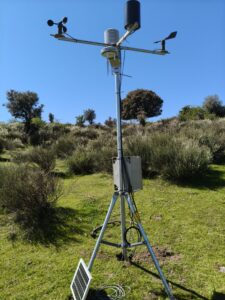
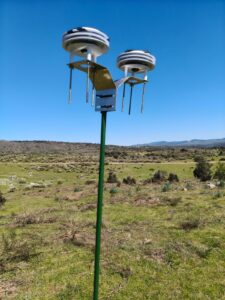
The work carried out in Santibáñez el Alto reflects the dual strategy of the SenForFire project: to detect fires in their early stages and to anticipate their outbreak through continuous monitoring of the forest environment, with the aim of improving fire risk management throughout the Sudoe region.