
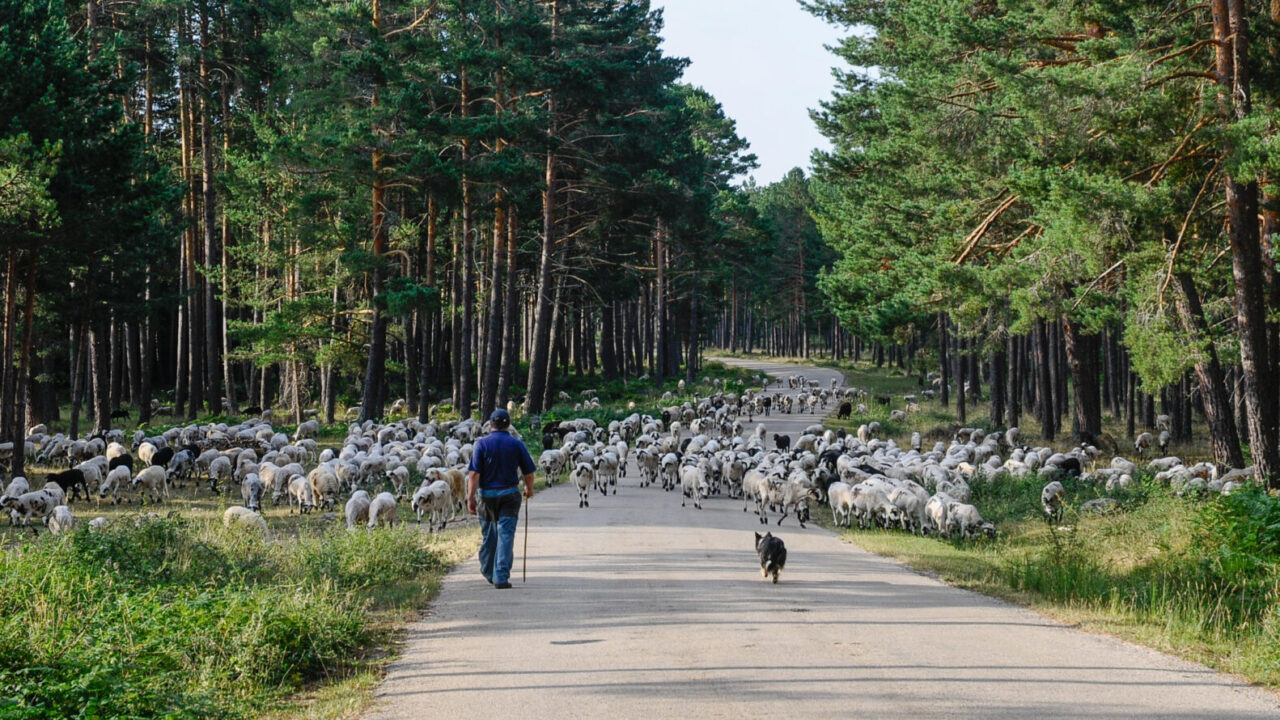
Every 21 March, the International Day of Forests is celebrated worldwide, a date proclaimed by the United Nations to raise awareness about the importance of forest ecosystems for life on the planet. This year, under the theme Forests and economies, the celebration focuses on the fundamental role forests play as drivers of sustainability, prosperity and social wellbeing.
In this context, the SocialForest project, developed thanks to the Interreg Sudoe Programme, joins the commemoration of this special date and highlights the need to promote sustainable forest management that contributes to the balance between environmental protection and social benefit.
The Autonomous Community of the Region of Murcia (CARM) coordinates this project, in which eight other partners from Spain, France and Portugal participate. The Directorate-General for Natural Heritage and Climate Action of the Regional Ministry of Environment, Universities, Research and the Mar Menor, an organisation involved in this transnational initiative, stresses that SocialForest “aims to enhance climate adaptation and promote the resilience of Sudoe forest areas, demonstrating exemplary measures to mitigate the impact of climate risks and rural depopulation”. The coordination also emphasises that the project “contributes to the climate adaptation of forest territories by promoting sustainable forest management aimed at reducing vulnerability to risks, creating employment and helping to curb rural abandonment”.
Transferable solutions to other territories
Forests perform essential functions for life, such as air purification, climate regulation, soil conservation and biodiversity maintenance, while also providing opportunities for rural communities. In line with these values, SocialForest works to strengthen the role of forest ecosystems as drivers of sustainable development in south-western Europe.
In this regard, CARM highlights that SocialForest “establishes integrated forest management, both environmental and socio-economic, as its main line of action in order to adapt forest areas to the effects of climate change, including the entire value chain and ensuring transferability to other territories”. The coordinating body adds that the project “proposes solutions to climate change challenges based on integrated land-use forest management and the application of adaptive silviculture measures”.
Raising public awareness
On the occasion of the International Day of Forests 2026, the project aims to highlight the importance of conserving and responsibly managing forest areas, as well as raising awareness of their contribution to present and future wellbeing. According to the coordinating entity of SocialForest, this transnational initiative seeks to “raise citizens’ awareness of the need for sustainable forest management that improves the adaptation of forests to climate change and increases their resilience”.
In this respect, the focus is placed not only on the capacity to adapt to climate impacts, but also on “boosting the socioeconomic development of rural areas in the Sudoe territory, contributing to a sustainable forest bioeconomy”.
Celebrating this day is also an opportunity to remember that caring for forests is a shared responsibility and a key element in moving towards a more resilient and sustainable future.
The project and its partners
SocialForest is a European cooperation initiative that brings together public administrations, research centres and forestry organisations with the aim of promoting innovative forest management models that integrate environmental sustainability, climate resilience and social participation.
It is composed of nine partners from Spain, Portugal and France: Autonomous Community of the Region of Murcia; Regional Ministry of Environment, Universities, Research and the Mar Menor, Directorate-General for Natural Heritage and Climate Action; Associação para o Estudo e Defesa do Património Natural e Cultural do Concelho de Mértola; Universitat Politècnica de València, Department of Hydraulic Engineering and Environment; INRAE Centre Nouvelle-Aquitaine-Bordeaux, UMR 1391 ISPA; Asociación Forestal de Soria (ASFOSO); Université Toulouse III – Paul Sabatier, Observatoire Midi-Pyrénées, laboratoire Géosciences Environnement Toulouse, UMR 5563; Junta de Comunidades de Castilla-La Mancha, Regional Ministry for Sustainable Development, Directorate-General for Natural Environment and Biodiversity; EDIA – Empresa de Desenvolvimento e Infra-estruturas do Alqueva; and Xylofutur.