
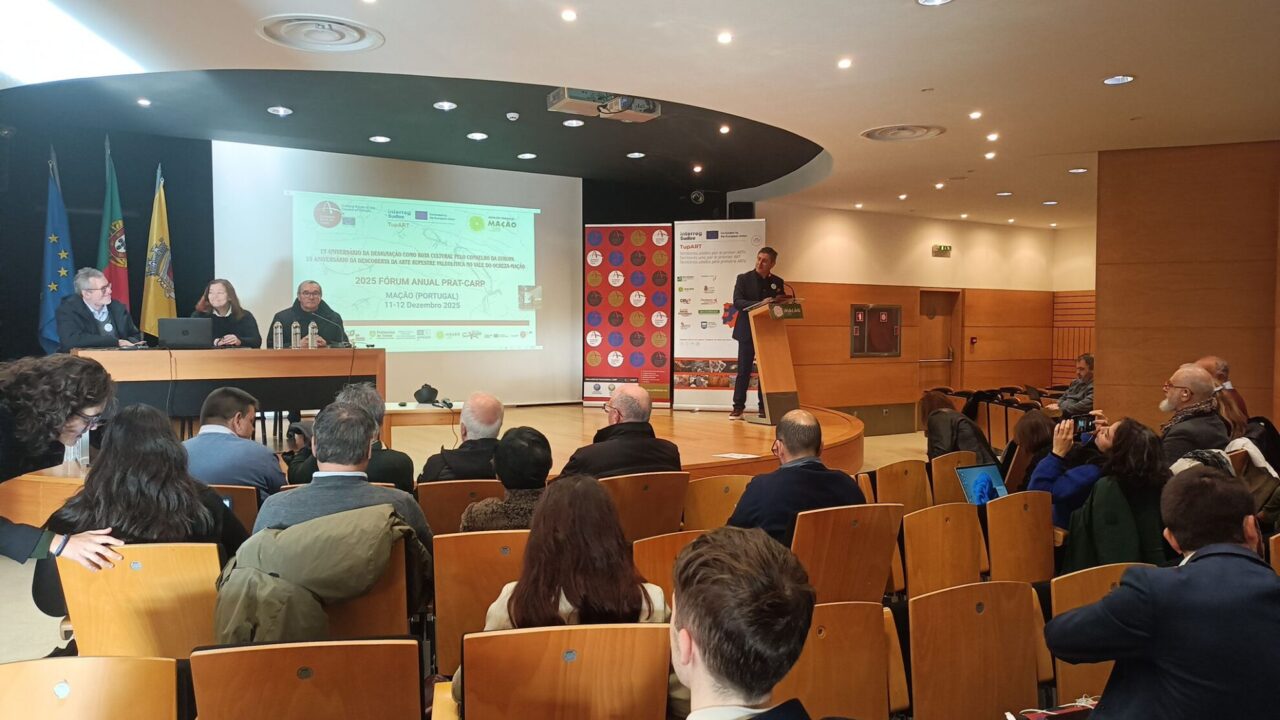
The European project TupART – Territories United by Ancient Art, co-financed by the Interreg Sudoe program, held its Second Workshop on December 11 and 12, 2025, at the Elvino Pereira Auditorium in Mação, Portugal. Entitled “Development of the 2026-2028 Action Plan,” the meeting brought together institutional partners from Spain, France, and Portugal to define future cooperation strategies regarding rock art and rural development.
The European project TupART (Territories United by Rock Art) held another working workshop with the participation of institutional representatives, heritage experts, and the ten partners involved in the initiative. The meeting served to advance the common strategy aimed at promoting cultural tourism, improving the management of rock art sites, and strengthening interregional cooperation.
During the opening, Germinal Peiro, president of the Dordogne Departmental Council, highlighted that the project aims to “unite rock art destinations in an interregional initiative to develop cultural tourism and improve the management of archaeological sites,” noting that the program has a budget of €1.2 million and will run from 2026 to 2028.
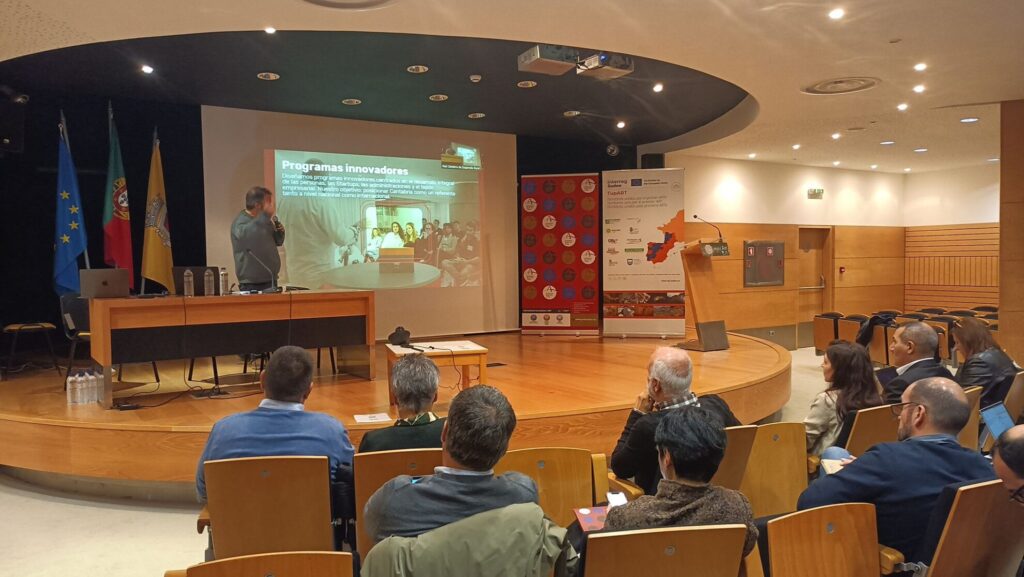
A European product club to boost rural tourism
One of the main focuses of the workshop was the creation of the European Rock Art Product Club, endorsed by the Council of Europe. Expert Alberto Galloso presented a ten-step plan for its implementation, which includes membership criteria for tourism businesses, best practice manuals, and pilot projects aimed at boosting the rural economy.
Training for 250 heritage professionals
The partner UCEIF–CISE presented the progress of the training plan, which will train 150 technicians and 100 cultural SMEs in sustainability, innovation, and digitalization. The program will combine online modules, live sessions, and two in-person symposia, with certification via micro-credentials.
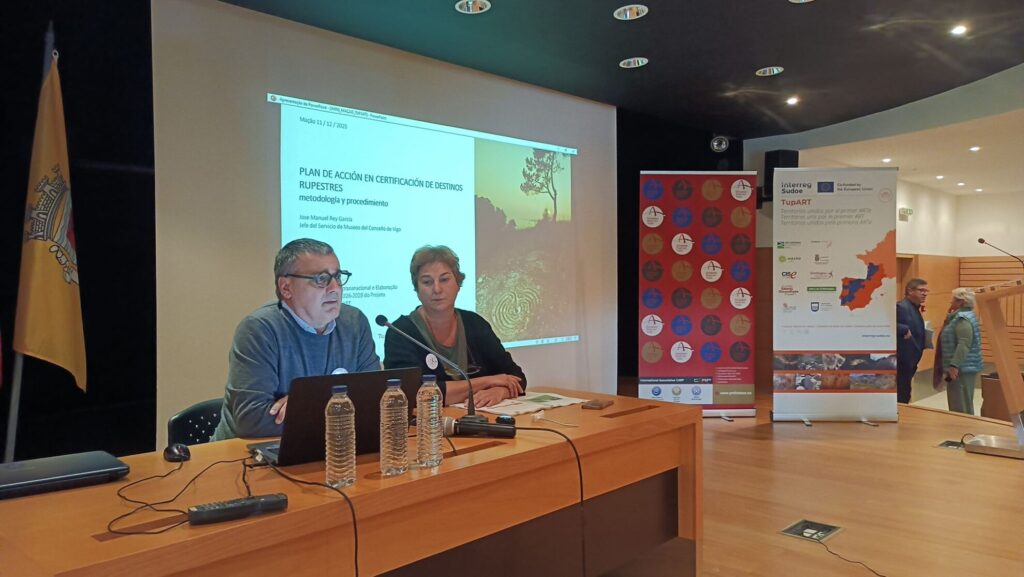
Quality Certification and Risk Management
The Cantabrian Rural Development Network presented its progress in the quality certification of rock art destinations, a system that evaluates 85 best practices. The case of the Altamira Museum was highlighted, achieving a score of 97.65%. In addition, ICOMOS-UNESCO experts Verónica Casanova and Miguel San Nicolás detailed the upcoming Comprehensive Risk Management Plan, which will include emergency protocols, preventative measures, and ongoing review to adapt to the effects of climate change.
Technology to Make the Invisible Visible
The workshop dedicated significant time to new technologies applied to heritage. The following were presented:
- ARTPOINTs, a platform with an app and website to improve accessibility to rock art sites.
- 3D digitization projects and digital twins of caves, developed by GIM Geomatics.
- Augmented reality applications to display elements not accessible to the public, presented by Eritech Cinemedia.