
The Garazi Public Health Institution (EPS Garazi), the entity responsible for piloting the REVITAL project in the Basque Country region of France, has released an exciting and revealing video showcasing the progress of this innovative initiative in its territory. The project aims to transform rehabilitation processes in rural areas through the use of advanced technology and a more personalized, human, and connected approach.
The REVITAL project has an international consortium made up of entities from Spain, France, and Portugal: the Innovative Solutions for Independent Living Cluster (SIVI), the Social Services Management of Castile and León, the San Cebrián Foundation, GOGOA Mobility Robots, the École Supérieure des Technologies Industrielles Avancées (ESTIA), the University of Deusto, the Garazi Public Health Establishment (EPS Garazi), the Beira Baixa Business Association (AEBB), and the Polytechnic Institute of Castelo Branco (IPCB), which together form the complete consortium.
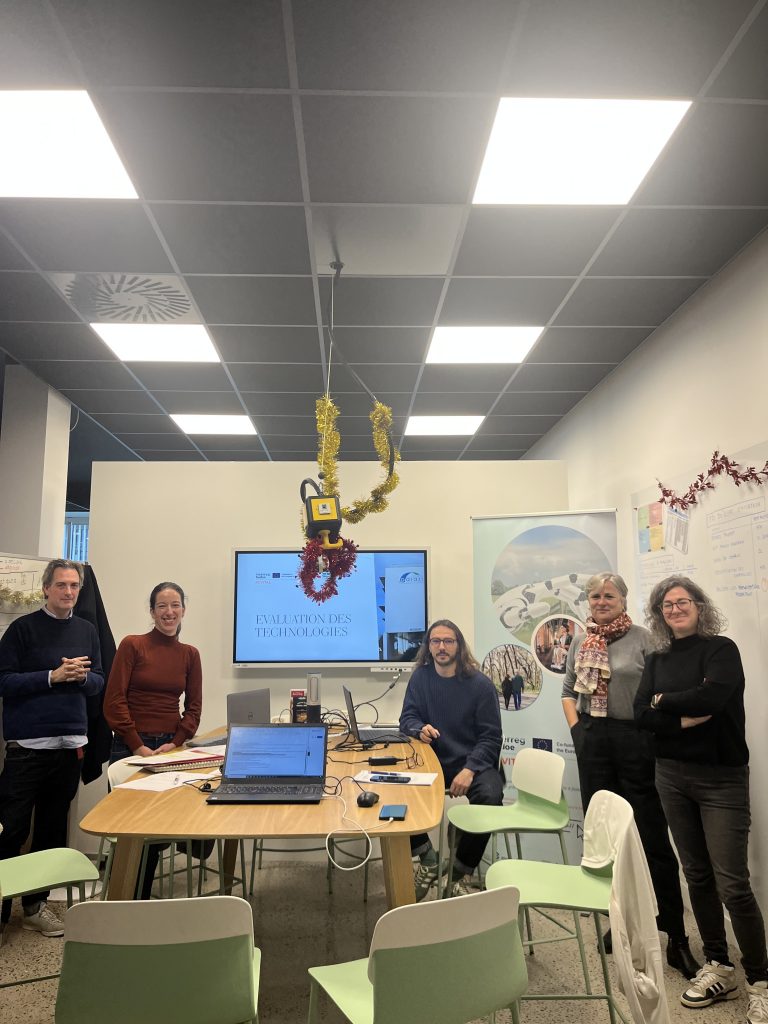
The REVITAL project is developing one of its pilot cases in the Garazi region of the French Basque Country, through the involvement of EPS Garazi (a local healthcare provider), with technological support from the ESTIA engineering school. In this context, a meeting was held on December 10, 2025, between representatives of both entities at ESTIA’s headquarters in Bidart, to analyze the evaluation of the technological tools used in the French pilot. This meeting provided an opportunity to review the project’s progress, share experiences of use in real clinical settings, and assess the impact of the technological solutions on the rehabilitation processes implemented in the region.
The pilot in EPS Garazi involves a multidisciplinary team
As of December 31, 2025, the pilot developed by EPS Garazi had involved 52 participants (13 men and 39 women), ranging in age from 44 to 94 years, with an average age of 77. A total of 357 rehabilitation sessions have been conducted, 300 of which were individual and 57 group sessions. The pilot program involved a multidisciplinary team of physiotherapists, occupational therapists, psychomotor therapists, speech therapists, activity coordinators, geriatric care assistants in nursing homes, and psychologists, working under a coordination model between EPS Garazi—both at its hospital and in nursing homes—and independent professionals in the region. This regional collaboration has allowed for the integration of technological innovation into daily clinical practice, fostering a more holistic approach to rehabilitation.
Among the tools used in the pilot program are digital solutions and advanced devices such as MediMoov, Cérébro, Fonctionsexecutives.com, VitalStim Plus, and several exoskeletons—Hank, Belk, and Helk—thanks to the support of Gogoa Mobility Robots within the consortium. According to Paloma Álvarez, physiotherapist and project coordinator at EPS Garazi: “The Revital project is an opportunity to discover new, modern, and technological devices that are not usually available. What these technological devices bring to traditional rehabilitation is that they enrich it, because they allow for even more variation in the proposed exercises.” This perception is also shared by the participants; one of the project’s patients noted that “it’s true that this playful aspect adds something extra to the sessions, and I have the impression that this is what has been developed the most. It’s a boost of motivation in relation to the exercises.”
Revital Project
The Revital project aims to improve the quality of life of older adults and people with disabilities while simultaneously generating skilled employment in the health, technology, and community care sectors in rural areas.
REVITAL aims to combat depopulation, improve access to specialized medical care, and promote new models of telemedicine and telerehabilitation in sparsely populated regions of southwestern Europe (Spain, Portugal, and France). To achieve this, it integrates technologies such as medical exoskeletons (HANK, BELK, HELK), virtual reality systems, and biomechanical analysis, as well as telehealth solutions and digital rehabilitation platforms.
The REVITAL project—”Socioeconomic revitalization of sparsely populated areas through clinical telehealth”—is part of the Interreg VI-B Sudoe 2021-2027 Program.