
Forests in south-western Europe are facing an increasingly complex scenario: rising droughts and heatwaves, more extreme and frequent wildfires, declining tree vitality and soil degradation. This context affects not only forest ecosystems, but also wildfire safety, water availability, biodiversity, landscapes and the rural economy.
To address this challenge, the European project SocialForest is developing a Transnational Forest Strategy that provides a common framework for Spain, Portugal and south-western France. Its objective is clear: to support more coherent, well-founded and comparable forest management decisions, moving from broad strategic guidelines to concrete, on-the-ground measures.
The strategy does not replace national forest policies, but rather adapts and harmonises them at an operational scale, facilitating practical implementation and the exchange of knowledge between regions. It is aimed at public authorities, forest managers, technical staff, landowners and local entities, while also enhancing transparency for society by explaining why certain actions are prioritised.
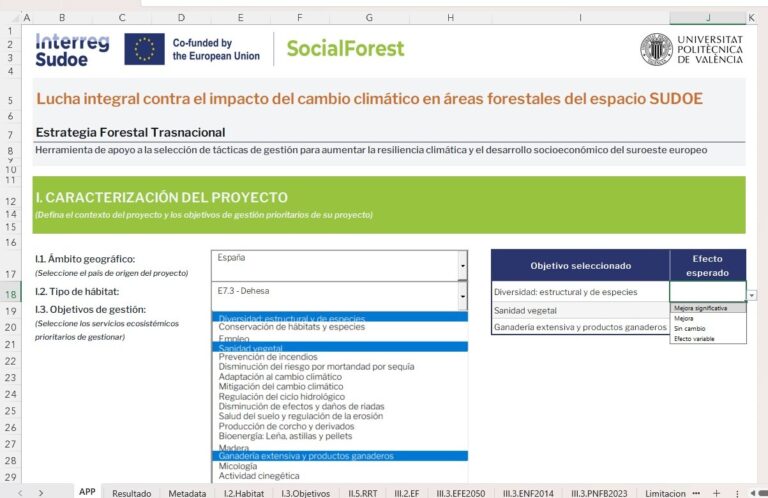
SocialForest has been built through a shared methodological process based on four steps. First, representative forest types within the SUDOE area were selected and management objectives were defined in terms of ecosystem services, such as soil protection, water regulation and wildfire risk reduction.
The definition of priorities combined biophysical information with a broad participatory process, including interviews and national workshops with experts and local stakeholders. This approach made it possible to integrate ecological criteria with the technical feasibility and social legitimacy of the proposed measures.
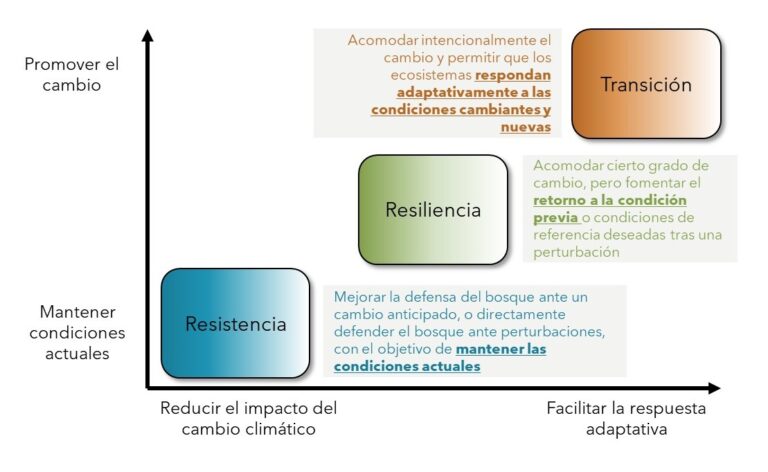
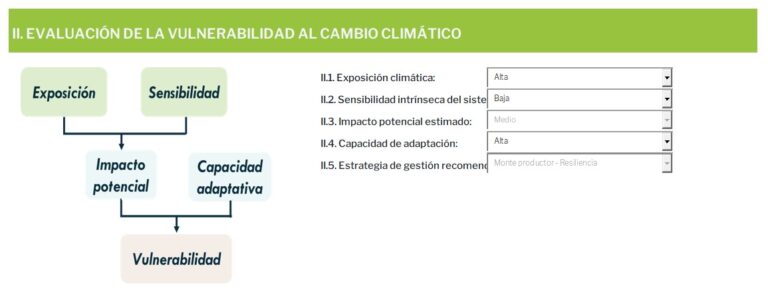
The second step involved analysing the vulnerability of forest systems to climate change, considering their exposure to risks, sensitivity and adaptive capacity. Based on this diagnosis, the strategy proposes three main adaptation pathways: resistance, to maintain the current system where it remains viable; resilience, to strengthen recovery capacity; and transition, where deeper changes towards climate-compatible models are required.
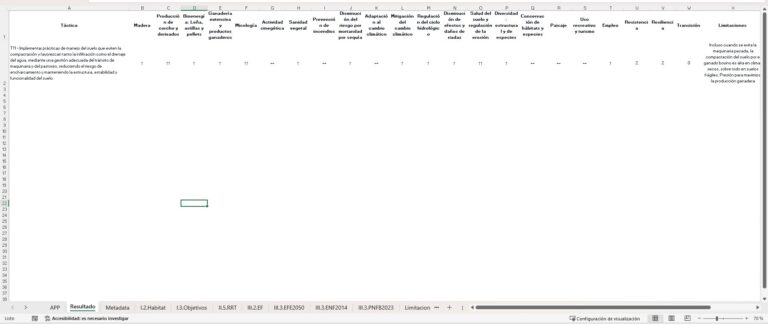
On this basis, SocialForest is developing a harmonised catalogue of forest management tactics, comparable across countries and aligned with existing national strategies. Each measure is linked to its objectives, its contribution to climate adaptation and its main practical limitations, allowing synergies and trade-offs between different forest uses to be assessed.
As a key tool, the project has created an Excel-based application that translates this methodological framework into a practical decision-support system. The application allows users to select the forest type, prioritise objectives, define the vulnerability profile and obtain a reasoned set of appropriate measures for each situation, reducing time requirements and increasing coherence and transparency in decision-making.
Overall, SocialForest provides a clear pathway from strategy to action, enabling more consistent, comparable and defensible decisions in a context of growing climatic uncertainty. It represents a step forward in managing south-western European forests using shared criteria while remaining adapted to the realities of each territory.