Forest management: a key factor in strengthening the resilience of Mediterranean forests to drought
Mediterranean forests play a fundamental role in climate and water regulation, biodiversity conservation and carbon sequestration. However, the increase in extreme droughts driven by climate change is jeopardising their stability and their ability to continue providing these essential ecosystem services.
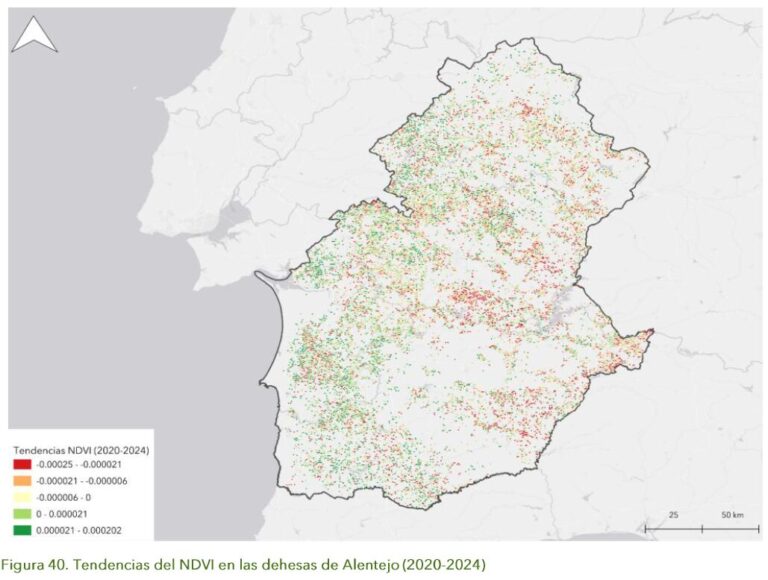
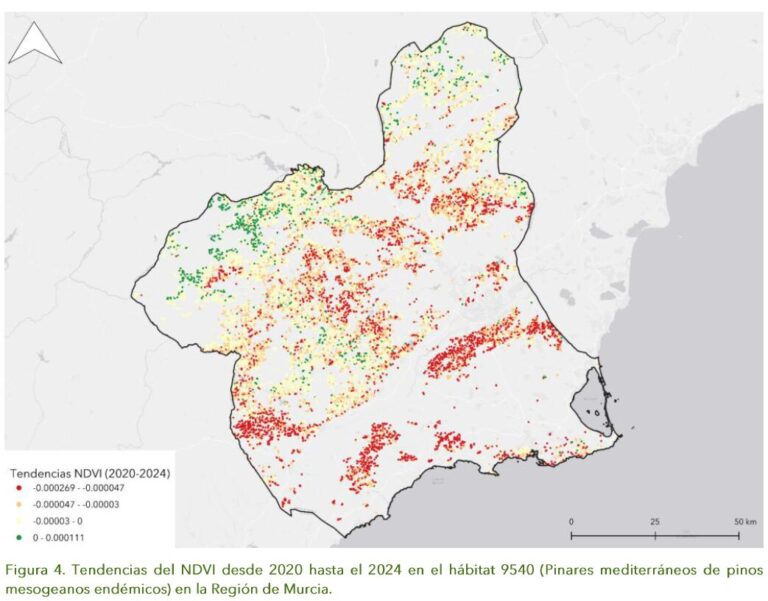
Deliverable 1.1.1 of the project analyses how resilience to drought has evolved in representative forest stands across the SUDOE area: Mediterranean pine forests in the Region of Murcia and Aquitaine, dehesa systems in Castilla-La Mancha and Alentejo, and endemic juniper forests in the province of Soria. To this end, the study uses time series of the NDVI vegetation index and assesses environmental factors such as altitude, aspect, slope and forest management type.
The results reveal contrasting behaviours and a common outcome: managed plots show a greater recovery capacity one year after a drought compared to unmanaged plots. This finding reinforces the need to implement adaptive forest management strategies to enhance the resilience of Mediterranean forests in the face of increasingly frequent and intense droughts.
Visitas: 72