The forests of southwestern Europe are dealing with increasingly intense wildfires, prolonged droughts, and the progressive abandonment of rural areas, leaving thousands of hectares unmanaged. In response, SocialForest has emerged—a transnational project that seeks to provide a practical and coordinated solution through a common Forest Strategy and several Action Plans adapted to different types of forest stands: Aleppo pine, maritime pine, holm oak dehesas and juniper woodlands.
The goal is to maintain the ability of these ecosystems to generate water, timber, cork and employment, even under adverse climatic conditions. After its first year of work, the project has already achieved three key advances:
- Local-scale climate diagnostics
The SocialForest team has produced an accurate assessment of forest health in five pilot regions: Murcia, Castilla-La Mancha, Soria, Alentejo and Nouvelle-Aquitaine. The analysis identified the areas most affected by droughts and pests and showed that well-managed forests withstand water scarcity better than abandoned ones.
- An active and connected forest community
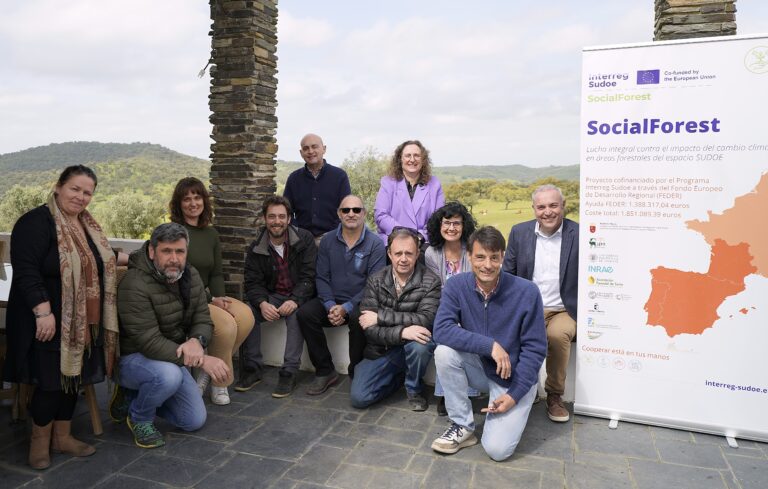
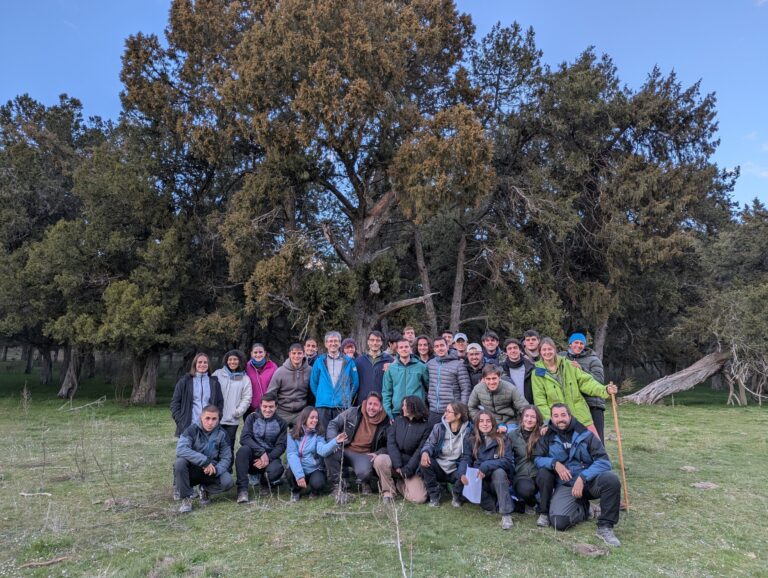
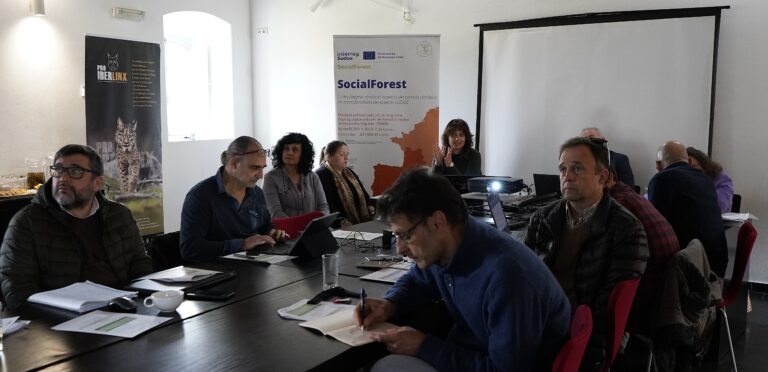
More than 90 people from Spain, France and Portugal have taken part in workshops and surveys (forest owners, municipal representatives, technicians, livestock farmers, biomass companies and research centres). Thanks to this exchange of knowledge and experience, a shared roadmap has been defined to guide each step and ensure that the strategy responds to the real needs of the territory.
- Knowledge that is shared and multiplied
The project has made shared knowledge one of its hallmarks. In various scientific forums and technical conferences, the SocialForest team has presented its methods and results to a diverse audience of technicians, managers and policymakers.
Among the notable events of the past year:
• At the 5th Meeting of the Forest Hydrology Working Group of the Spanish Society of Forest Sciences (16–18 October 2024), we presented a methodology to identify forests affected by decline and mortality processes.
These actions are helping good practices spread beyond the pilot sites, creating networks of knowledge and cooperation among regions that face similar challenges.
Over the coming months, the measures designed will be applied in the field. This real-world testing will help refine and improve the Transnational Forest Strategy, which will be published at the end of 2025.
Visitas: 69