
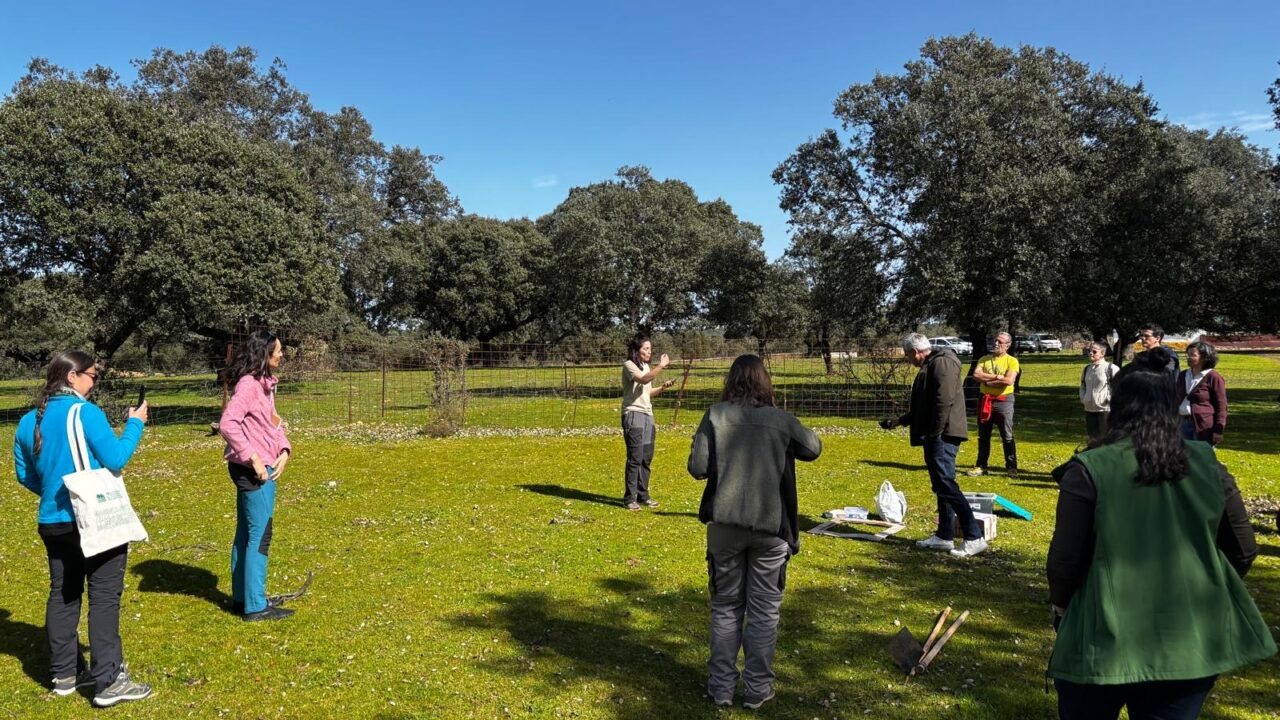
The partners of the PASTONATUR project met on 24 February at an extensive grazing farm in the Spanish region of Extremadura. This territory is distinguished by its rich natural heritage, where protected areas converge with montado and agro-silvo-pastoral production systems, such as the Monfragüe National Park, which is renowned for its diversity of wildlife and fits in with the theme of the meeting.
With the aim of developing a transnational methodology for monitoring the impact of livestock farming on biodiversity, a specialist team from the Global Nature Foundation conducted technical training geared towards the future implementation of this methodology in the territories covered by this Interreg Sudoe project.
The purpose of the training was to find a consensual and rigorous approach to collecting the various biodiversity indicators, ensuring the comparability of results between the different territories. Subsequently, the proposed methodology will be validated by experts appointed to represent each of the three countries involved in the project (Spain, France and Portugal).
The session took place in two distinct parts, including a theoretical component in the morning, followed by a practical component in the afternoon, which invited participants to directly apply the concepts learned in the field.
This meeting marked a fundamental step in the operationalisation of the PASTONATUR biodiversity monitoring methodology, at a key moment prior to the spring period, which is essential for carrying out ecological assessments in the project’s pilot areas.
The biodiversity assessment methodology is one of four methodologies that will be applied at the farm level in the project’s pilot areas.