
Climate change is altering crop development cycles, leading to warmer winters that favor early flowering. This situation increases plant vulnerability to spring frosts, which occur at critical growth stages and can cause losses of up to 100% in productions such as orchards or vineyards.
In the SUDOE area, many agricultural systems lack effective solutions to address this risk. Existing techniques are often costly, energy-intensive, or dependent on water use. In this context, the Interreg An‑Gel SUDOE project promotes the testing of innovative, sustainable, and transferable solutions, as well as the development of early warning systems to enhance the resilience of the agricultural sector.
The main objective of the pilot is to analyze how soil moisture and ground cover management influence the intensity of spring frosts. To this end, an experimental setup has been designed based on the comparison of two soil management approaches:
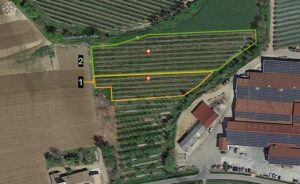
The trial includes a monitoring system with weather stations and soil probes that record variables such as temperature, humidity, wind, and radiation, as well as soil temperature and moisture up to 60 cm depth. This system is installed under homogeneous conditions to ensure data comparability and to reliably assess the influence of the factors studied.
The actions carried out within the pilot focus on testing soil management strategies as passive solutions against frost, avoiding the use of resource-intensive techniques. In addition, continuous monitoring of climatic and soil conditions is performed, along with the analysis of the collected data.
The expected impact is the identification of effective, sustainable, and low-cost agronomic practices to reduce damage caused by spring frosts. These solutions can be transferred to other farmers and territories, contributing to strengthening the resilience of the agricultural sector to climate change. Furthermore, the results of the pilot will serve as a basis for technical recommendations and to support decision-making at both farm and policy levels.