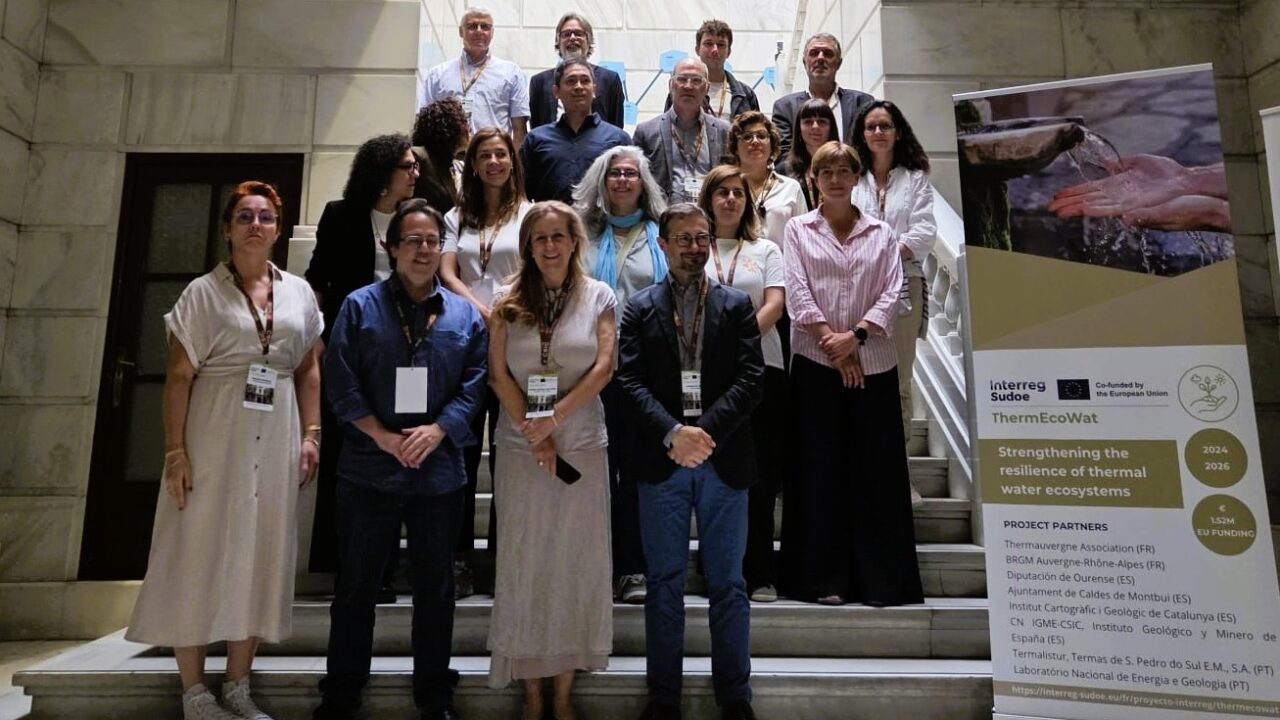
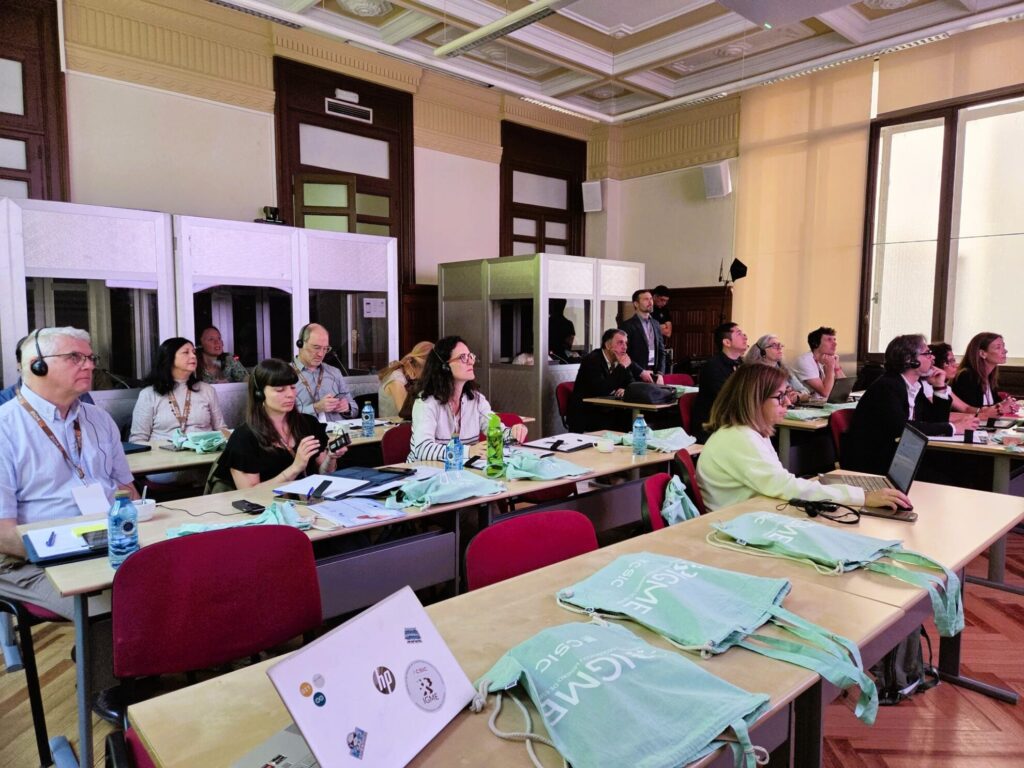
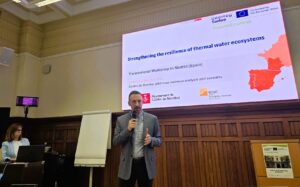
From 19 to 21 May 2026, ThermEcoWat partners gathered in Madrid (Spain), hosted by CN IGME-CSIC, for the project’s 4th and final Transnational Workshop before the closing phase of the project.
Over three days of exchanges, technical sessions and collective discussions, the workshop brought together scientific partners, local authorities and thermal territory stakeholders around a shared objective: strengthening the resilience of thermal water ecosystems and supporting thermal territories in adapting to climate change.
Three pilot sites, three adaptation pathways
Each of the three pilot territories presented the progress achieved over the last months through the ThermEcoWat methodology:
- São Pedro do Sul (Portugal)
- Caldes de Montbui (Spain)
- Chaudes-Aigues (France)
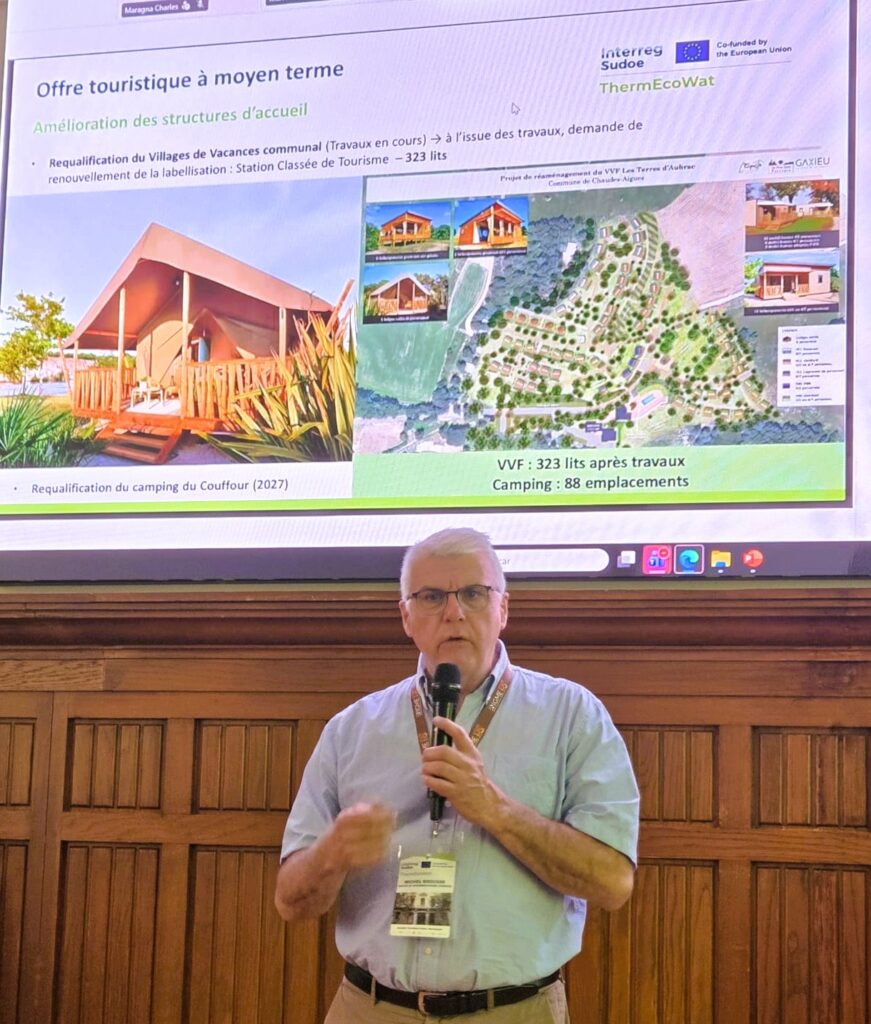
The workshop represented an important project milestone, as all three pilot sites delivered a first consolidated presentation of their Action and Adaptation Plans, currently being refined and developed.
These plans are the result of a multidisciplinary process combining:
• territorial diagnosis,
• climate change projections,
• hydrogeological and environmental analyses,
• socio-economic considerations,
• regulatory assessment,
• evaluation of alternative solutions,
• and prioritisation of adaptation measures.
A central element of this process is the ThermEcoWat Knowledge Graph (TEW KG), developed to structure and connect heterogeneous territorial data and support decision-making through an integrated approach.
From diagnosis to action
The Madrid workshop enabled partners to demonstrate how scientific knowledge can support concrete territorial strategies.
For each pilot case, discussions focused on:
• resource analysis and future scenarios,
• use of TEW KG data for solution assessment,
• feasibility and prioritisation criteria,
• and preparation of operational action plans.
The adaptation plans currently under development aim not only to protect thermal resources but also to strengthen territorial resilience through improved governance, energy transition, sustainable resource management and economic diversification.
Advancing the ThermEcoWat Livre Blanc
Madrid was also an important step forward in the preparation of one of the project’s final outputs: the ThermEcoWat Livre Blanc.
Designed as a methodological guide for thermal territories, the Livre Blanc will capitalise on the lessons learned throughout the project and provide a transferable framework to support decision-makers in building climate adaptation strategies.
Rather than presenting only project results, the Livre Blanc aims to connect scientific knowledge, governance mechanisms, territorial realities and decision-making processes into a practical methodology that can inspire thermal territories across Europe.
Looking ahead to Brussels
This workshop concludes the transnational workshop cycle of ThermEcoWat and opens the final phase of the project.
The next major milestone will be the final ThermEcoWat event in Brussels, where the project’s consolidated results and final deliverables will be presented.
The consortium would like to warmly thank CN IGME-CSIC for hosting and organising this workshop, and all project partners for their continued commitment and collaboration.
Together, we are building more resilient thermal territories for the future.
Press articles on the pilot sites:
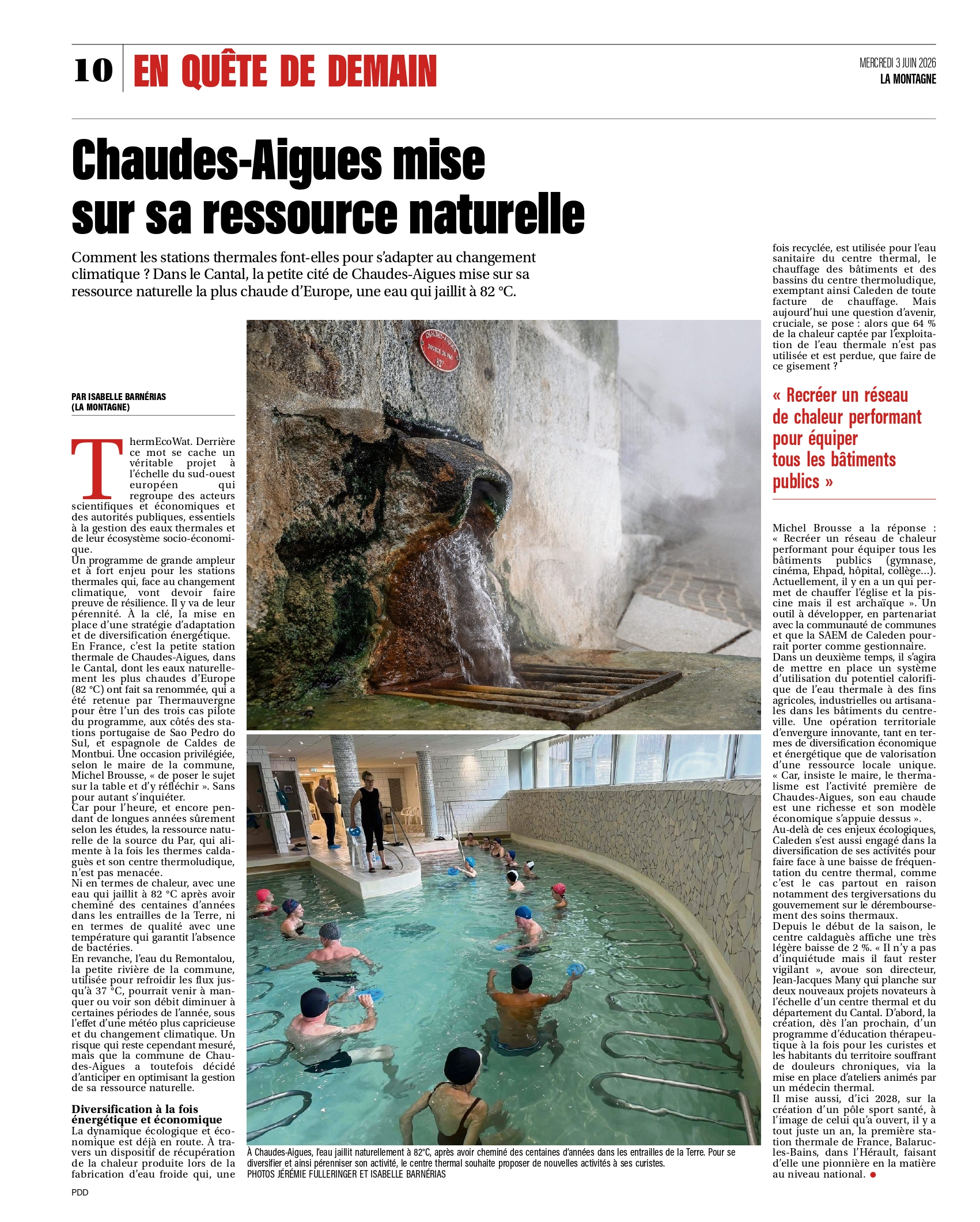
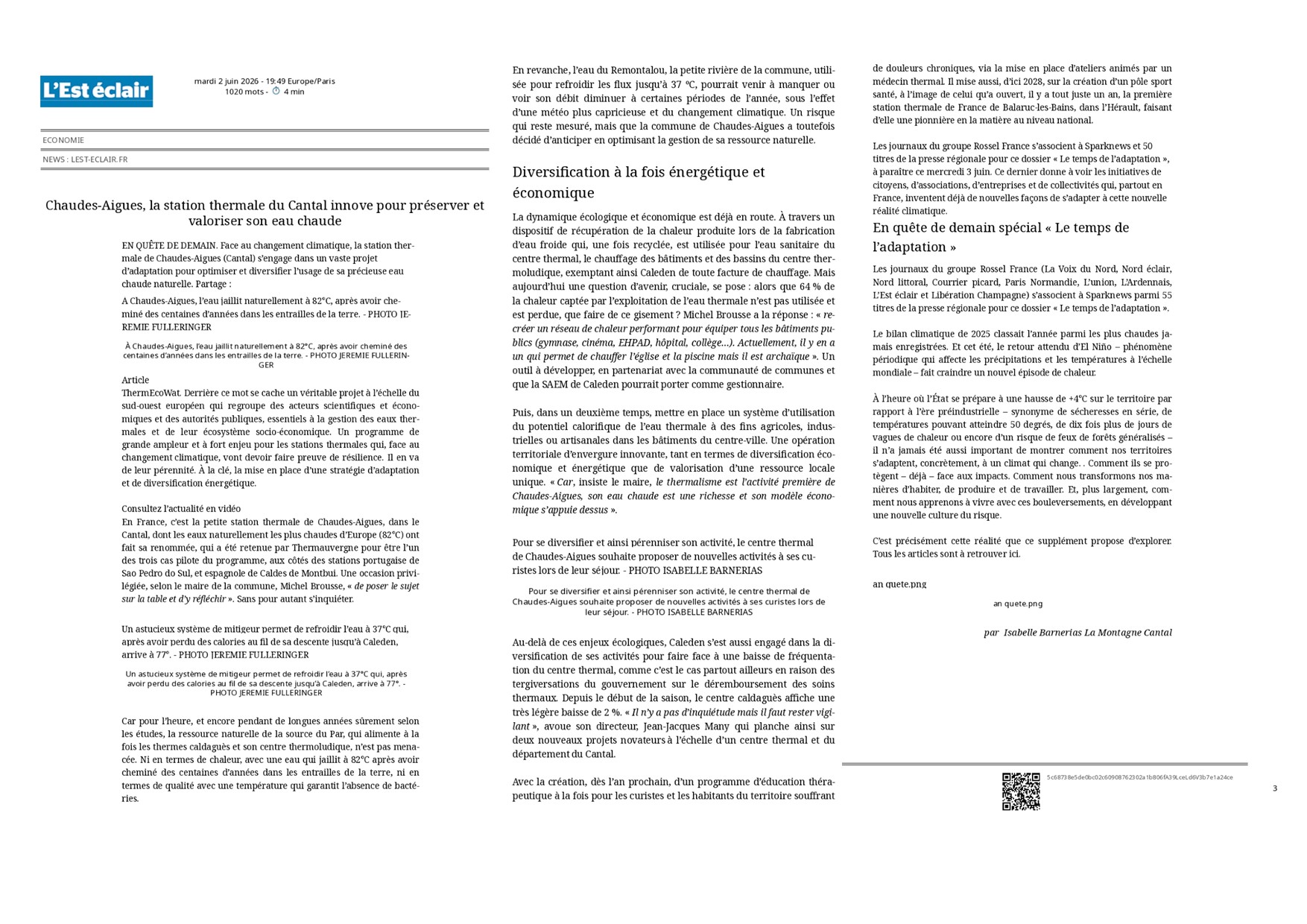
Chaudes-Aigues commits to its natural resources