
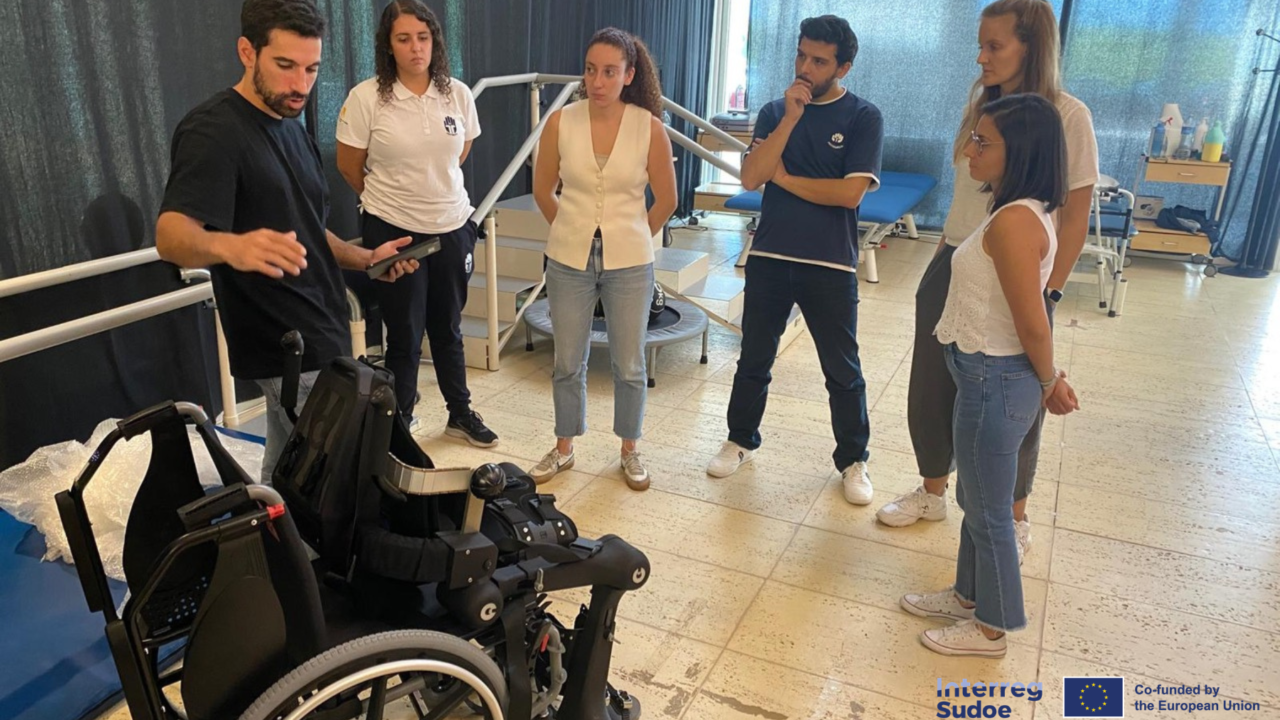
The project evaluation reveals high levels of satisfaction, usefulness, and engagement with the telerehabilitation tools, which have already become the subject of study at the Deusto International Research School – DIRS (Deusto Doctoral School)
The REVITAL project, focused on the socioeconomic revitalization of sparsely populated areas through clinical telecare, has revealed positive results regarding the effectiveness and acceptance of the technologies in the rural areas used in its pilot programs. The evaluation carried out in Spain, France, and Portugal confirms remarkable success in the acceptance, usefulness, and ease of use of the technological tools, both among the 92 users served and among the professionals who use them in their daily work.
These results are part of Activity 3.1 of the project, “Evaluation of the technological tools used in the pilot cases,” led by the University of Deusto. This activity has been fundamental for scientifically validating the telerehabilitation model developed by REVITAL and analyzing the real-world experience of participants in the consortium’s three territories.
To this end, the USE questionnaire was designed and implemented, focusing on three key dimensions: usefulness, satisfaction, and ease of use. The tool was linguistically adapted to Spanish, French, and Portuguese, allowing for the precise collection and analysis of the experiences of both users and participating professionals.
The results obtained reflect a particularly positive assessment of the technologies used in the project in rural areas. In the pilot centers in Spain, France, and Portugal, users gave high scores to aspects such as the usefulness of the tools for their rehabilitation processes and their overall satisfaction with the experience.
Some solutions, such as the MediMoov gamification platform, have also stood out for their ability to make rehabilitation sessions more engaging and enjoyable for patients, thus promoting greater involvement and adherence to treatments.
Over 97% Engagement During Sessions
One of the most significant results was obtained in the pilot study conducted in France. The MediMoov evaluation was complemented by eye-tracking studies, which allowed for the analysis of users’ attention levels during the sessions.
The data revealed over 97% engagement, with virtually total focus on the objectives set in the exercises. This result highlights the potential of gamification as a tool to support cognitive and motor rehabilitation.
The professionals’ assessment has also been positive. According to the evaluation results, the devices used have a rapid learning curve, facilitating their integration into professional practice. Participants also emphasized the ease of remembering how to use them and the potential of these solutions to improve productivity and clinical effectiveness, especially in rural areas where access to certain specialized services can be more complex.
Technologies in Rural Areas
The evaluation included advanced technologies such as Gogoa’s HANK and BELK exoskeletons, gamification platforms like MediMoov, and digital rehabilitation systems like Rehametrics. Furthermore, tools like Fonctionsexecutives.com have allowed care to extend beyond face-to-face sessions, enabling therapists to assign and monitor exercises performed by patients in their own homes.
Overall, the project has provided treatment to 92 users with these technologies and has delivered a total of 888 rehabilitation sessions across the three territories participating in REVITAL.
The results reinforce the viability of the telerehabilitation model in sparsely populated areas and demonstrate that incorporating advanced technologies can help reduce inequalities in access to specialized services. The key, according to the evaluation’s conclusions, lies not only in the technical functionality of the solutions but also in their ability to adapt to the needs and expectations of the people who use them.
REVITAL, a case study at the Deusto International Research School.

The interest and relevance of the results obtained have also led the REVITAL project to transcend its research dimension. The initiative has become a practical learning tool within the Deusto International Research School – DIRS (Deusto Doctoral School).
Specifically, REVITAL has been integrated as one of the main case studies of the doctoral program in Engineering for the Information Society and Sustainable Development, within the course “Evaluation of technological solutions with users”.
This collaboration allows doctoral students to critically analyze how the real impact of technologies is evaluated in complex, real-world environments, using as a reference the work developed in rural areas of Spain, France, and Portugal.
This aforementioned Activity 3.1 of REVITAL, led by the University of Deusto itself, has been used as a basis for delving deeper into user-centered evaluation methodologies. The project was presented as the first case study of the course, working with questionnaires directed at users and analyzing the application of the USE model.
Importance of transferring the project results to the academic sphere
The students have been able to study real data from the pilot studies and compare, among other aspects, the perceptions of end users and healthcare professionals. They have also analyzed the acceptance and usability of technologies such as the HANK and BELK exoskeletons, MediMoov, and Rehametrics, as well as the overall reach achieved by the project.

The inclusion of REVITAL in this doctoral program also represents recognition of the value of applied research and the importance of transferring the results of European projects to the academic sphere.
The conclusions drawn during this training activity coincide with one of the project’s main lessons: a technology can only be considered truly effective when, in addition to functioning correctly, it responds to people’s real needs and is properly integrated into the entire care value chain.
The overwhelmingly positive perception of users, especially regarding the greater control these tools can provide over their own health and quality of life, thus reinforces the potential of telerehabilitation as a sustainable alternative to address the challenges associated with demographic aging and geographical dispersion.
REVITAL continues to demonstrate, therefore, that technological innovation can become an effective tool for bringing specialized services to rural areas and helping people access quality care regardless of where they live.