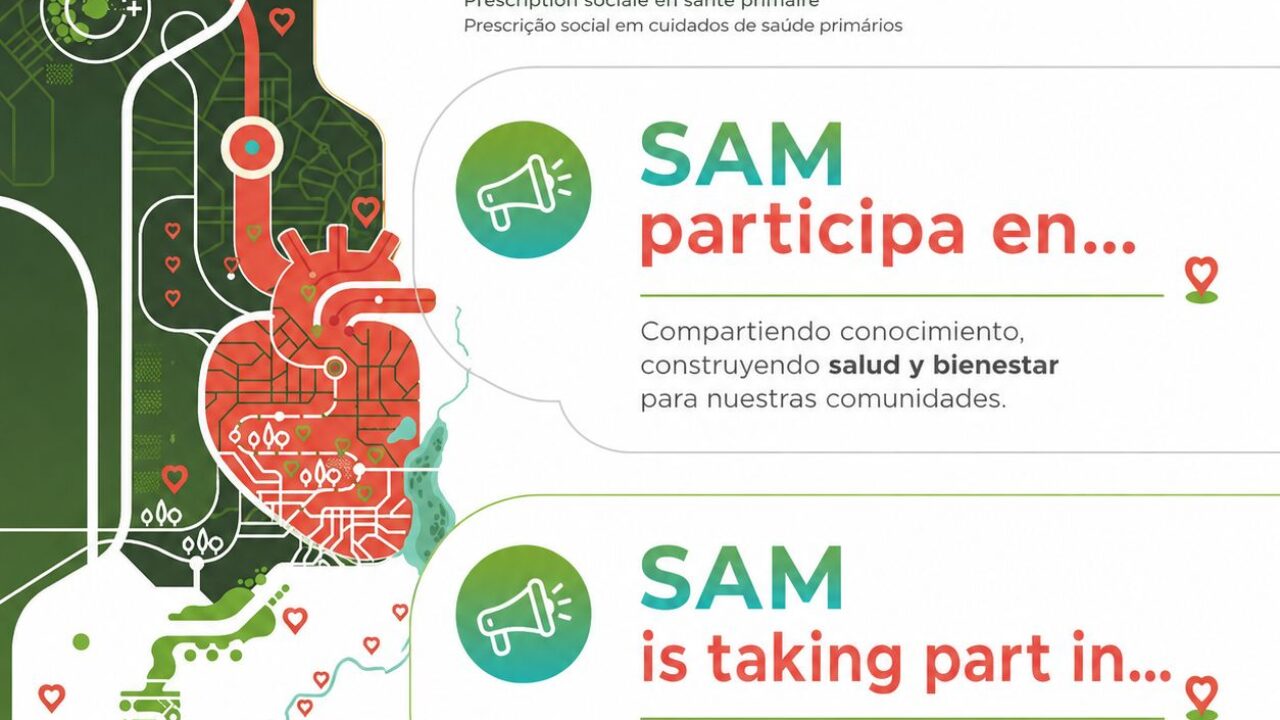
The Interreg Sudoe SAM project took part in events held in San Sebastián, Madrid, Paris and Santiago de Compostela during September and October, sharing its approach to connecting healthcare with local resources.
Health depends on more than medical care. The environment we live in, opportunities for physical activity and access to community spaces and local resources also influence our well-being. With this in mind, the European Interreg Sudoe SAM project is developing an intelligent digital twin designed to help integrate these resources into healthcare practice through social prescribing.
Throughout September and October 2026, the project has presented its progress at four conferences focusing on digital health, geotechnologies and primary care.
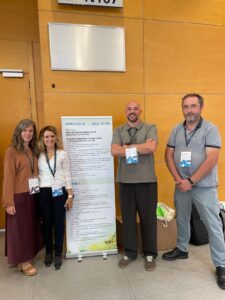
The series of events began from 9 to 11 September in San Sebastián, at the 13th International Digital Health Congress. Federico Talledo, from the Cantabrian Health Service and IDIVAL, and Jon Arambarri, from ESTIA, presented work on the use of a geospatial web service to personalise social prescribing. Their presentation explored how community resources can be located and characterised, enabling healthcare professionals to consider them when recommending activities and healthy habits.
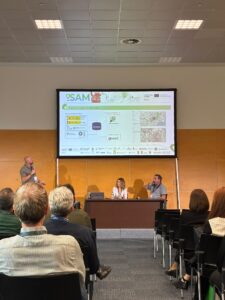
On 30 September and 1 October, SAM participated in the Esri Spain Conference in Madrid, with a presentation focusing on the geotechnological work carried out using Esri tools. The session brought together Olga de Cos and Valentín Castillo, from the University of Cantabria; María Zúñiga, from the University of Zaragoza; and José Carlos Lavín, Mayor of Penagos. It offered different perspectives on the application of cartography and geographic information systems to healthcare.
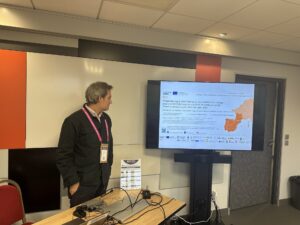
The project’s geographical dimension was also highlighted on 7 October in Paris, during SIG 2026 – Le Géo événement, the Esri Francophone Conference. Jon Arambarri and Chloé Morel, from ESTIA, presented SAM’s digital twin and its application to social prescribing in primary care, emphasising the role of geographic data in connecting health needs with nearby community resources.
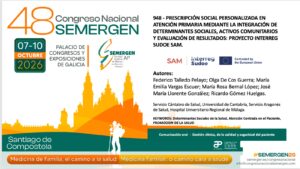
Finally, from 7 to 10 October, SAM is taking part in the 48th SEMERGEN National Congress in Santiago de Compostela, represented by Federico Talledo. This participation brings the project closer to family and community medicine professionals, one of the fields in which the tool could support decisions related to social prescribing.
These four events have provided opportunities to present SAM from complementary perspectives: healthcare innovation, territorial analysis, geospatial technologies and their potential application in medical consultations. This exchange of knowledge across disciplines is essential for developing tools that are useful to both healthcare professionals and the wider population.
About the SAM project
SAM is being implemented in Spain, France and Portugal, through eight pilot centres — six in primary care and two in specialised medical care — covering rural and urban areas. The project aims to develop and evaluate a digital twin that helps healthcare professionals identify accessible health-promoting community resources suited to individual needs, contributing to more personalised healthcare that is better connected to the local environment.