
The forests of Navarre constitute one of the region’s greatest natural assets, but they also harbour resources which, if managed responsibly, can help tackle some of today’s major environmental and energy challenges. Foremost among these is forest biomass, the sustainable use of which offers opportunities to reduce dependence on fossil fuels, improve fire prevention and promote economic development in rural areas.
It is within this context that the European BIO4RES project operates, as part of the Interreg Sudoe programme – an initiative that aims to improve the prevention and management of forest fire risk through the utilisation of biomass, specialised training and the promotion of solutions tailored to the needs of each region.
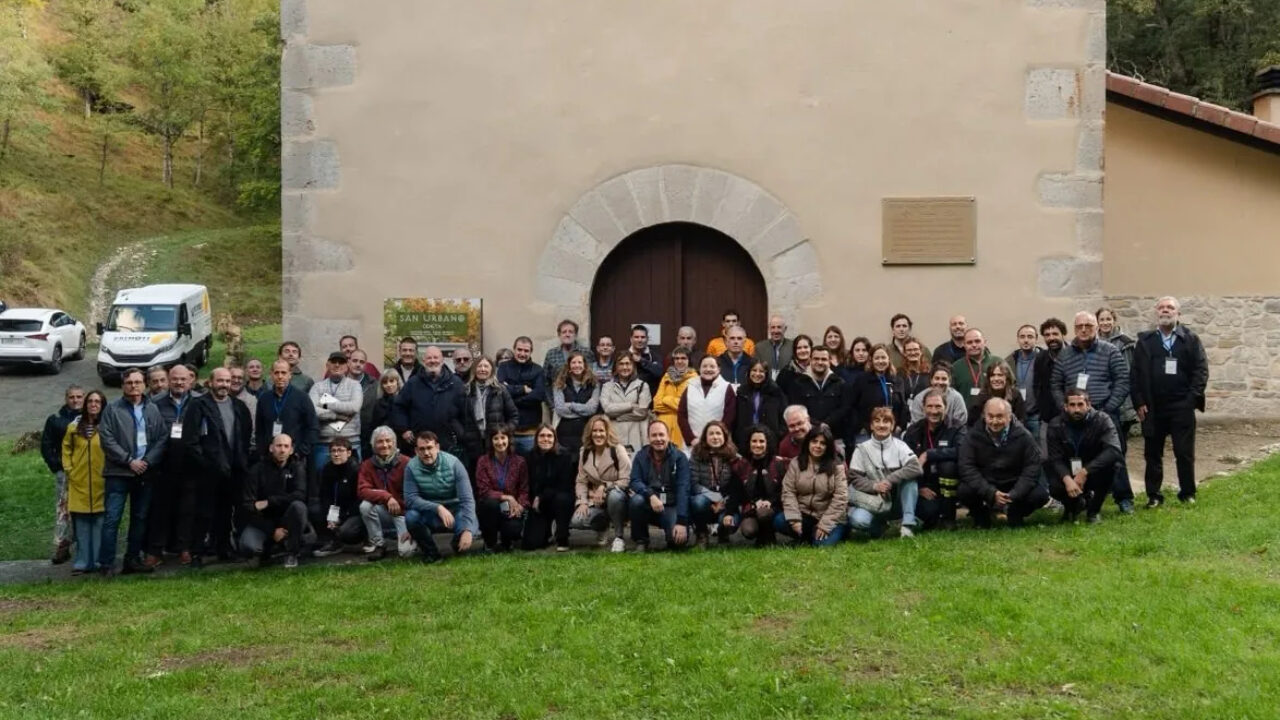
The second edition of the ‘Biomass 360° in Navarre’ conference, held in Odieta as part of the programme for the 2nd Navarre Climate Week, provided an opportunity to share progress, experiences and challenges relating to the sustainable management of forest resources.
The event, organised by the Government of Navarre with technical support from Nasuvinsa Lursarea, through the Navarre Biomass Office and the BIO4RES project, brought together institutional representatives, local authorities, professionals from the forestry sector, consumer organisations and emergency services.
The event was opened by the Mayor of Odieta, Alberto Urdániz, and the Regional Minister for Industry and Ecological and Digital Business Transition, Mikel Irujo.
BIO4RES: TRAINING TO MAKE THE MOST OF FOREST RESOURCES
The event, aimed at training local authorities, regional authorities and local stakeholders, brought together the perspectives of various actors involved in the biomass value chain. Among the highlights was a presentation on the progress of the BIO4RES project, which works to transform the potential of forest biomass into concrete opportunities for sustainable development.
David Candel Pérez, a technician at Nasuvinsa-Lursarea and technical lead for the BIO4RES project, presented the training materials developed as part of the project, designed to improve the skills of professionals, local authorities and individuals interested in the management and utilisation of forest resources.
These tools address one of the sector’s main challenges: ensuring there is a skilled workforce and the technical expertise needed to mobilise biomass efficiently, responsibly and in a way that is tailored to the characteristics of each region.
Another project carried out in Navarre as part of BIO4RES is the feasibility study conducted by the company Agresta in the Salazar and Roncal valleys. This analysis examines the available forest resources and the potential for the sustainable mobilisation of biomass in both regions, providing valuable information to promote future local utilisation initiatives.
FOREST MANAGEMENT, ENERGY TRANSITION AND FIRE PREVENTION
During the conference, the director of the Government of Navarre’s Energy Transition Service, Esperanza Aristu Pérez de Larraya, highlighted the opportunities offered by biomass to advance decarbonisation and reduce dependence on external energy sources.
For her part, Nerea González Tejedor, a specialist at Nasuvinsa-Lursarea and a member of the Biomass Office, presented the Office’s areas of work, which focus on providing advice, training and fostering collaboration amongst the stakeholders involved in the value chain for this resource.
Active forest management also featured prominently. Elena Baeza Oliva, head of the Forest Management Section of the Government of Navarre, addressed the challenges posed by climate change and pointed out that Navarre harvests an average of 389,000 cubic metres of timber per year.
The round-table discussion ‘Different perspectives, a shared responsibility: management, timber, consumption and prevention’ provided an opportunity to explore in greater depth the need to strengthen cooperation between different stakeholders in the sector, promote professional training and reconcile the conservation of ecosystems with the responsible use of forest resources.
The event concluded with a technical visit to the area affected by the Ezcabarte fire, where participants were able to gain first-hand insight into some of the challenges relating to forest management and fire prevention.
AN OPPORTUNITY FOR THE FUTURE OF RURAL AREAS
Beyond its contribution to the energy transition, the sustainable use of forest biomass can become a tool for revitalising rural economies, promoting the creation of specialised jobs and generating value chains linked to local resources.
Against this backdrop, BIO4RES emphasises the importance of linking research, training and regional cooperation to develop solutions that help improve the resilience of forests to climate change and the risk of wildfires.
The conference in Odieta highlighted that the future of forest biomass lies in planned, sustainable and shared management, capable of combining environmental objectives with the region’s energy, economic and social opportunities.
This is a challenge on which BIO4RES continues to make progress, demonstrating that caring for our forests and making responsible use of their resources are objectives that can go hand in hand.