GENERAL INFORMATION ABOUT THE PILOT
- Pilot name: From cork and pine bark to new textiles: coated yarns and jacquards of organic origin
- Responsible partner(s): Têxteis Penedo (pilot project leader), in collaboration with CITEVE
- Location: Guimarães, North, Portugal
- Duration: May 2024 – March 2026
CONTEXT AND CHALLENGE
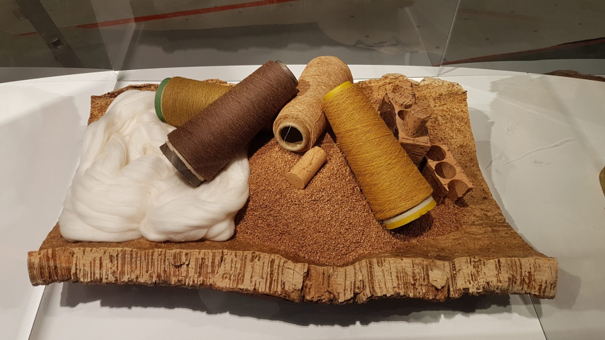
The textile industry continues to rely on formulations containing fossil-based components and is seeking solutions that will reduce environmental impact without compromising the performance of the materials. This pilot project tests the incorporation of natural waste materials, such as cork and pine bark, into bio-based formulations applied to cotton yarns. The challenge was to take these solutions from the laboratory to an industrial scale and transform them into functional fabrics and prototypes with potential for real-world application.
PILOT OBJECTIVE
- To develop and validate yarns and fabrics with bio-based coatings that incorporate natural waste materials, in particular cork and pine bark.
- To demonstrate the technical and industrial feasibility of applying these coatings to cotton yarns and in the production of jacquard fabrics.
- To assess the environmental performance of the solutions and quantify the reduction in the carbon footprint compared with conventional formulations.
PROPOSED SOLUTION / INNOVATION
The pilot project involves applying a bio-based formulation to cotton yarns, replacing some of the fossil-based components and incorporating natural waste materials. Following laboratory validation, the cork and pine bark coatings were tested on an industrial scale and used in the production of jacquard fabrics. Improvements in adhesion were also tested, using an additional bio-based finish, and the technical performance and environmental impact of the solutions were assessed.
MAIN ACTIVITIES
- Development, optimisation and laboratory validation of bio-based formulations incorporating cork and pine bark, including adhesion and top coat tests.
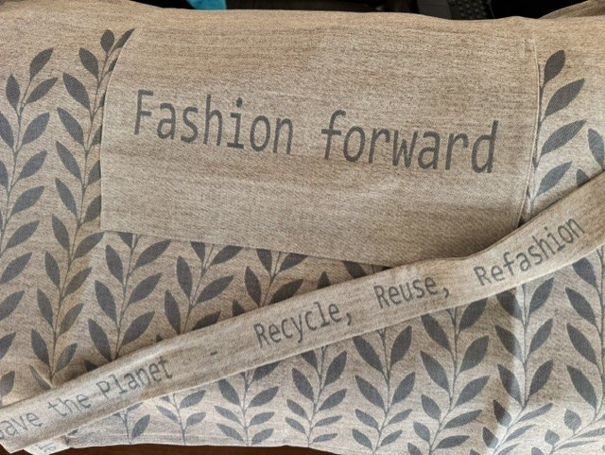
- Industrial application of the coatings to cotton yarns, development of jacquard patterns and production of the Francis and CT-Aroeira fabrics, as well as physical prototypes.
- Material performance testing and life-cycle assessments to compare the new formulations with conventional solutions and quantify the environmental benefits.
EXPECTED RESULTS / IMPACT
- Environmental: an 18.8% reduction in the carbon footprint of cork-based yarn and an 18.2% reduction in that of pine bark-based yarn, compared with conventional formulations.
- Economic: demonstration of the industrial viability of coating solutions that make use of natural waste and can lead to new yarns, fabrics and products with higher added value.
- Technical and capacity-building: enhancing knowledge of formulation, industrial application, jacquard development and validation of textile materials containing bio-based components.
KEY INDICATORS
- 2 naturally sourced materials with industrial validation: cork and pine bark.
- 2 fabrics developed and characterised: Francis and CT-Aroeira.
- Reduction in carbon footprint: 18.8% for the cork-based yarn and 18.2% for the pine bark-based yarn.
- 1 initial prototype produced (water bottle pouch), with technical validation of the fabrics through testing for washability, abrasion, lightfastness and fire behaviour.
TESTIMONIAL
This pilot project has shown that it is possible to scale up bio-based solutions using cork and pine bark to an industrial level within the textile sector, reducing the environmental impact whilst maintaining the performance required for new textile applications.”
Visitas: 1