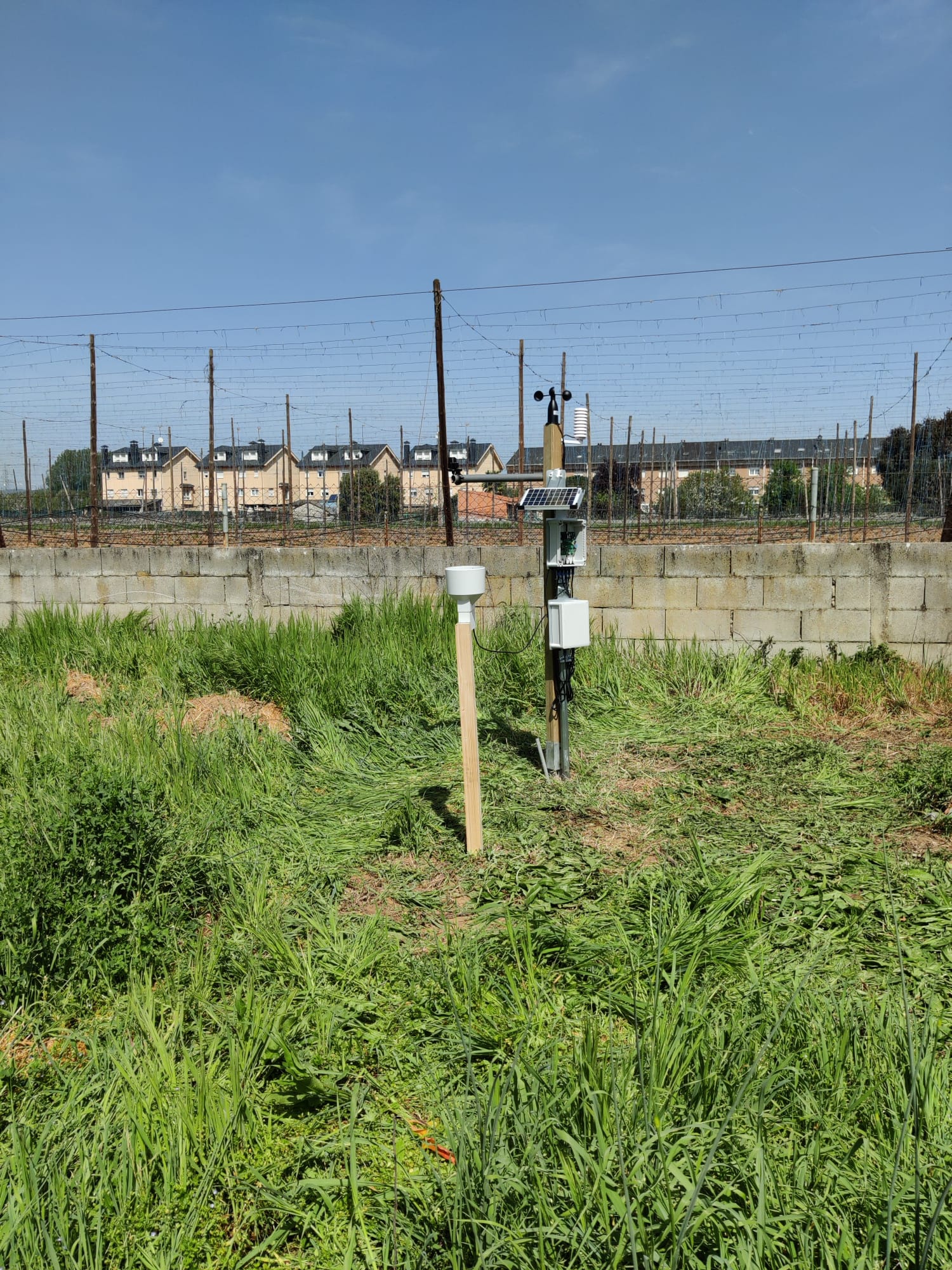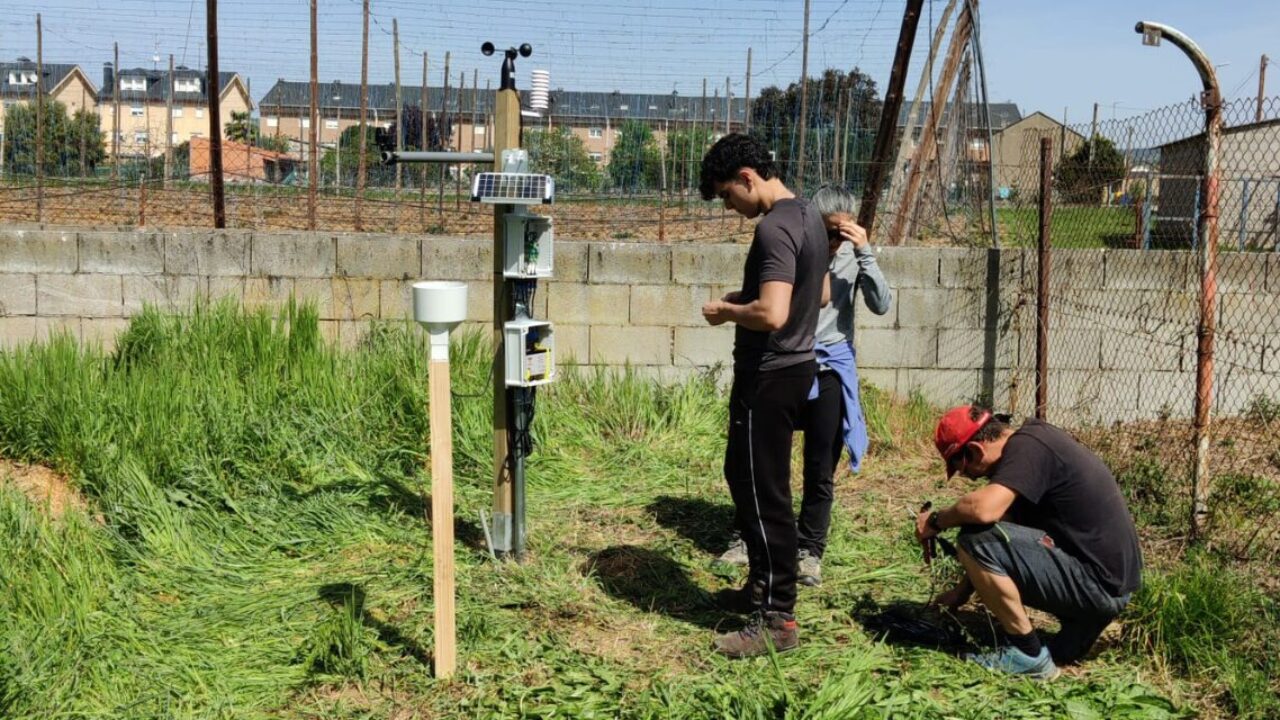
The I-ReWater project is committed to technology and advanced monitoring to improve water management in irrigated agriculture. In this context, agrometeorological stations play an essential role by providing accurate and up-to-date information on crop water requirements.
In addition to carrying out water balance assessments and collecting real-time data from the soil-water-plant system through IoT sensors, the initiative works with climate information from 15 agrometeorological stations, both owned by the project and located near the demonstration pilot sites.
Climate data to optimise irrigation
Weather conditions directly influence crop water demand. One of the most relevant indicators is reference evapotranspiration (ETo), a key parameter for accurately calculating actual irrigation needs.
To improve these calculations, the project has developed its own agrometeorological station capable of estimating ETo using different environmental variables, including:
- Air temperature
- Relative humidity
- Wind speed
- Solar radiation
The role of rainfall in the water balance
Rainfall is also a determining factor in irrigation planning. For this reason, the stations include rain gauges that make it possible to measure the water provided by rainfall at each of the project’s 15 pilot sites.
Innovation for more sustainable agriculture
Having an accurate estimate of the soil water balance makes it possible to take more efficient irrigation decisions, both with conventional water resources and through the use of reclaimed water.
Through the integration of advanced technology and real-time monitoring systems, I-ReWater promotes innovative solutions to move towards agriculture that is more sustainable, competitive and resilient in the face of climate change.