
Climate change is altering crop development cycles, leading to milder winters that advance flowering. This increases plant vulnerability to spring frosts, which affect crops at critical stages and can cause losses of up to 100% in fruit production.
In the SUDOE area, many farms do not have effective solutions to address this risk. Available techniques are often costly, energy‑intensive, or dependent on water use. In this context, the Interreg An‑Gel SUDOE project promotes the development and testing of innovative, sustainable, and transferable solutions that improve the resilience of the agricultural sector to frost events.
The pilot trial is carried out in a plum orchard under real production conditions, on a plot divided into two distinct areas. The crop is managed using standard fruit farming practices, including micro‑sprinkler irrigation and ground cover management through mechanical and chemical techniques.
The objective of the pilot is to analyze the influence of soil moisture and ground cover management on the intensity of spring frosts. To achieve this, an experimental setup has been designed based on the comparison of four soil management approaches:
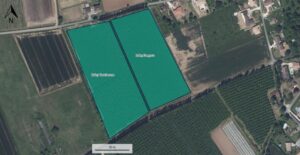
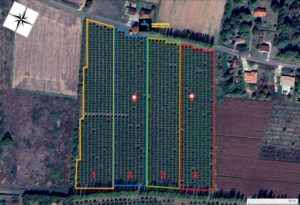
This design allows for a combined analysis of the effect of soil moisture and ground cover, as well as their interaction on the thermal behavior of the crop during frost events.
The trial also includes a monitoring system with weather stations and soil sensors that record climatic and soil variables, enabling an accurate assessment of the relationship between soil conditions, orchard microclimate, and frost severity.
The actions carried out in the pilot focus on testing soil management practices as passive solutions against frost, reducing reliance on resource‑intensive techniques. Continuous monitoring of climatic and soil conditions is also carried out, along with the analysis of collected data.
The expected impact is the identification of effective, sustainable, and low‑cost strategies to reduce damage caused by spring frosts in plum orchards. These solutions can be transferred to other farms and regions, contributing to improving the resilience of the agricultural sector to climate change and supporting decision‑making at both technical and policy levels.