
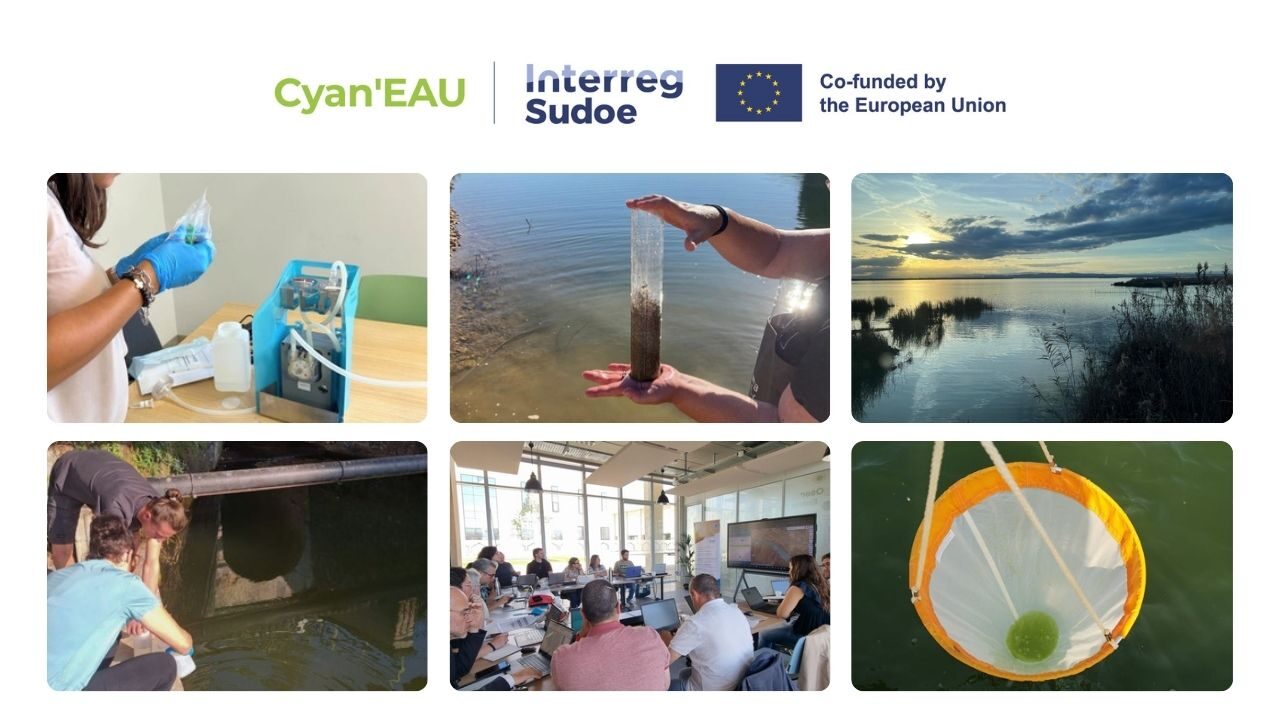
The Cyan’EAU project has completed its first year of implementation, achieving significant progress in improving knowledge on cyanobacterial blooms in water bodies across the SUDOE area and in developing solutions tailored to the specific needs of each territory.
During this period, project partners worked in several pilot sites located in Portugal, Spain and France, including the Aguieira Reservoir, the Albufera of Valencia, the Sierra Boyera and Puente Nuevo reservoirs, and Lake Clarens. At these sites, water and sediment sampling campaigns were carried out, together with analyses aimed at identifying the factors that promote the occurrence of cyanobacterial blooms.
Preliminary results highlight differences among the territories studied, both in terms of their environmental characteristics and the pressures resulting from human activities. This knowledge will support the design of prevention and management strategies better adapted to local conditions.
The project has also made progress in the application of new monitoring tools, including the use of satellite imagery and land-use analysis, with the aim of improving the early detection of risk situations and supporting decision-making in water management.
In addition, Cyan’EAU has strengthened collaboration with public authorities, experts and local stakeholders, laying the groundwork for future awareness-raising and knowledge-transfer activities.
These initial results represent a key step towards the development of innovative solutions that will help protect aquatic ecosystems, public health and water-dependent economic activities across the SUDOE area.