
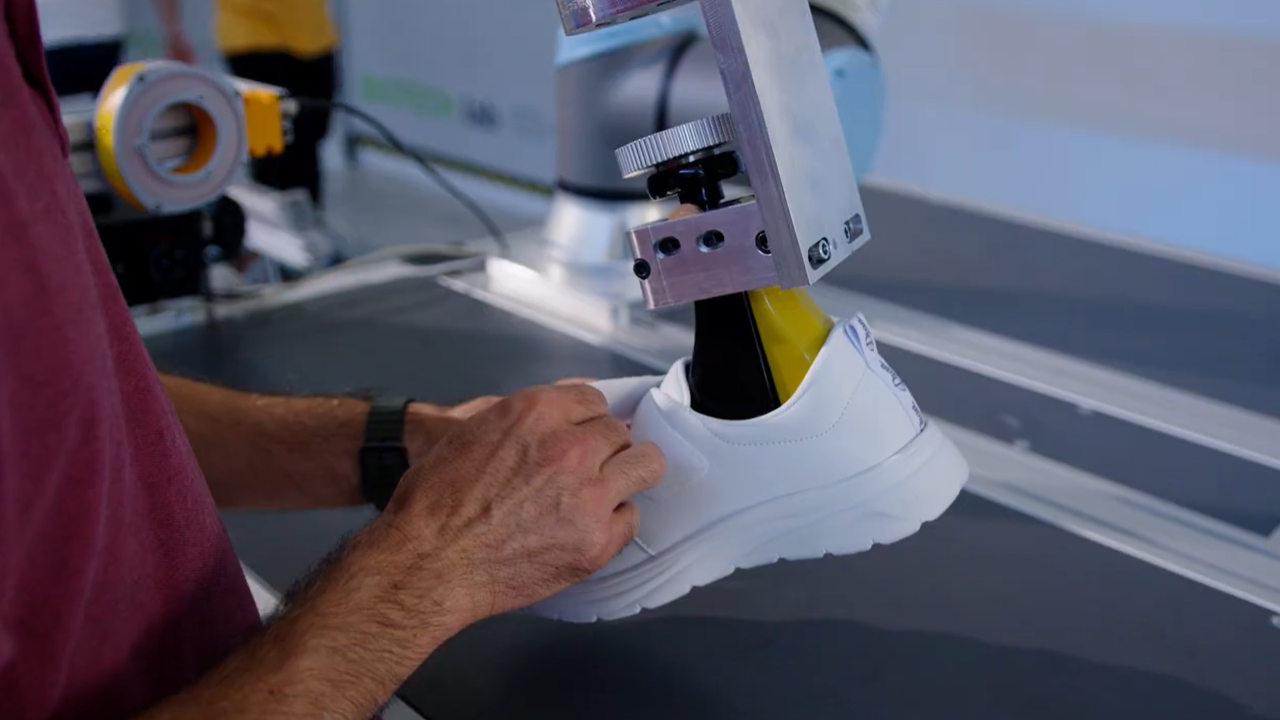
Can robotics help give footwear a second life? The REMAIN project presents a new video showing how the combination of robotics, artificial intelligence and advanced perception technologies can help automate remanufacturing processes and contribute to a more circular and sustainable footwear industry.
Giving a shoe a second life involves much more than simply repairing it. It is necessary to assess its condition, identify the damage caused during use and determine which operations are required to restore it and return it to the value chain. This is one of the main challenges addressed by REMAIN. Its final video provides a visual overview of how the project applies new technologies to advance the automation of footwear remanufacturing processes.
The solutions developed include systems combining computer vision, perception and artificial intelligence to detect damage and defects in footwear, together with robotic technologies capable of handling deformable products and carrying out different operations required for their recovery and remanufacturing.
The aim is to translate these advances into solutions that can be applied in industry and demonstrate the potential of remanufacturing to extend product lifespans, reduce the consumption of new raw materials and minimise waste generation. REMAIN addresses this challenge from the product design stage itself, promoting ecodesign criteria that facilitate footwear durability, repairability and remanufacturing.
Through this new video, the project brings its achievements closer to companies, professionals and the general public, showing how technological innovation can help transform the way footwear is produced, used and recovered.
▶️ Discover “REMAIN | Robotics for Footwear Remanufacturing” and learn how technology can help give footwear a new life.
The development of REMAIN has been made possible thanks to the joint work of a European consortium coordinated by Inescop and involving the universities of Zaragoza, Alicante and Coimbra, as well as Clermont Auvergne INP; the Spanish Footwear Industries Federation (FICE); the industrial partners SMA-RTY and Automática y Control Numérico (ACN); and the Chamber of Commerce AIDA CCI, with the collaboration of the social association Proyecto Lázaro.
The REMAIN project is co-financed by the European Regional Development Fund (ERDF) through the Interreg Sudoe Programme, project reference S1/1.1/E0111.