
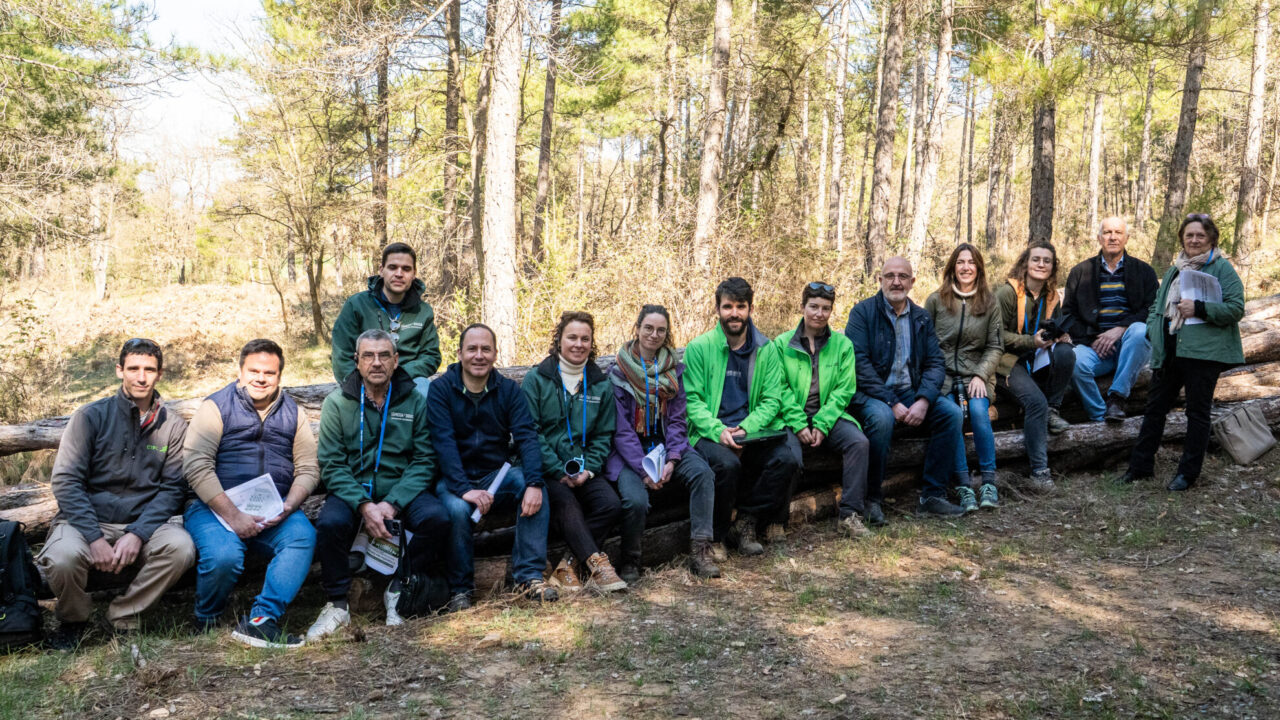
The European BIO4RES project has presented a joint strategy for the energy recovery of forest biomass in Solsona (Lleida), based on the analysis and development of four pilot projects implemented in Spain, France and Portugal.
The strategy is based on the recognition that forest biomass represents a resource with high potential that remains underutilised in the SUDOE region. Its use allows, simultaneously, for improved forest management, reduced fire risk and the creation of economic opportunities in rural areas, whilst also contributing to the energy transition and the resilience of ecosystems.
The document proposes an integrated approach that links the forest-wood-energy chain and is based on three main pillars: promoting the production of renewable energy from forest biofuels, reducing the fuel load in forests as a preventive measure against fires, and fostering local economic development by activating new value chains linked to biomass.
Among its main objectives, the strategy aims to improve knowledge of the availability of forest resources, strengthen the logistics and supply chain, remove barriers for the various stakeholders in the sector, increase market transparency and advance the coordination of public policies. It also includes communication and awareness-raising initiatives to foster social and regional engagement.
The action plan includes specific measures such as forest resource planning, the development of logistics infrastructure and collection centres, the creation of institutional coordination mechanisms, and the deployment of digital tools to facilitate management and the exchange of information between sector stakeholders.
Four pilot projects to transform forest management
The strategy draws on four pilot projects that complementarily address the main challenges of fire prevention and biomass utilisation.
The pilot project on the impact of biomass harvesting on biodiversity, developed by the Union des Communes Forestières du Grand Sud (France) and presented by Irène Sénaffe, has led to the design of planning tools—such as maps and specific indicators—that reconcile biomass harvesting with ecosystem conservation. This approach makes it easier to identify areas of high ecological value and adapt forestry operations to avoid negative impacts on key habitats or structures.
The pilot project on innovation in forestry harvesting methods, led by the CTFC (Catalonia) and presented by Gerard Alcoverro, has analysed the use of advanced machinery and technologies such as LiDAR to improve the efficiency of forestry work. The results show improvements in productivity in certain contexts, although they also highlight the need to adapt technological solutions to the characteristics of the terrain.
The pilot project on local biomass management models, promoted by the Comunidade Intermunicipal do Tâmega e Sousa (Portugal) and presented by Maria Manuela Alves and Mário Júlio, proposes a comprehensive system based on the collection, processing and energy recovery of biomass at a local level. It includes the creation of collection centres and a micro-power plant, focusing on the circular economy, local proximity and the involvement of local stakeholders.
For its part, the forestry crew training pilot project, developed by Nasuvinsa (Navarra) and presented by David Candel, focuses on training staff specialising in forest management and biomass harvesting. The programme combines theoretical and practical training and addresses key challenges such as the lack of a new generation of workers and the shortage of skilled labour in the sector.
A replicable model for Europe
The strategy also identifies structural challenges that constrain the sector’s development, such as logistical constraints, competition with other timber markets, the lack of specialised professionals, and the need for greater technological innovation. In response, it proposes a balance between environmental sustainability, economic efficiency, territorial development and fire prevention as the basis for action.
In this regard, BIO4RES proposes a model that can be replicated in other European regions, enabling the valorisation of local resources, strengthening energy security, advancing decarbonisation and reducing the risk of fires, thereby contributing to the creation of more resilient and sustainable landscapes in the SUDOE region.