
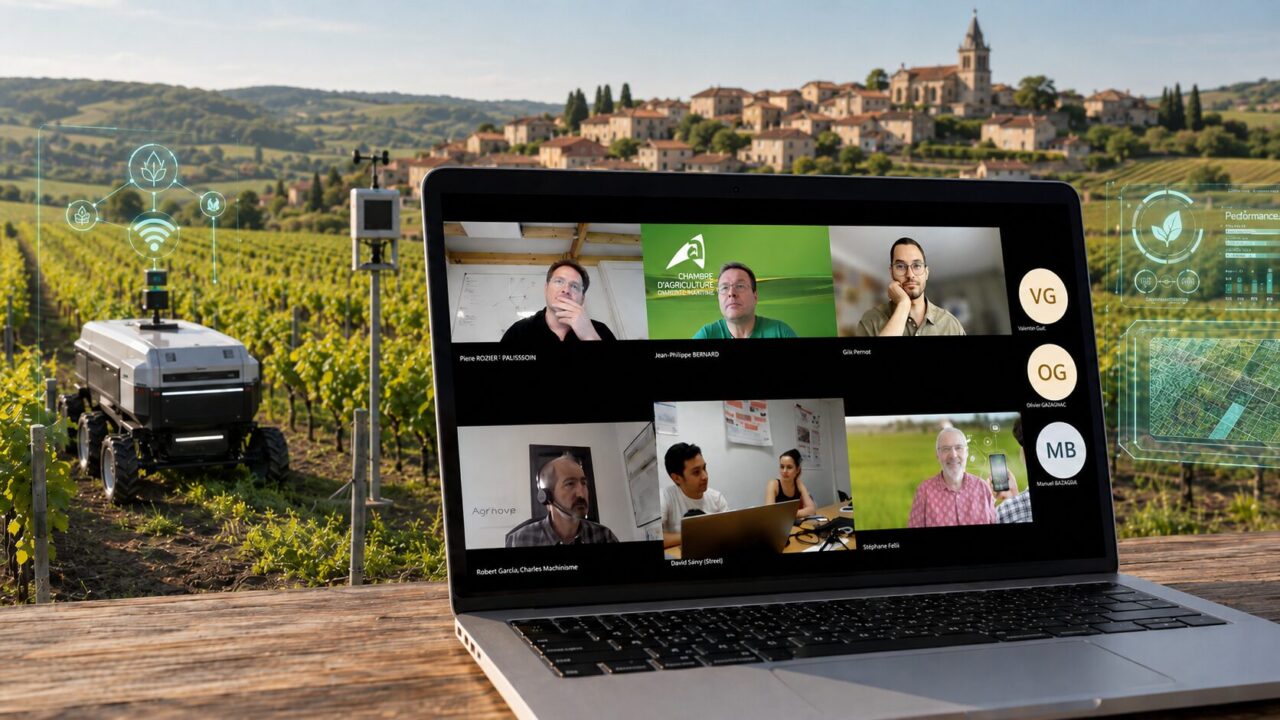
On 29 June, the Agrobotics-DiTwins project held its French National Webinar, bringing together key stakeholders from the agricultural innovation ecosystem in Nouvelle-Aquitaine.
The webinar was organised by Aquitaine Robotics, XLIM – University of Limoges and Osfarm, within the framework of the project’s dissemination activities. The session aimed to present the project’s objectives, consortium and expected impact, with a particular focus on the deployment of the French Living Lab.
Throughout the webinar, participants were introduced to the concepts of digital agriculture, agricultural robotics, digital twins and Living Labs. The session also explored how these technologies can support the transition towards Agriculture 5.0, helping agricultural organisations to better assess, test and adopt innovative solutions.
Special attention was given to the practical opportunities offered by Agrobotics-DiTwins, including the possibility of testing robotic solutions before investment, using digital twins to evaluate expected technical and economic benefits, participating in pilot activities within the Living Labs and identifying future funding opportunities to support technology adoption.
The event gathered representatives from regional and departmental Chambers of Agriculture, research organisations, agricultural robotics companies, innovation clusters, technology transfer organisations and industrial partners. This audience was selected for its capacity to relay project information to agricultural SMEs, cooperatives, technology providers and farmers across Nouvelle-Aquitaine.
The discussions confirmed the relevance of the Living Lab approach as a tool to accelerate the adoption of robotics and digital technologies in agriculture. Participants also highlighted the importance of demonstrating the economic value of robotic solutions before investment, as well as the role of digital twins in reducing technological risk.
The webinar strengthened collaboration between project partners and regional innovation actors, creating favourable conditions for future pilot use cases and for the engagement of agricultural stakeholders in the next phases of Agrobotics-DiTwins.