
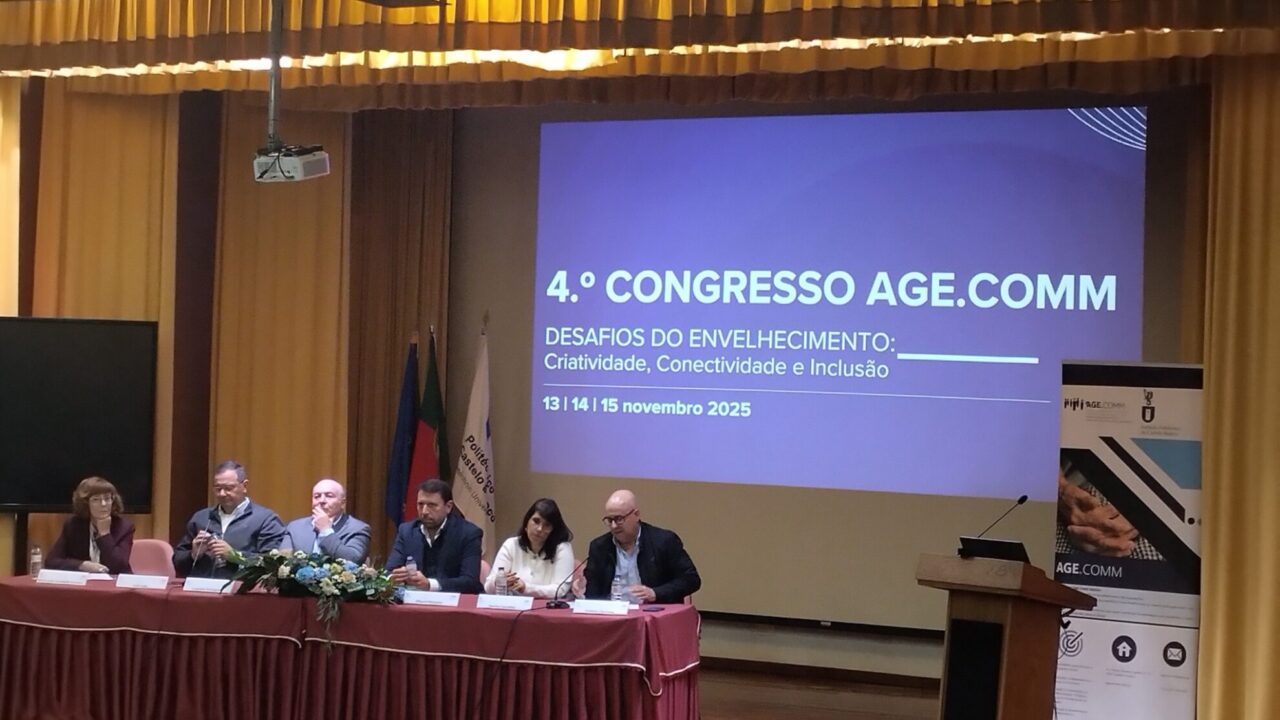
The REVITAL project was present at the 4th AGE.COM Congress, solidifying its position as one of the most relevant initiatives addressing aging in rural areas. Participation was made possible thanks to the Escola Superior de Saúde Dr. Lopes Dias (ESALD), part of the Polytechnic Institute of Castelo Branco, which promoted the project by including it in the congress poster session.
The poster presented summarizes the work developed within the REVITAL framework, which aims to address the challenges of aging and depopulation in rural areas of the SUDOE region, such as Beira Baixa (Portugal), Castile and León (Spain), and the French Basque Country. These regions are characterized by a marked demographic aging and limited availability of social and healthcare services, a situation exacerbated during the COVID-19 pandemic, especially for older and dependent individuals.
In this context, REVITAL proposes an innovative solution based on the implementation of telecare and telerehabilitation services, combining technological innovation with social cohesion.
Content of the poster presented at the 4th AGE.COM Congress
The main objective of the project is to provide physiotherapy and neurological rehabilitation care to adults with chronic neurological conditions who reside in sparsely populated rural areas. To this end, a hybrid model combining in-person care with telerehabilitation is being used in Portugal, evaluating its viability as a strategy for both healthcare and socioeconomic development and population retention.
The study methodology was based on an exploratory pilot with a mixed-methods approach (quantitative and qualitative), conducted at the ESALD (IPCB) teaching clinic and in the homes of participants in the Beira Baixa region. The sample includes 25 adults over 18 years of age, who are independent and have been diagnosed with chronic neurological conditions. The assessment tools used include the Mini-Mental State Examination, the SF-36v2 health questionnaire, the Health Assessment Questionnaire (short version), the USE scale (utility, satisfaction, and ease of use), and a sociodemographic questionnaire.
Among the expected results, the project aims to demonstrate the effectiveness of telerehabilitation in improving the functionality and quality of life of participants, as well as to identify barriers and facilitating factors in the adoption of technologies in rural healthcare. Ultimately, the project seeks to demonstrate that integrating technological solutions into rehabilitation services can improve access to healthcare, generate skilled employment, and contribute to the socioeconomic revitalization of low-density areas.
See the REVITAL Project poster information at https://eu-central-1.linodeobjects.com/evt4-media/documents/4Age.comm_Livro_de_resumos_3Fev.pdf (pages 16 and 17 / 17 and 18 of the PDF)
IPCB, responsible for piloting REVITAL in Portugal
In this regard, the Polytechnic Institute of Castelo Branco (IPCB) was responsible for piloting the REVITAL project in Portugal, ultimately achieving significant results: a total of 20 people served, 209 individual sessions conducted, and an average participant age of 69.
The conference where this work was presented, organized by the Interdisciplinary Research Unit – Functional Aging Communities (Age.Comm) of the IPCB, aimed to further the debate on the challenges of aging in contemporary society. Under the theme “Challenges of Aging: Creativity, Connectivity, and Inclusion,” the event framed aging not as a problem, but as an opportunity for the development of sustainable and innovative communities.
For three days, from November 13 to 15, 2025, this international and interdisciplinary gathering brought together researchers, professionals, and policymakers to analyze the multiple dimensions of aging and reflect on new strategies to address current demographic and social transformations.
REVITAL Project Consortium
The Clúster Soluciones Innovadoras para la Vida Independiente (SIVI) coordinates this project, funded by Interreg-Sudoe, which includes the participation of Gerencia de Servicios Sociales de Castilla y León, Fundación San Cebrián, GOGOA Mobility Robots, École Supérieure des Technologies Industrielles Avancées (ESTIA), Universidad de DEUSTO, Etablissement Public de Santé de GARAZI, Associação Empresarial da Beira Baixa (AEBB) and the Instituto Politécnico de Castelo Branco (IPCB), which together form the complete consortium.