
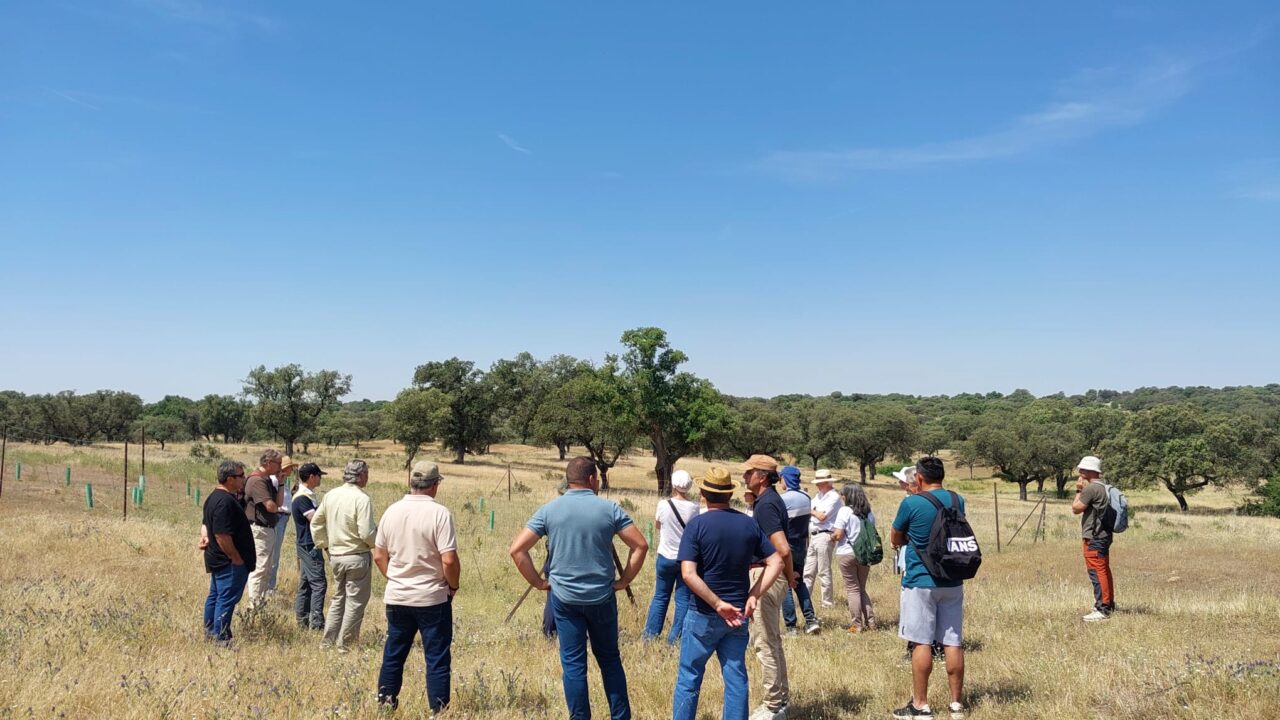
The Directorate-General for Natural Environment and Biodiversity of the Government of Castilla-La Mancha held this week a dissemination workshop on the pilot action it is promoting through the SocialForest project, part of the Interreg Sudoe programme. The Castilla-La Mancha initiative is aimed at developing prevention and control measures to increase the resilience of Quercus stands (pasturelands) affected by decline, in line with the European project, which seeks to support the adaptation of south-west European forests to climate change.
The event, which took place at the Convent of the Franciscans in Velada (Toledo), brought together more than twenty attendees, including landowners, public and private forest managers, and representatives of technical consultancy firms. The meeting enabled experts and technicians to address the issue of holm oak and cork oak decline in pastureland systems, one of the main threats facing these ecosystems of high environmental, economic and social value. All participants showed considerable interest in the results obtained and took an active part in the technical exchange throughout the day. Particular attention was drawn to the treatments and measures implemented on the farms participating in the pilot action, as well as to the most appropriate management practices to address Quercus decline caused by Phytophthora cinnamomi.
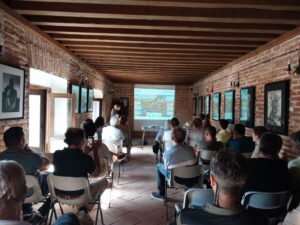
The session included several technical presentations outlining both the scientific context of the problem and the actions carried out in Castilla-La Mancha to improve the resilience of these forest stands. Highlights included a presentation on Quercus decline by representatives of the Scientific and Technological Research Centre of Extremadura (CICYTEX), as well as an overview of the actions promoted by the Directorate-General for Natural Environment and Biodiversity and an explanation of the preventive and control measures applied on the pilot farms.
The workshop concluded with a field visit to one of the holdings located near Velada, where attendees were able to see first-hand the work carried out and assess on site the solutions implemented to prevent and mitigate deterioration in pasturelands.
In conclusion, participants agreed that this is a highly complex issue with no definitive solution. However, a number of measures can be adopted on farms to reduce incidence in affected areas and prevent the spread of the pathogen to areas where it is not yet present. Indeed, the effectiveness of some of these measures has already been demonstrated, while others are still being tested. Thanks to these pilot actions and their monitoring, further information will be obtained regarding their impact.
Through this action, Castilla-La Mancha reinforces its commitment to innovation applied to sustainable forest management and to European cooperation in addressing the effects of climate change on forest ecosystems.
Instagram (@socialforest_sudoe)