
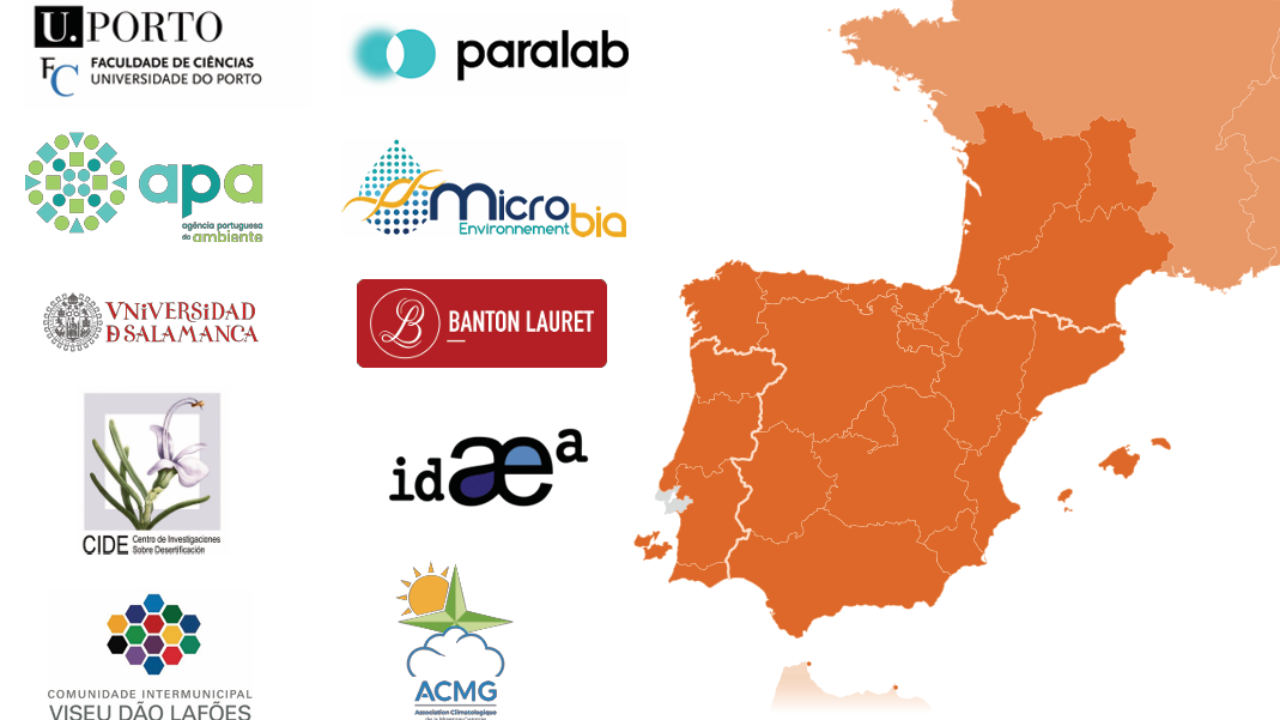
An international consortium of institutions from Spain, France and Portugal is leading the Cyan’EAU project, funded by the Interreg Sudoe programme, with the aim of developing innovative solutions for the prevention, early detection and remediation of cyanobacterial blooms in inland waters across south-western Europe.
Cyanobacteria, common phytoplankton organisms found in rivers, reservoirs and other aquatic ecosystems, can undergo massive blooms when favourable environmental conditions coincide, such as high temperatures, abundant solar radiation, poor water circulation and an excess of nutrients. These events can have significant ecological, health and economic impacts, as they reduce dissolved oxygen, disrupt the balance of aquatic ecosystems and can release toxins that are hazardous to human and animal health.
Against a backdrop of these phenomena accelerating due to climate change, the project focuses on strategies centred on prevention and early control. The aim is to develop low-cost tools to identify early signs of blooms, facilitate early action and, where necessary, implement sustainable remediation measures that minimise harmful effects on the environment.
To this end, the consortium will work in various pilot areas across the three partner countries. In Portugal, several sections of the Dão and Mondego rivers will be analysed, as well as the Aguieira and Ribeiradio reservoirs; in Spain, the area around l’Albufera de València and several reservoirs in the Guadalquivir basin will be studied; whilst in France, various points in the Garonne river basin will be selected, in addition to several representative lakes and reservoirs.
The actions include environmental sampling and sediment analysis to understand the dynamics of the blooms and their relationship with the physical and chemical factors that trigger them, which will enable the prioritisation of areas for intervention and the improvement of the long-term management of these episodes.
The project, entitled “Cyan’EAU – Innovative systems for controlling cyanobacterial blooms in the inland waters of the Sudoe region”, has a budget of over €1.6 million, brings together scientific and water management bodies from the three countries, and will run until 2028, also including training and knowledge transfer activities aimed at those responsible for water resource management.