Action plan for the implementation of integrated forest solutions in inland arease
Action plan for the implementation of integrated forest solutions in the interior areas of the SUDOE space. Occitania (France) and Castile-La Mancha (Spain)

Action plan for the implementation of integrated forest solutions in the interior areas of the SUDOE space. Occitania (France) and Castile-La Mancha (Spain)
Strategy to adapt and mitigate forest masses to the scarcity of water resources, biodiversity loss, pests and fires while helping to curb the abandonment of rural areas in the SUDOE territory
Sitio piloto sobre cultivos anuales: cereales.
Sitio piloto en cultivos permanentes: vid y olivo.
This toolbox will contain the tools that will allow the implementation of the pilot projects in the three pilot territories. The city of Cartagena, located in the Region of Murcia in Spain, will develop a Rural Transition Lab in the Oeste Region of its territory, a rural and marginalized region of the territory of the community. The pilot project will focus on the definition of new agricultural economic models based on the optimization and preservation of local resources (endogenous species, water recovery by PV panel systems). The Intermunicipal Community of Ave, located in the Norte Region of Portugal, will develop a second Rural Transition Lab. Its pilot project will be implemented in the municipality of Póvoa de Lanhoso and will support the use of endogenous species and local know-how for the development of urbanized areas in order to optimize water use. The Syndicat mixte Est Creuse Développement, located in the Nouvelle Aquitaine region of France, will develop the third Rural Transition Lab at the level of its two communities of municipalities Creuse Confluence and Marche et Combrailles in Aquitaine. The pilot project will address the challenges of preserving endogenous biodiversity and landscapes and the challenges of runoff and soil erosion through the implementation of a sustainable management system for agricultural hedgerows. This toolbox will contain the method used for the territorial dialogue and the GIS tool (common solution): TOOLS for the implementation of the strategy of the RURAL TRANSITION LABS
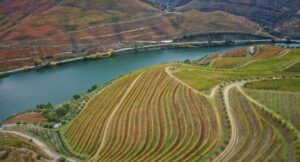
In the cross-border area of Arribes and Alto Douro, nature-based solutions (NBS) measures to improve IV will be implemented in the vineyards of Bodegas Pascual Fernández in Fermoselle (Zamora) and Bodega Duorum in Foz Côa and the surrounding lands. In the Mariñas – Betanzos area, work will be carried out on plots belonging to Bodega Pagos de Brigante. In all these areas, the project aims to address agricultural and environmental challenges while promoting biodiversity and the conservation of natural and cultural heritage, contributing to climate change resilience and preventing depopulation.
The implementation of the 3 pilot actions contributes to the RCO84 Programme Implementation Indicator. Pilot action number 1 will consist of the creation and implementation of an energy community in the town of Bembibre, which will also study the implementation of the results of pilot action number 2 and 3 in order to replicate a sustainable mobility system based on green hydrogen as an engine and take advantage of possible surpluses for the distribution of natural gas. Action number 2 will integrate a self-consumption system and test a hydrogen bike system that will be tested in both Bembibre and Portalegre. Action 3 shall launch a demonstration laboratory in which application simulations will be carried out to adopt solutions to real cases: conversion of traffic, distribution of natural gas, modernisation of agricultural transport, etc.
The objective of this catalogue is to present in a synthetic and operational way the pilot actions that are currently experiencing new solutions to conserve forest resources, preserve and strengthen the resilience of forests. Pilot actions to be carried out in the territories (15 pilot sites are already planned) will include three types of solutions: 1/Planting new species and provenances to test their resistance in forests in the long term. This should help environments better cope with different threats. 2/Adoption of specific forestry actions to promote the adaptation and resilience of forests and the maintenance of associated ecosystem services. The aim is to improve, preserve or restore forest cover, for example by enriching the masses, which favors the mixing of species. 3/Implementing actions for the conservation of the forest genetic heritage. These actions aim to respond to important local challenges. The wide variety of forest situations (main objective of the masses, composition in species, age of the masses, etc.) and of the pedocclimatic conditions found must allow a good representativeness of the forest contexts of southwest Europe. The techniques used, the resources mobilised and the results of the pilot actions will be exploited and transferred 1) within the partnership, 2) to other local, regional and national institutions and actors and 3) to other territories of the EU through the European networks of partners and partners to facilitate their ownership. This catalogue will be integrated into the metadata base (ACT2.1) and will illustrate some of the operational recommendations of the Transnational Strategy (achievement of WG1).