
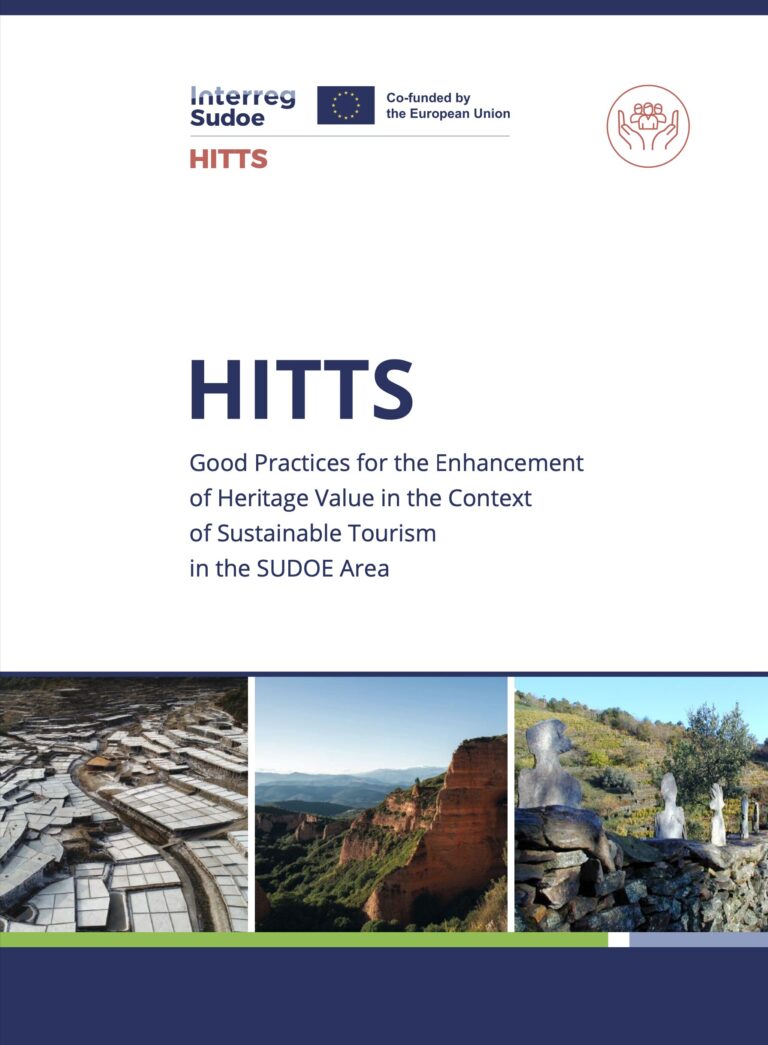
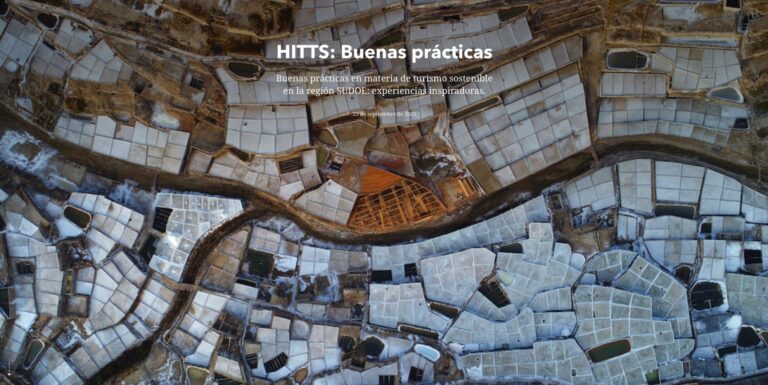
The European project HITTS has successfully completed Activity 1.5: Identification of good practices in the SUDOE area on innovative strategies and initiatives, one of the key milestones in the project’s first implementation phase.
The work was coordinated by the Polytechnic Institute of Tomar (Portugal) with the participation of all consortium partners, and has led to the identification of 15 inspiring experiences that demonstrate how cultural and natural heritage can act as a driver of innovation, sustainability, and territorial cohesion in the rural regions of southwestern Europe.
This activity has resulted in two complementary and openly accessible outputs:
[View the HITTS Good Practices Map]
Both results constitute the final deliverable of Activity 1.5 and contribute directly to the HITTS objective of strengthening transnational cooperation around heritage as a strategic resource for more sustainable, inclusive, and high-quality tourism.
The documented experiences span Spain, France, and Portugal, and reflect diverse approaches—from industrial heritage recovery and community management to artistic reinterpretation of the landscape and the revitalization of intangible traditions.
Complete list of good practices in the SUDOE area:
A model for sustainable heritage tourism
Together, these experiences show that heritage, when managed inclusively, participatively, and creatively, can become a powerful tool for social innovation and sustainable development.