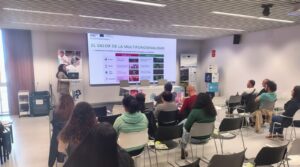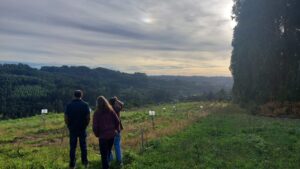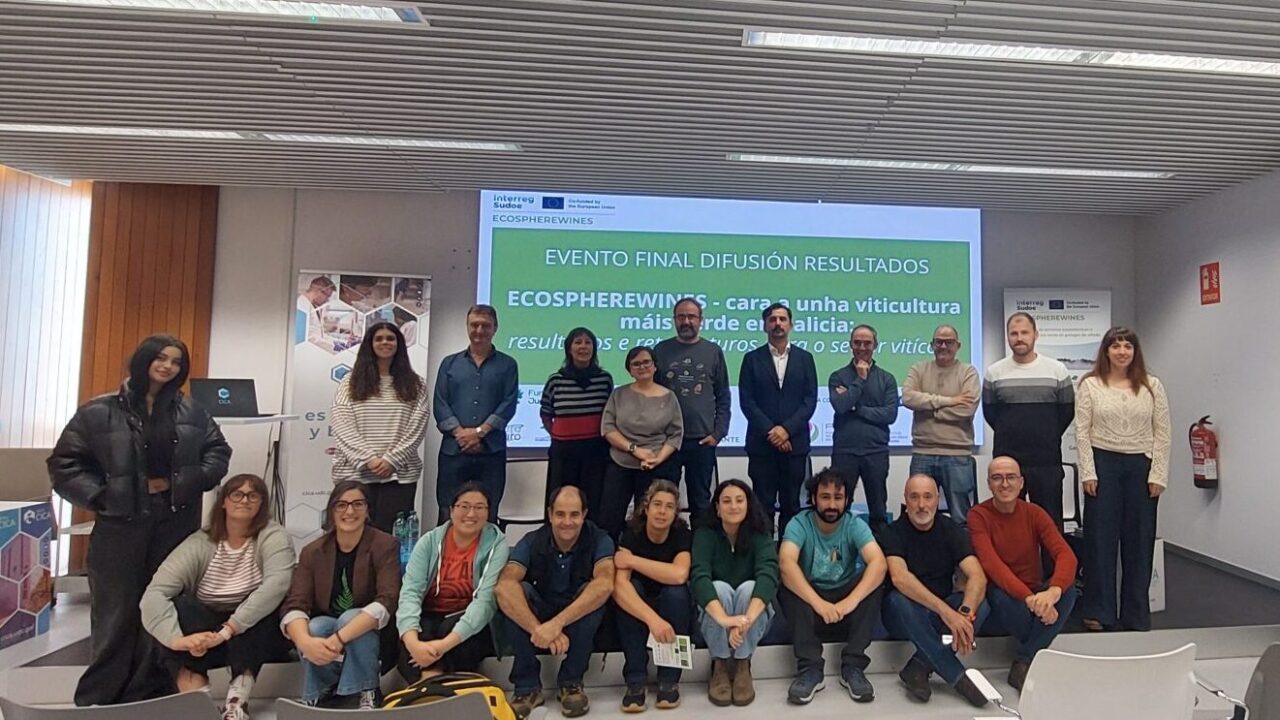
The European project ECOSPHEREWINES has spent the last three years transforming the almost ten hectares of the A Picha plot, in Paderne (A Coruña), into a living laboratory to demonstrate how combining traditional practices with advanced analytical tools can contribute to a viticulture better prepared for the future. On 29 October, under the title «ECOSPHEREWINES: towards a greener viticulture in Galicia: results and future challenges for the wine-growing sector», these technical advances were presented at the Centro Interdisciplinar de Química e Bioloxía (CICA) of the Universidade da Coruña, before researchers and professionals from the sector.
The actions at A Picha were organised into three working areas. The first focused on improving soil health: gorse mulches and mustard cover crops have shown significant improvements in vine vigour and chlorophyll content, while trials with forest-derived biochar have increased soil organic carbon and enzymatic activity 15 days after application. The second area was dedicated to the recovery of the traditional vineyard and the preservation of the genetic diversity of the IGP Betanzos, with the installation of native trees as a natural form of containment for the terraced areas, and the application of lacto-fermented fertilisers to improve soil microbiology. The third area demonstrates that improving a vineyard also means acting on the surrounding landscape: paths and dry-stone walls were restored, the A Picha spring and its wetlands were rehabilitated, and the riparian forest was regenerated, completing the intervention with a food forest and flower strips to encourage pollinators.
At the event, the Strategy for the Implementation of Green Infrastructure (GI) in High Ecological Value Wine Landscapes in the SUDOE Area was also presented. A plan of 28 concrete actions aimed at wine growers, designations of origin and public administrations, with the objective of transferring the knowledge generated to other wine-growing territories.
The results confirm that the recovery of the traditional vineyard landscape directly contributes to the sustainability and resilience of the wine-growing sector.