
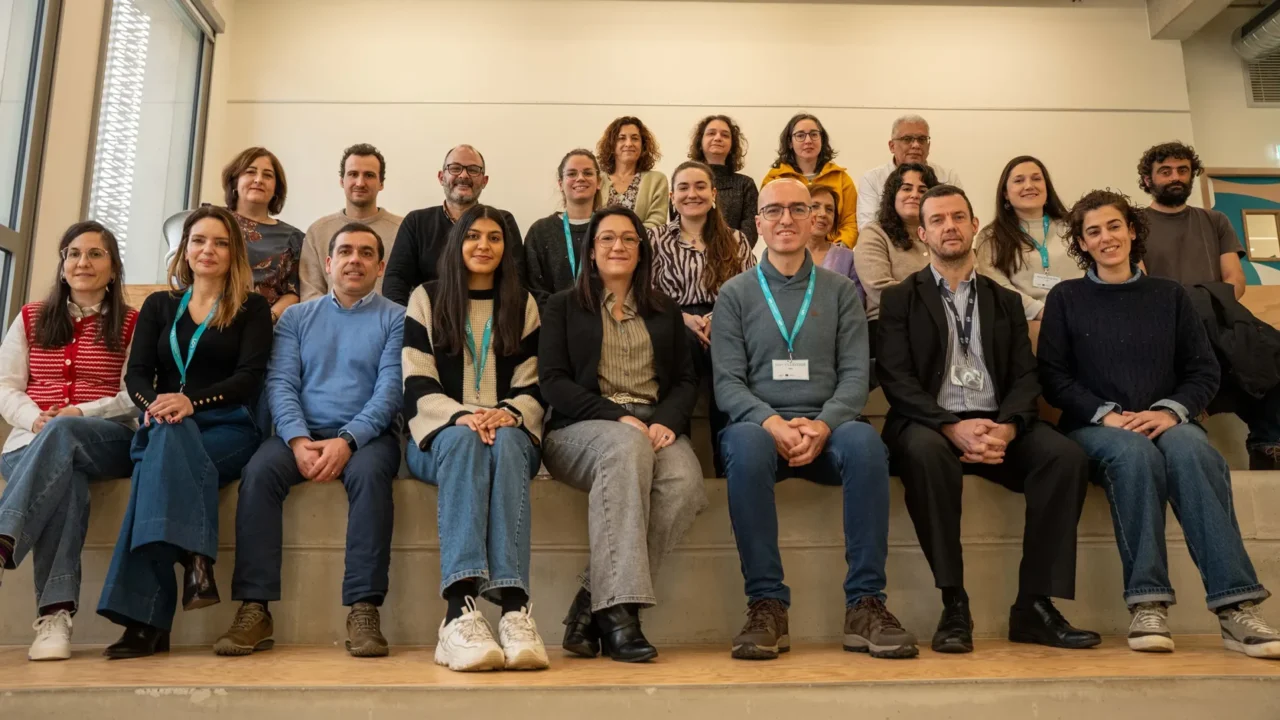
Representatives from 15 partners across Spain, France, and Portugal gathered in Clermont-Ferrand (France) to synchronize technological progress and consolidate circular economy strategies for the wine sector
The international consortium of the European project Soil&WineResidues (S2/1.1/E0258), co-funded by the Interreg SUDOE Programme through the European Regional Development Fund (ERDF), held its in-person working sessions on January 22nd and 23rd, 2026. The meeting, held in the French city of Clermont-Ferrand, specifically at the KAP – Learning Center of the Université Clermont Auvergne (UCA), served as a strategic stage to align criteria, synchronize research efforts, and present results achieved to date.
Progress in soil management and waste valorization
Under the coordination of the Misión Biológica de Galicia-CSIC, the working sessions allowed the different Working Groups (WG) to share their progress. During the first day, discussions focused on advances in soil health diagnosis and the development of pilot solutions for the valorization of vineyard waste.
The second day focused on the Communication strategy (led by the Juana de Vega Foundation) and the presentation of the Working Group dedicated to the transfer of results and project governance. Roundtable discussions were held to plan the next working period, ensuring that the scientific knowledge generated effectively reaches winegrowers, wineries, and society at large.
The meeting strengthened cooperation between partners from Portugal, France, Catalonia, and Galicia, highlighting the importance of applied innovation to transform industry sub-products, such as grape pomace, stalks, and pruning remains, into high-value resources.
With this meeting in Clermont-Ferrand, the Soil&WineResidues project reaffirms its commitment to finding sustainable solutions that reduce the environmental footprint of the agricultural sector and improve the competitiveness of vineyards in the SUDOE area through the circular economy.
Technical visits and cutting-edge biotechnology
Prior to the meeting at UCA, technical visits were conducted at various local vineyards in the Albi–Gaillac region (France) for soil sampling. This work, developed in collaboration with institutions such as the Misión Biológica de Galicia-CSIC, the University of Santiago de Compostela, and the University of Vigo, constitutes a key step in deepening the knowledge of soil microbiological composition and its regeneration potential.
During the Soil&WineResidues consortium meeting in Clermont-Ferrand, a key highlight was the visit to the MEDIS laboratory (Microbiology, Digestive Environment, and Health). There, partners gained first-hand knowledge of pioneering research on the application of grape-derived biomaterials. Notably, the UCA research on valorizing vineyard sub-products for pharmacological applications, currently being developed collaboratively with the Soil&WineResidues partnership, was showcased, including the development of tablets, hydrogels, and polymeric membranes from grape pomace.