
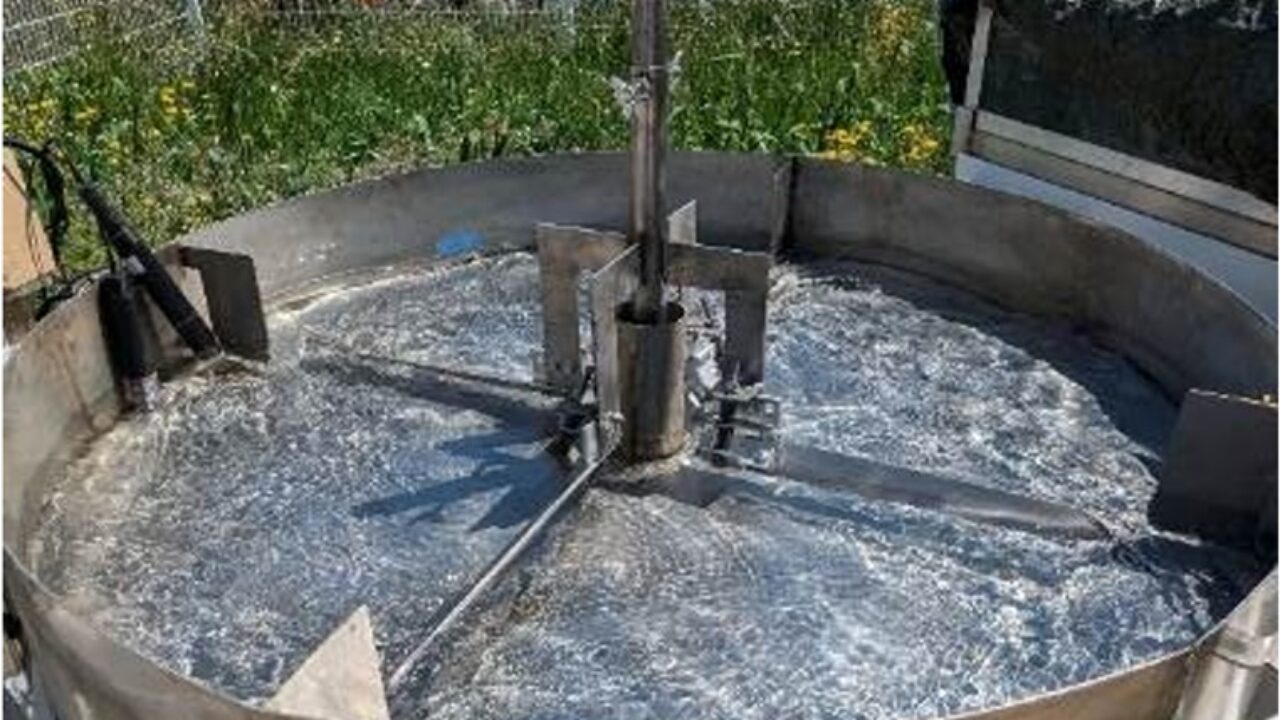
French partners from the University of Perpignan participating in the European GestEAUr project (Sustainable Urban Water Management in Rural Areas), funded by the Interreg Sudoe programme, have successfully tested a solar technology to remove traces of caffeine, ibuprofen and diclofenac from water. The reuse of treated wastewater is one of the main responses to drought and water scarcity. In France, the 2024 decree on wastewater reuse regulates these practices to ensure that reclaimed water meets appropriate health quality standards for different uses, such as irrigation, urban cleaning and certain industrial applications.
One of the main challenges is removing small traces of contaminants that may be present at very low concentrations but can still affect aquatic ecosystems. To assess whether the new treatment technologies are effective, the study used three reference substances: caffeine, ibuprofen and diclofenac. All three are molecules commonly found in treated wastewater and make it possible to evaluate how the system responds to contaminants with different behaviours.
The researchers focused on a technology that uses sunlight to trigger reactions that break down these contaminants until they are eliminated. This solution offers two major advantages: it uses a renewable energy source and can act on compounds that conventional biological treatments do not always remove completely. The research progressed in stages, from laboratory testing to real-world conditions.
First, tests were carried out in a fully controlled environment, varying the concentration of the substances and the light intensity in order to understand how they degraded. The system was then tested in continuous operation, using artificial light and sequences designed to reproduce changes in sunlight throughout the day.
In a third phase, the pilot reactor was tested under real sunlight using water containing caffeine, ibuprofen and diclofenac at concentrations similar to those that may be found at the outlet of a wastewater treatment plant. These tests made it possible to assess how natural variations in light, such as cloud cover and the transition between day and night, affected the process.
Finally, the system was installed as a pilot at the Pau-Lescar wastewater treatment plant, where it was commissioned and operated for nine months as part of the GestEAUr project. Fed directly with treated wastewater, it operated continuously under real weather conditions, including sunny days, cloudy skies, rain, high temperatures and seasonal variations. The study therefore validates the concept of a ground-installed solar photoreactor and represents a step forward towards the use of this technology under real operating conditions to improve the safe reuse of water.