
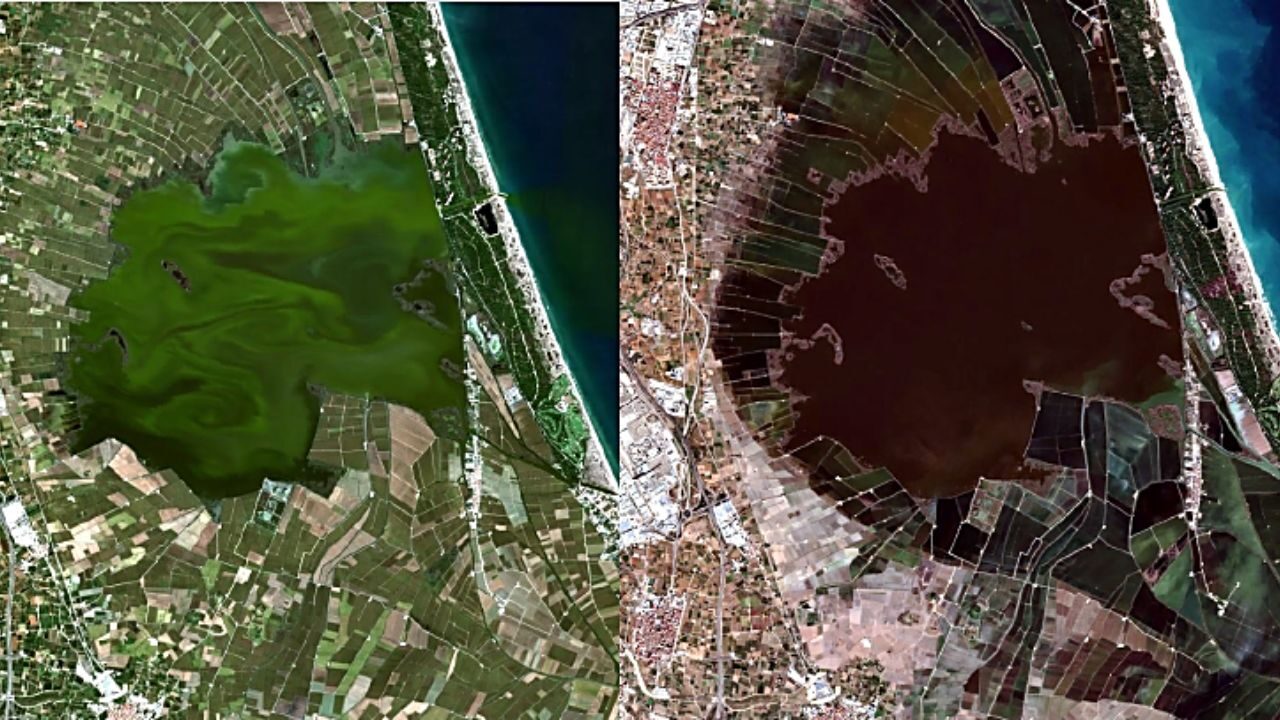
Spain is facing a situation of growing environmental concern following findings in two key areas: L’Albufera in Valencia and the reservoirs of Puente Nuevo and Sierra Boyera in the Guadalquivir basin. Both systems are experiencing a steady increase in cyanobacteria, a decline in water quality and incidents that are already affecting the population.
In L’Albufera, one of the Mediterranean’s most iconic wetlands, chlorophyll-a levels have returned to very high levels, reaching double the values recorded just a few years ago. The causes point to the historical accumulation of nutrients (in the sediments), the rise in water temperature — which already exceeds 32 degrees in summer — and stagnation associated with prolonged droughts. Cyanobacteria, particularly Microcystis aeruginosa and, to a lesser extent, Cylindrospermopsis raciborskii, constitute the main component of phytoplankton, with microcystins present for part of the year and concentrations that sometimes exceed international reference values.
The situation is equally worrying in several reservoirs on the Guadalquivir. Sierra Boyera y Puente Nuevo are among those most affected by high trophic states and recurrent blooms. The case of Sierra Boyera became a social issue in 2023, when the drought left the reservoir almost dry and forced the interruption of the drinking water supply to more than 80,000 people after contamination was detected in the water from an emergency transfer.
Research confirms that the combination of higher temperatures, reduced water flow, nutrient inputs from agriculture and long water retention times creates an ideal environment for algal blooms. These trends are consistent with scientific forecasts indicating that Mediterranean lakes and reservoirs will be particularly vulnerable to climate change in the coming decades.
The challenge for Spain is twofold: to protect public health and to preserve vital ecosystems that are already at the limits of their resilience.