
Increasing climate variability is leading to a higher occurrence of extreme events such as late frosts, which significantly affect agriculture. In northeastern Portugal, these events are one of the main causes of losses in fruit production, reducing both yield and fruit quality. In addition, traditional active protection methods often involve high costs, which limits their adoption by farmers. In this context, it is essential to develop more sustainable, accessible and efficient solutions based on passive strategies and a better understanding of the agricultural microclimate.
The pilot trial is carried out in Bragança (Portugal), in experimental plots managed by the Polytechnic Institute of Bragança (IPB). Its main objective is to evaluate innovative strategies to mitigate the impact of frost on fruit crops.
The pilot focuses on two complementary lines of action:
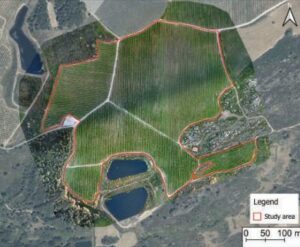
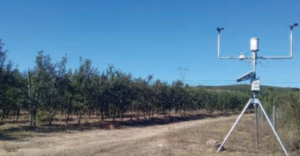
To this end, an experimental system is implemented including plots with different treatments arranged in a randomized block design. The trial is supported by continuous monitoring using sensors (temperature, humidity, radiation and wind) and an automatic weather station. In addition, thermal remote sensing using drones is incorporated to characterise the spatial variability of temperature and analyse the thermal behaviour of the crop.
The main actions developed in this pilot include:
The expected impact of the pilot is twofold:
Overall, this pilot will contribute to the development of more efficient adaptation strategies, facilitating the transfer of innovation to the agricultural sector and promoting the adoption of sustainable solutions that enhance farm resilience in the face of climate change.