

The development of energy sovereignty and the adaptation of agriculture to climate change in order to guarantee food independence are major strategic challenges.
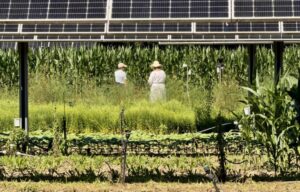
Agrivoltaics, which combines agricultural and energy production, can address these challenges, but it also presents risks in terms of speculation on agricultural land, negative impacts on biodiversity, and changes in farmers’ working practices. AgroSOL aims to develop a sustainable model for the development of agrivoltaics in rural areas, focusing on small and medium-sized farms in order to strengthen farmers’ livelihoods.
To achieve this, a common strategy will be developed to facilitate the implementation of photovoltaic production models that contribute to the resilience of rural areas in the SUDOE region. The project includes several pilot projects aimed at improving understanding of the impact of solar panels, their design, and the most suitable technological solutions:
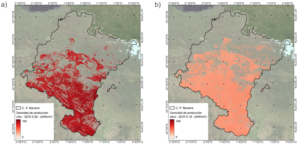
- Pilot 1: ES (Navarra) – Led by Consorcio EDER with technical support from UPNA and UBU, the project will be carried out in woody crops (almond trees), alternating rows of almond trees with rows of solar infrastructure.
- Pilot 2: PT (Alentejo) – Implemented by the University of Évora in collaboration with ADENE, this pilot agrovoltaic system will be installed in a greenhouse on the University of Évora campus.
- Pilot 3: FR (Nouvelle-Aquitaine) – Conducted jointly by GLHD and ESTIA, the project will include different trials aimed at deepening the study of crop growth in agrivoltaic systems, including both horticultural and extensive crops.
- Pilot 4: ES (Castilla y León) – Led by ITAGRA, this pilot will focus on agrivoltaics combining mushroom production with the cultivation of aromatic and medicinal plants, with technical support from UPNA and UBU and support from EREN for the dissemination of results.
- Pilot 5: ES (Extremadura) – Coordinated by CICYTEX, this pilot will analyse the impact of solar panels on winter cereal crops.