- The European project PreDisc, led by Navarrabiomed, presented its conclusions this Thursday at Baluarte after three years of work carried out in hospitals and research centres across Spain, France, Portugal and Andorra. “Fragility is not inevitable,” stressed its principal investigator, Nicolás Martínez Velilla, during an event held to coincide with the International Day of Older Persons.
“Fragility is not inevitable. It can be prevented and delayed if action is taken in time, healthy lifestyles are promoted and active ageing is encouraged.” This was the central message underpinning the closing event of the European PreDisc project, held this Thursday at Baluarte, the Palace of Congresses and Auditorium of Navarra. The event, open to the public, featured eleven talks, ten workshops and an exhibition area designed for people who want to take care of themselves and remain active beyond the age of 65.
During the opening session, Ana Ollo, Second Vice-President and Regional Minister for Memory and Coexistence, External Action and Basque Language Policy, stated that “the real challenge is no longer simply increasing life expectancy, but ensuring that those years are lived with wellbeing, autonomy and the ability to continue participating fully in society.”
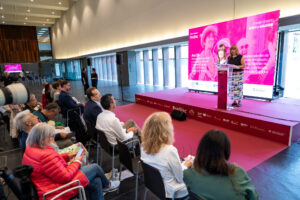
According to Ollo, “PreDisc has been much more than a research project.” She described it as “an initiative capable of connecting science, clinical practice, territories and, above all, people.” She also highlighted that its value “should not be measured solely by the results achieved during its implementation, but by its capacity to generate lasting change.”
Ollo also emphasized the importance of European cooperation and programmes such as Interreg Sudoe. “Europe is also built in this way: by creating cohesion among territories and strengthening regional capacities,” she stated. Participation in European projects is one of the key priorities of her department through the Directorate-General for External Action.
Fragility is not inevitable
Following the institutional welcome, the project’s conclusions were presented by Nicolás Martínez Velilla, Head of the Geriatrics and Active Ageing Unit (INGEA) at Navarrabiomed, Head of the Geriatrics Department at the University Hospital of Navarra (HUN), and Principal Investigator of PreDisc. The project is led by Navarrabiomed and co-financed at 75% by the Interreg Sudoe Programme through ERDF funding.
Addressing attendees, Martínez Velilla stated that disability associated with ageing “can be prevented or delayed if action is taken early, healthy habits are encouraged and person-centred care models are developed.”
In this regard, he explained that PreDisc has demonstrated that “adapted physical activity, support during and after hospitalization, coordination between levels of care and the use of innovative tools can help older adults preserve their independence and maintain a better quality of life for longer.”
Among the project’s major achievements was an international multicentre clinical trial. The study evaluated the effectiveness of personalised physical exercise programmes and healthy lifestyle interventions, both during hospital stays and after discharge. The goal was to facilitate the incorporation of these advances into routine clinical practice.
To support this objective, training activities were delivered to professionals within the Navarra Health Service (SNS-O) on the benefits of physical exercise and its prescription as a health intervention. In addition, a digital health (e-health) platform was developed.
This digital tool was publicly presented during the event. It includes two sections. The first is open to the general public and provides content and practical recommendations for active ageing. The second, accessible only to patients, enables them to continue at home the exercise programme started during hospitalization and access personalised guidance on nutrition and other aspects of self-care.
Another noteworthy achievement of PreDisc has been its specific focus on rural communities. Functional assessments, participatory activities and community events promoting healthy lifestyles were organised in rural settings.
“We approached rural communities to listen to people, provide resources and promote healthy habits,” explained Martínez Velilla.
Summarising the project’s impact, the researcher stated that the results achieved through PreDisc “consolidate a model of public health that is closer, more connected, fairer and more sustainable for all citizens.”
Open to the public
The event was opened by Javier Gómez Arrue, Director of Navarrabiomed, together with Marta Martín, Medical Director of the University Hospital of Navarra, and Itziar Blanco, Head of Primary Care. Their joint presence symbolised one of PreDisc’s main achievements: collaboration between research, hospital care and primary care to address the challenges of ageing.
During his speech, Gómez Arrue highlighted that “the major challenges of ageing can only be tackled by combining scientific knowledge, clinical expertise and the voices of older people themselves.”
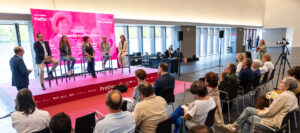
The institutional session also included two roundtable discussions. The first brought together Interreg Sudoe projects committed to innovation and cooperation between territories in order to address shared challenges. The second focused on incorporating the outcomes of European projects into public policies and citizen-oriented services. Antonio López, Director General of Health of the Government of Navarra, participated in this discussion and noted that:
“Navarra has an active and healthy ageing strategy structured around three pillars and ten strategic areas. The PreDisc project fits perfectly within this strategy, particularly in two areas: research, innovation and regional development, and the promotion of healthy lifestyles, where physical activity, through its various programmes, plays a fundamental role.”

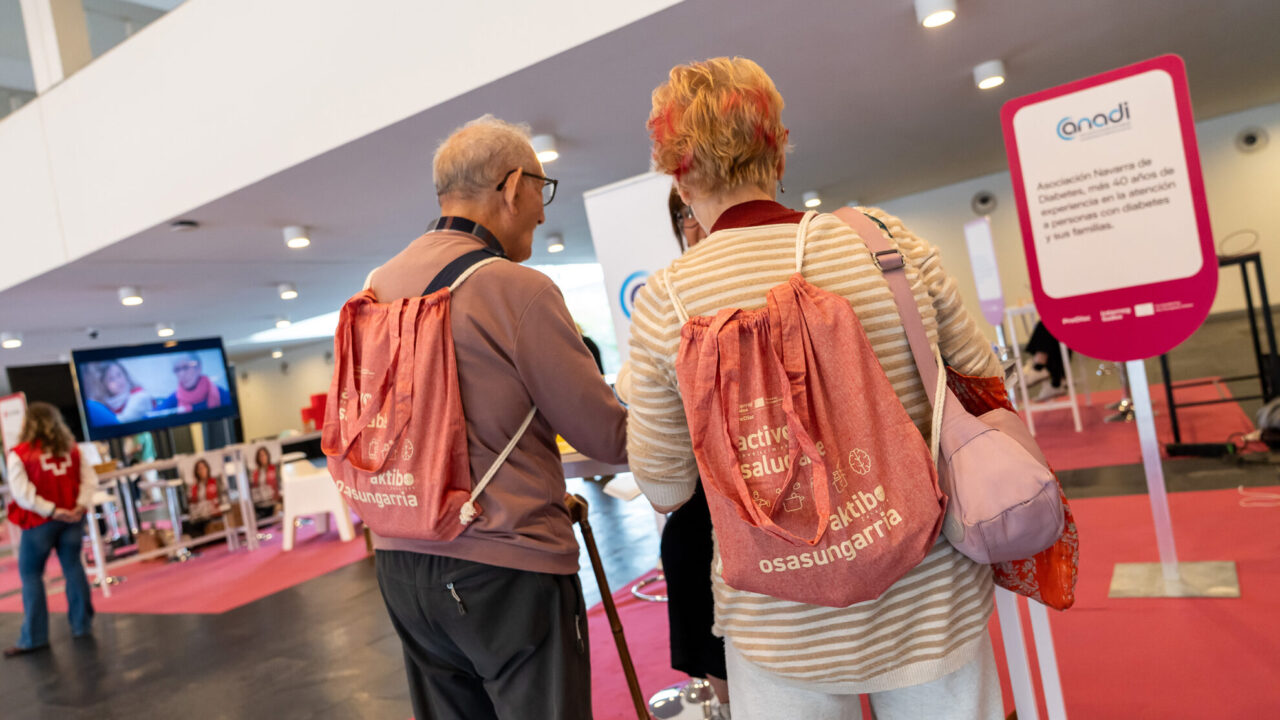
The day concluded with an extensive programme open to the public, including information stands, educational talks and practical workshops focused on healthy ageing. Participants had the opportunity to explore the digital platform developed by PreDisc, reflect on the importance of incorporating a gender perspective into ageing policies and practices, learn about initiatives aimed at combating unwanted loneliness, discover community-living projects and take part in activities related to physical exercise, healthy eating, emotional wellbeing and active ageing.
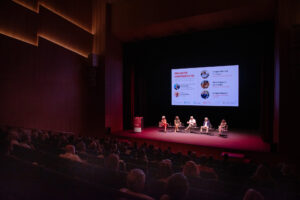
As a prelude to the event, Baluarte hosted the gathering “Ageing with Purpose: Conversations to Inspire an Active, Autonomous and Fulfilling Life” the previous day. The event provided a space for reflection and dialogue on how we wish to experience later life. Gerontologist Camino Oslé opened the session with an inspiring talk on the art of ageing, followed by a discussion moderated by Javier Solano featuring Enrique Villarreal “El Drogas”, Alicia Otaegui, Irene Aldabe and Enrique Martín Monreal. Through a diverse range of personal experiences and life journeys, the session invited participants to reflect on the meaning of ageing, the importance of maintaining social connections, remaining engaged in society and continuing to find reasons to enjoy life, contribute to the community and feel a sense of belonging.