
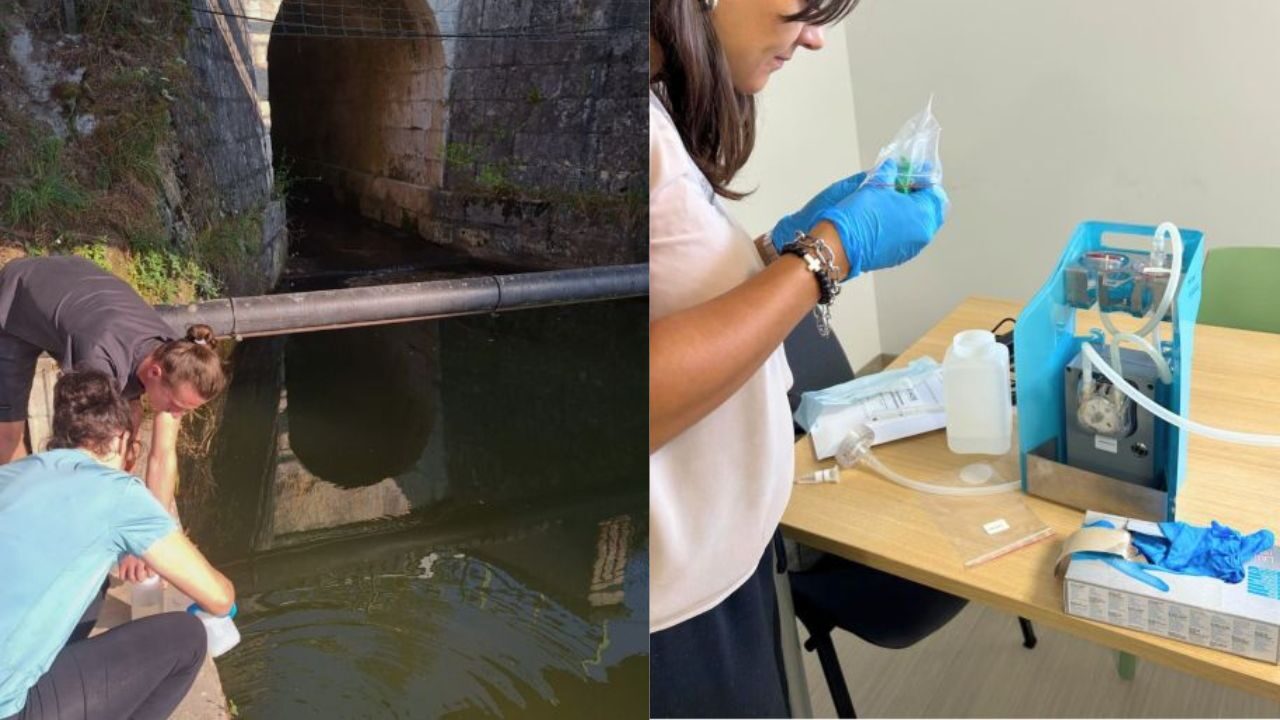
The ACMG has launched a monitoring campaign at Lake Clarens, in Casteljaloux (France), as part of the European project Cyan’EAU (Interreg SUDOE). The initiative aims to improve cyanobacteria surveillance and strengthen early detection capabilities for potential blooms, particularly during the summer months, when rising water temperatures favor their development.
The campaign includes weekly water sampling until mid-September, enabling continuous monitoring of the lake’s ecological status and providing analytical results within a short timeframe to support the implementation of preventive measures when necessary.
In addition, this monitoring effort will be complemented by monthly environmental DNA (eDNA) analyses, an innovative methodology that allows for a more comprehensive identification of the microbial communities present in the aquatic ecosystem. These analyses will be carried out by IAGE (Ingénierie et Analyse en Génétique Environnementale).
Thanks to the combination of conventional monitoring techniques and advanced molecular tools, Cyan’EAU continues to promote knowledge generation and the development of innovative solutions to improve the management of risks associated with cyanobacterial blooms.
Fortunately, to date, no cyanobacterial bloom has been detected in Lake Clarens.