
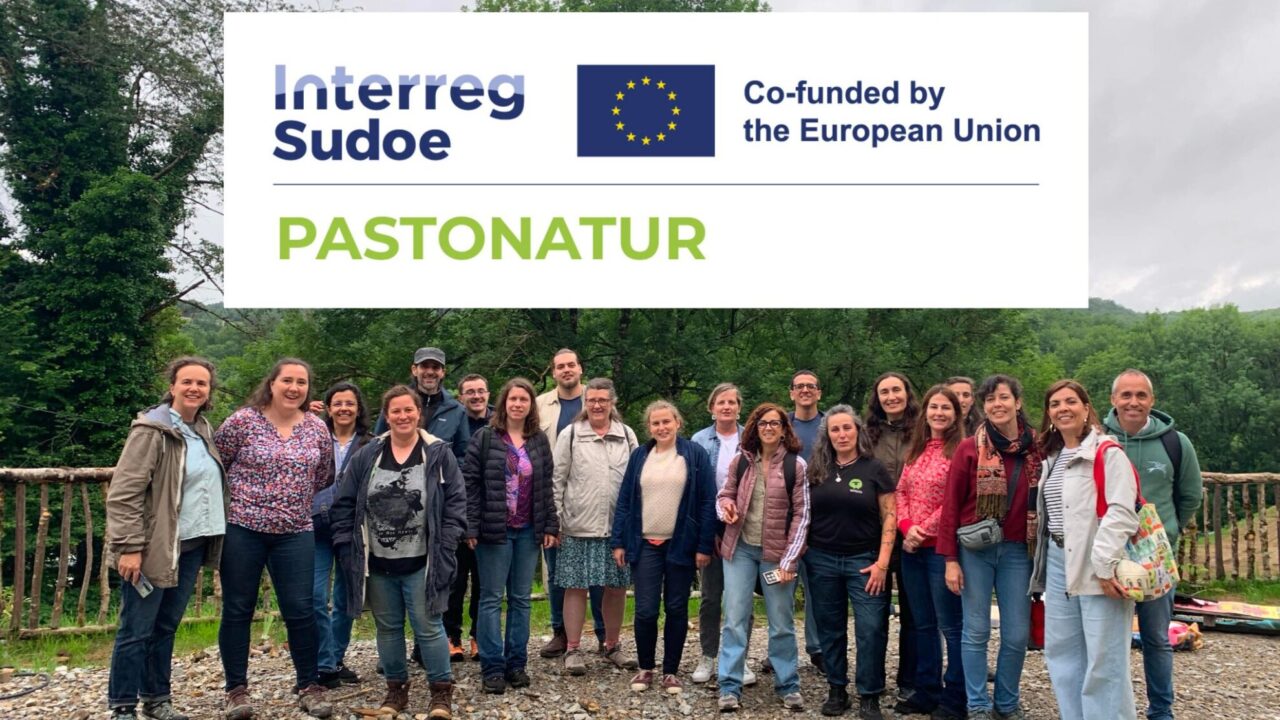
On 2 and 3 June 2026, the lush region of Occitanie, France, hosted the coordination team of PASTONATUR. This technical visit combined fieldwork, methodological discussion, and the exchange of experiences focused on the valorisation of extensive livestock farming. The meeting was supported and hosted by the French partner Parc naturel régional du Haut-Languedoc.
Partners from Portugal, Spain, and France had the opportunity to visit farms, deepen ongoing technical work, and define the next steps of a transnational strategy that places extensive livestock farming at the heart of nature conservation in protected areas across the SUDOE territories.
The meeting began with welcome remarks by Michel Castan, First Vice-President of the PNRHL and head of the agricultural department. In his speech, he highlighted the essential role of extensive livestock farming in land management and biodiversity conservation, also stressing the importance of short supply chains in adding value to meat and other local products.
Methodological work and field exchange of experiences
On the first day, in a workshop setting, partners further developed the four methodologies to be applied in the PASTONATUR pilot projects, covering biodiversity assessment, climate change, economic aspects, and socio-economic development. Regarding the biodiversity methodology, discussions focused on its principles, advantages, and implementation challenges, aiming to reach consensus for a harmonised and replicable approach across all participating territories.
In the afternoon, the group visited La Grange de Baffignac, one of the project’s pilot farms, where the territorial adaptation of the proposed methodologies was validated and discussed, bringing technical work closer to real production systems. Young farmers presented their self-sustaining production model and ongoing projects to enhance local value, including cheese production and the construction of a small slaughterhouse. They also shared key challenges linked to farming in the area, as well as cooperation strategies between neighbouring farms based on exchange of goods and shared use of equipment and tools.
With diversified livestock production, the visit also showcased examples of short supply chains and the gastronomic valorisation of local products, notably through a seasonal association-run restaurant and local markets that support the regional economy.
Value chain, certification, and marketing
The value chain, certification, and marketing were the focus of the third day. The visit to Ferme de la Ruyère in Pont-de-Larn offered insight into a model that combines high-quality production, territorial certification, and short supply chains, demonstrating how the valorisation of local livestock products can contribute to the economic sustainability of rural areas — a model that the project aims to study, adapt, and transfer to the 16 pilot territories selected for PASTONATUR.
During the visit, producers shared the main challenges they face, both in farming operations and in the transition towards regenerative production practices. It was also possible to observe the diversification of activities, including artisanal production and acacia liqueur making, products that participants were able to taste and that illustrate the potential for adding value to local resources.
Next steps
The working session also included an update on communication and knowledge transfer activities, culminating in a summary of agreements reached and the definition of the technical calendar for the coming months.
This initiative represents another important step in strengthening international cooperation among partners, consolidating a shared vision to promote innovative solutions that combine agricultural activity, nature conservation, climate adaptation, and sustainable rural development.
Eleven PASTONATUR Interreg Sudoe partners took part in this technical visit: Andanatura, Fundación Entretantos, Fundación Global Nature, and University of Extremadura (Spain); Parc naturel régional du Haut-Languedoc, Chambre d’Agriculture de l’Ariège, Chambre d’Agriculture des Pyrénées Atlantiques, and Institut de l’Élevage – IDELE (France); ADPM, ACOS, and University of Évora (Portugal).
Progress was also made in the development of the Transnational Strategy and the Action Plan for Dynamic Conservation associated with Regenerative Extensive Livestock Farming.


